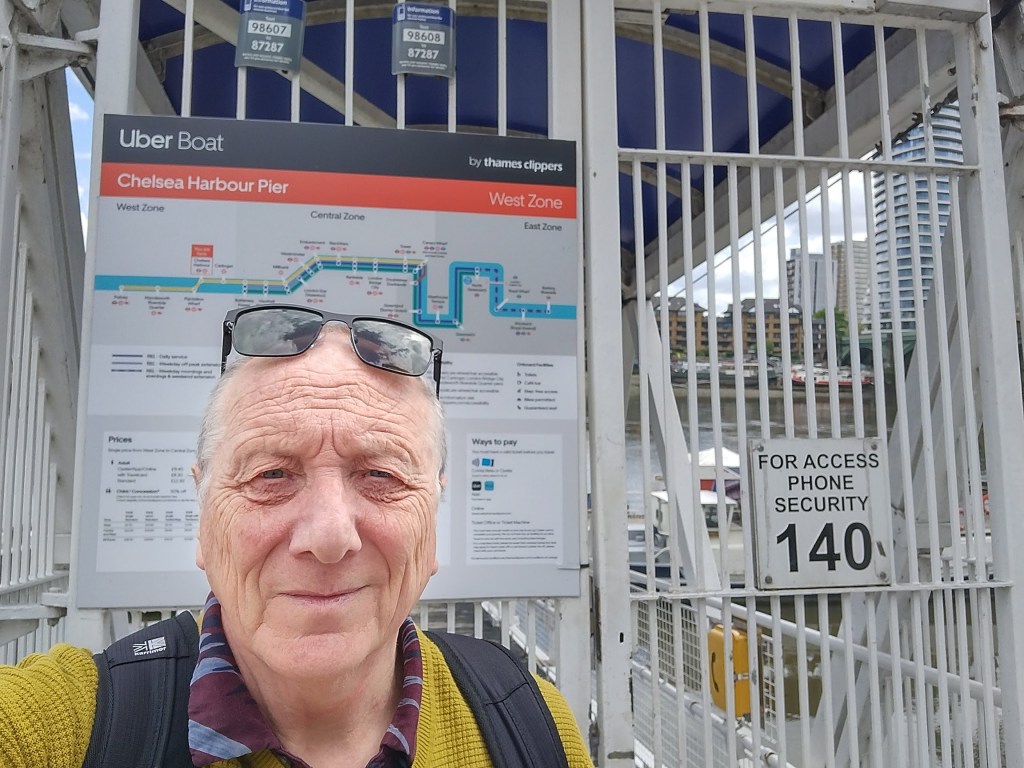
A Brief History
Chelsea Harbour Pier hasn’t always been the calm, modern place it is today. If you went back over a hundred years, you wouldn’t recognise it at all. Instead of ferries and flats, this part of the river was busy, noisy, and full of hard work. It was an industrial area, mainly used as a coal wharf, where huge amounts of fuel were brought into London.
At that time, everything revolved around industry. Barges carried coal along the Thames, and nearby railways helped transport it across the city. The air would have been filled with smoke and dust, and the riverbanks would have been crowded with workers loading and unloading supplies. It wasn’t a place people visited for fun—it was a place people depended on for jobs and survival.
However, things began to change in the mid-20th century. Coal was no longer as important as it once had been, and new forms of transport, like lorries, reduced the need for river trade. As a result, many riverside areas, including Chelsea Harbour, started to decline. The busy wharves became quieter, and some were eventually abandoned. For a while, the area felt forgotten, as if it had been left behind while the rest of London moved on.
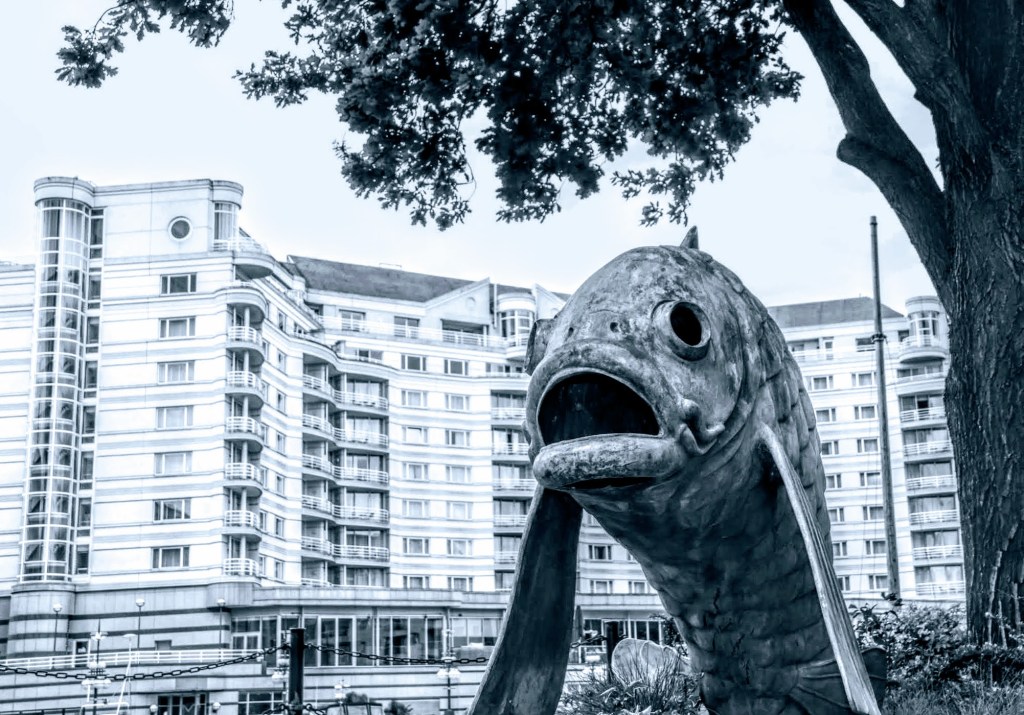
Everything changed again in the 1980s. This was when developers decided to completely transform the area. Instead of rebuilding the old industrial site, they created something entirely new. Chelsea Harbour became a modern development featuring luxury flats, a marina, and business spaces. It was a huge shift—from a place focused on industry to one focused on living, working, and relaxing.
Chelsea Harbour Pier was built as part of this redevelopment. Unlike the old wharves, which were designed for cargo, the pier was made for people. Today, it is used by river bus services, helping commuters and visitors travel along the Thames. Boats now connect this area to other parts of London, showing how the river is still important, but in a different way. Instead of transporting coal, it now helps people move around the city in a more relaxed and scenic way.
Another important change is the area’s increased connectivity. With nearby train stations like Imperial Wharf, it’s easy to switch between river and rail travel. This shows how modern London focuses on making transport simple and accessible, something that wasn’t a priority in the old industrial days.
In the end, the story of Chelsea Harbour Pier is really a story about change. Even though it looks completely different today, its history is still important. It continues to remind us how cities grow and adapt over time, and how places can be given a whole new purpose.
My Journey and Images
I visited the pier on the 10th of May 2023, and posted the related images on social media in October 2023.
Getting to the pier was quite easy as TfL’s Overground (Mildmay) line and Southern Rail’s North/South service stops nearby at Imperial Wharf. It’s then a short walk down Harbour Avenue to the pier, which is served by Uber Boat by Thames Clipper riverboat service.
This was a relatively short walk along the Thames Path, past Chelsea Harbour, up to Chelsea Creek and onward to Stamford Bridge – the home of Chelsea FC.
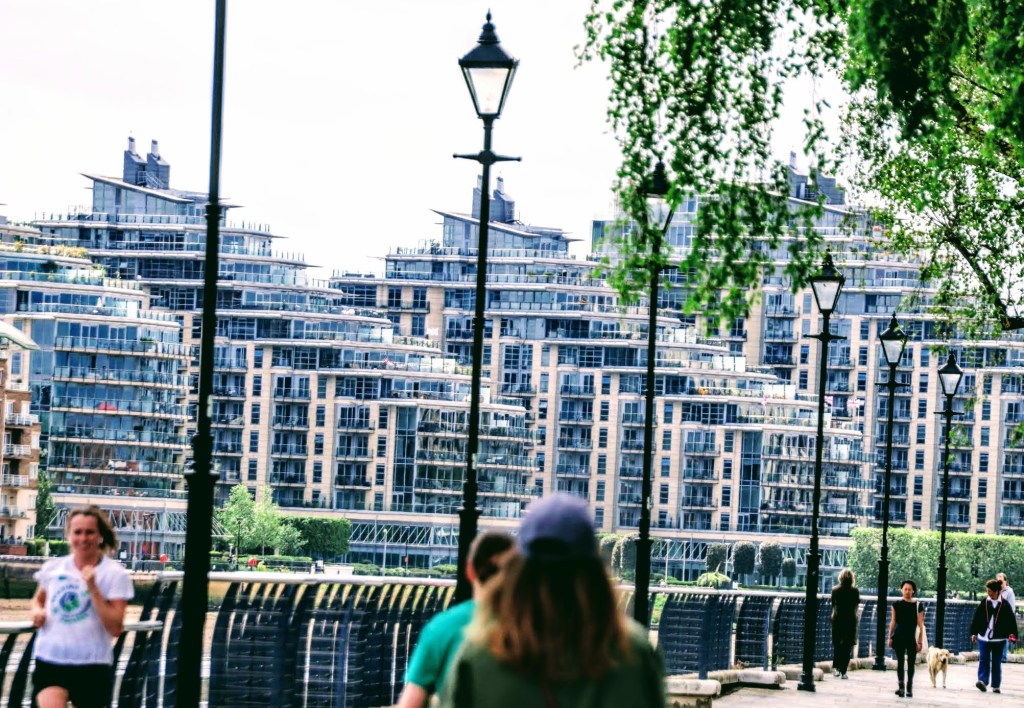
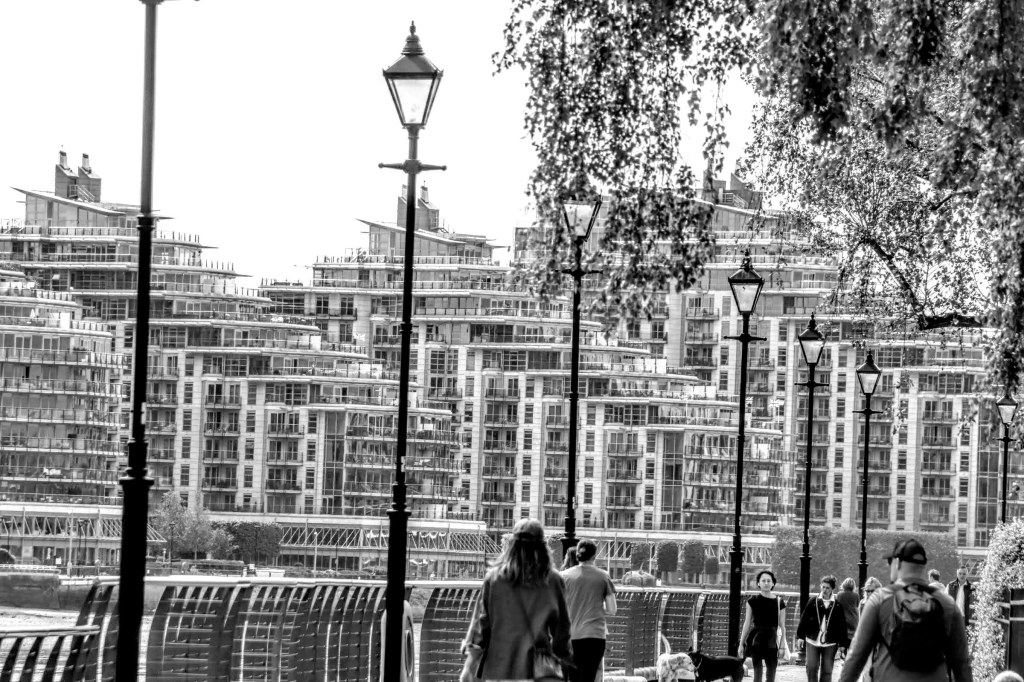
#01: Runners and Walkers
This is a long-range view of Kingfisher House on the south bank of the Thames, taken from the Thames Path at Sands End. I can’t decide between the colour and the black-and-white image. Which do you prefer?
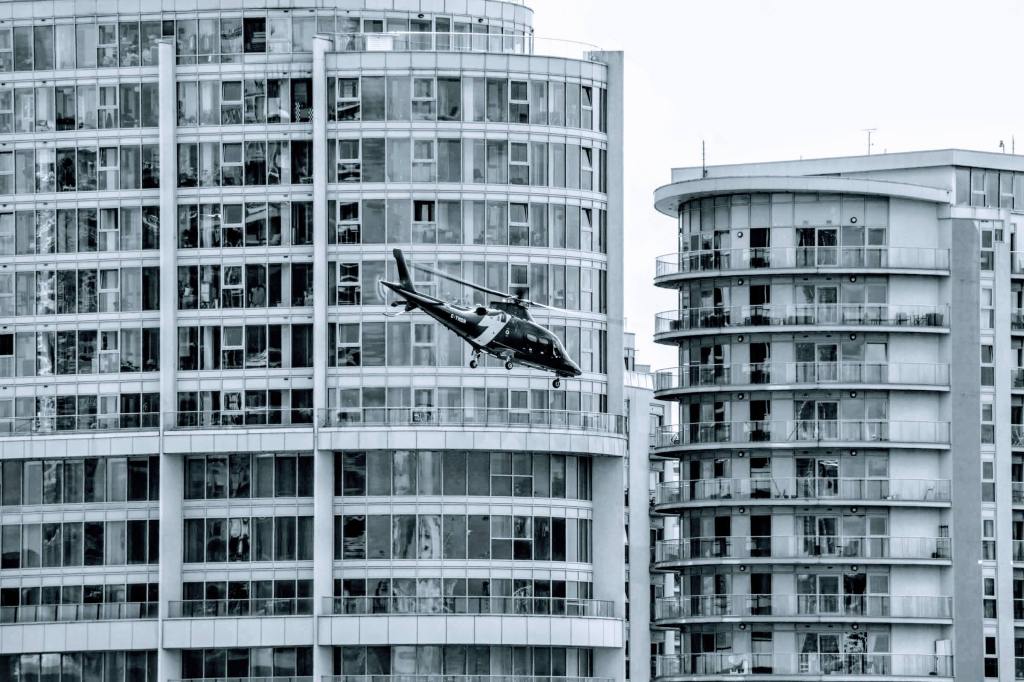
#02: SaxonAir C-THDR
You get to see some unusual sights from the Pier at Chelsea Harbour. Across the river, helicopters come and go at regular intervals from London’s Heliport.

#03: Gateway of Hands
Here’s an interesting sculpture by Glynn Williams, outside the Chelsea Harbour Towers.
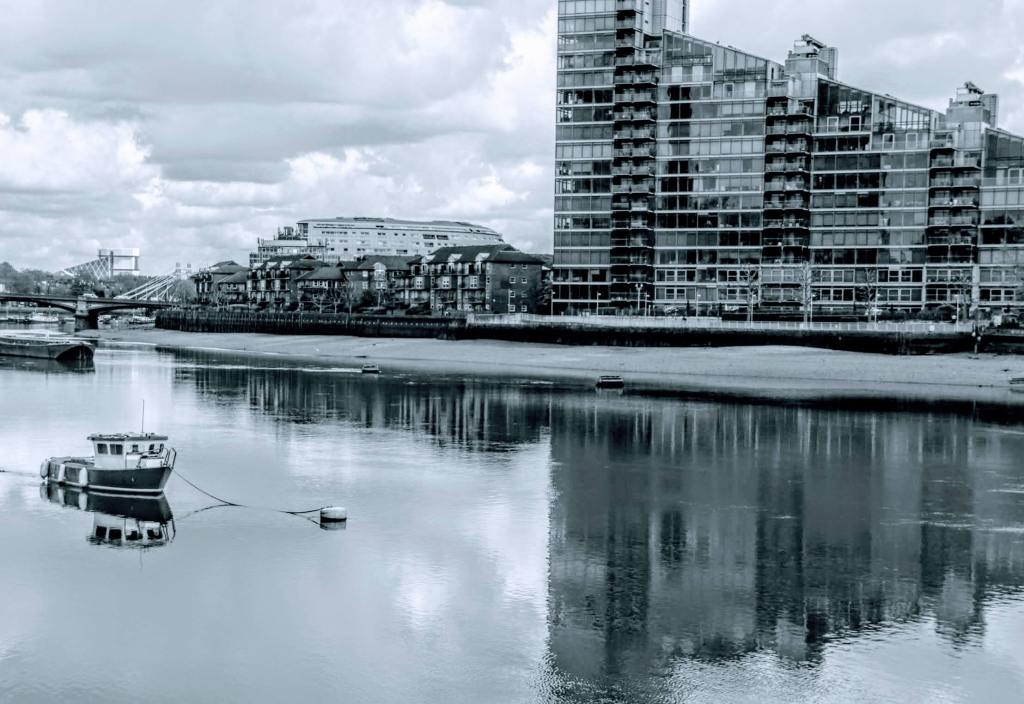
#04: Reflections of Bobbi
Bobbi is moored, all alone, along the Thames. But with a calmish water, you get to see its mirror image too.
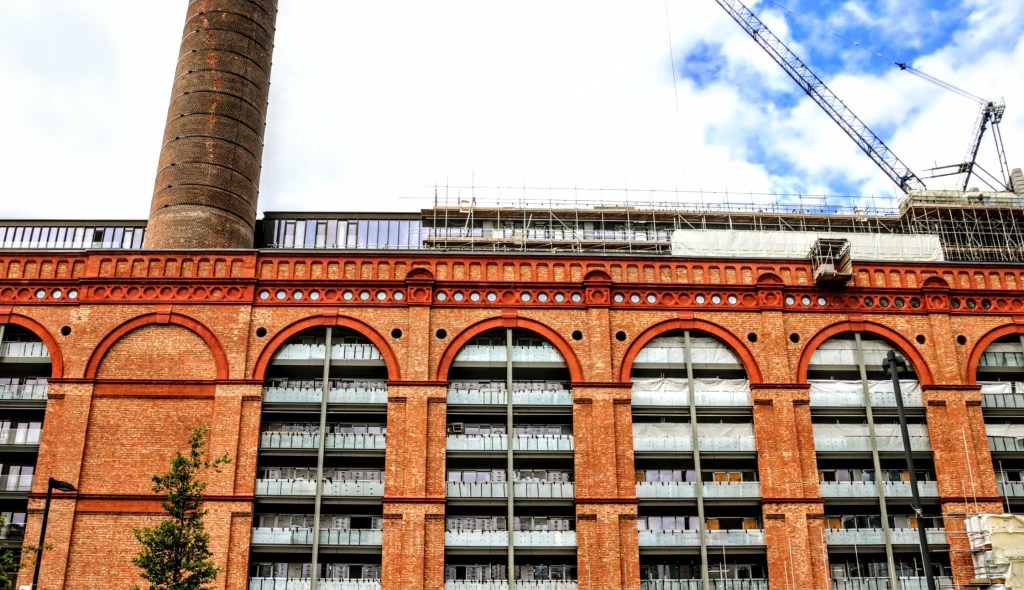
#05: Lots Road Power Station
Converted into apartments in 2022, I’m surprised to see it’s still under construction. The former power station once powered the underground for 80 years up to 1985. Its impressive brickwork stands proudly alongside Chelsea Creek.
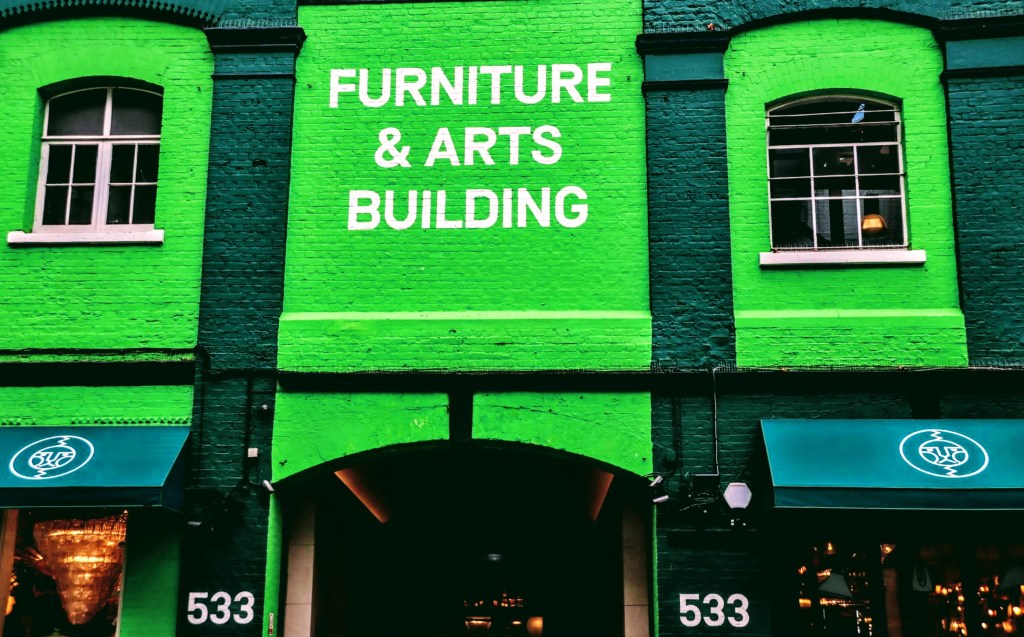
#06: 533 Lots Road
You know what’s inside as it’s clearly labelled on the outside. The delightfully coloured building stands out on the corner of Lots Road and King’s Road.
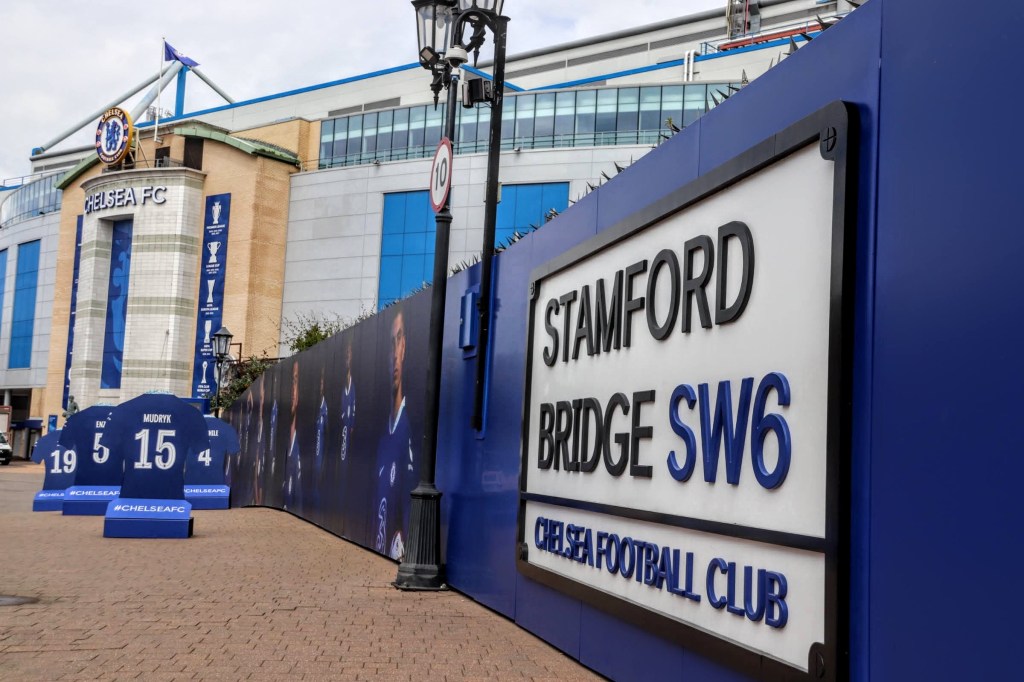
#07: ‘Blue is the colour’
A visit to the area isn’t complete without a walk around and through Stamford Bridge. No matches today, so it was relatively quiet. I have to admit blue isn’t my preferred colour.
#08: A Veteran’s Community
The Sir Oswald Stoll Foundation was erected as ‘An empire’s tribute to the valiant’ after the First World War. It remains, to this day, a housing community to help veterans.
Wikipedia – Chelsea Harbour Pier



Leave a comment