A Brief History
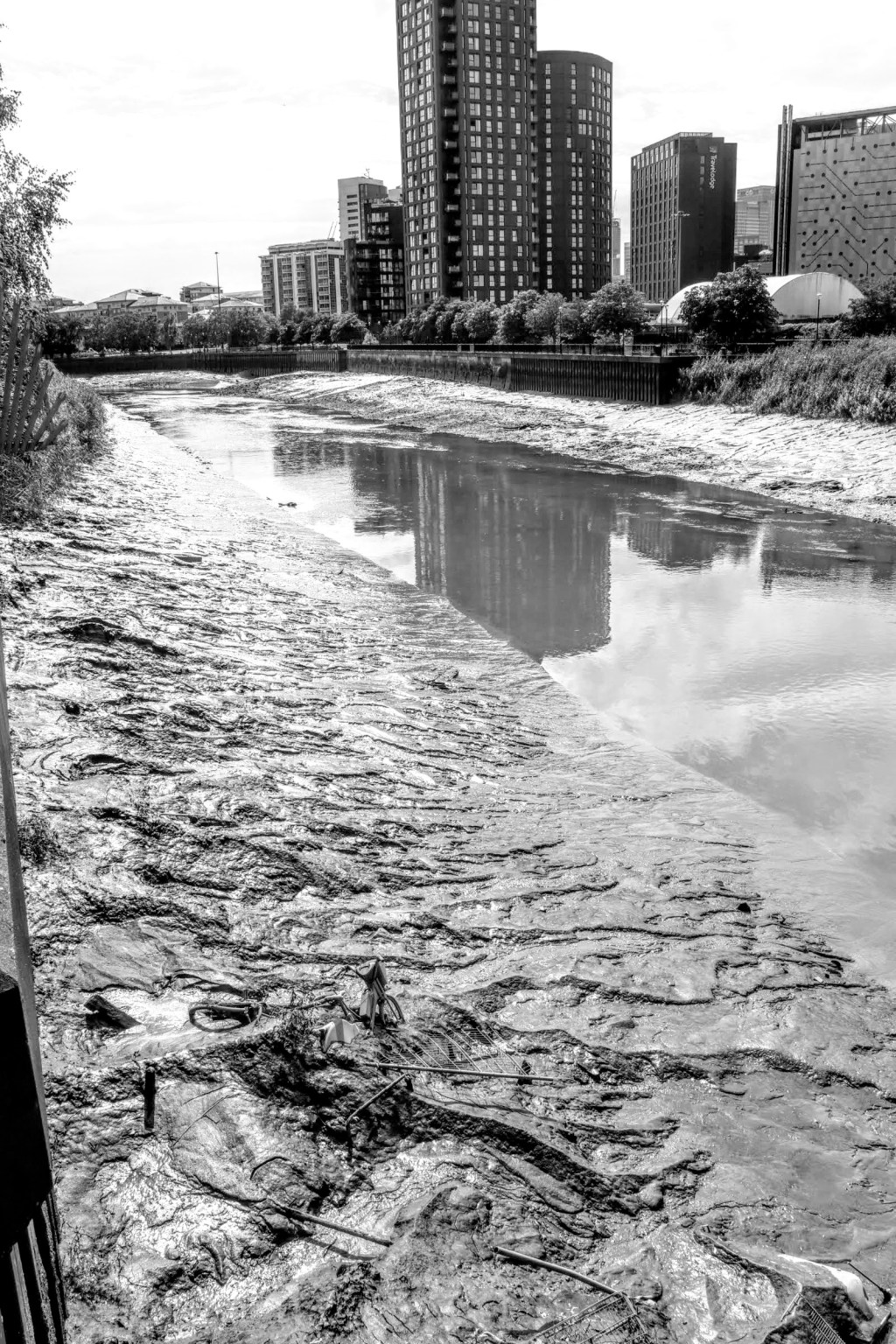
Leamouth is a small but historically significant area in the London Borough of Tower Hamlets, at the confluence of the River Lea and the River Thames. Its history reflects wider changes in London, from rural isolation to industrial growth, decline, and modern regeneration.
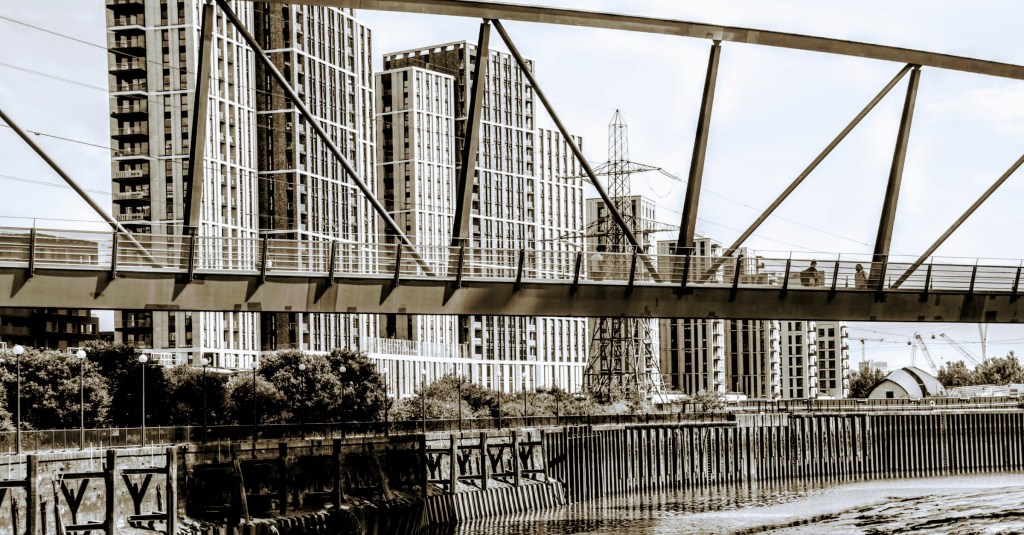
The earliest evidence of activity in Leamouth dates back to around 1297, when records suggest ships were unloaded in the area, although it remained largely undeveloped for centuries. During the medieval and early modern periods, the area was mainly used for farming and fishing, with only limited settlements. By the late 16th century, a manor house (Orchard House) had been established, later becoming a public house in the 18th century. This suggests that early Leamouth was a small, rural, and relatively unimportant part of London compared to other parts.
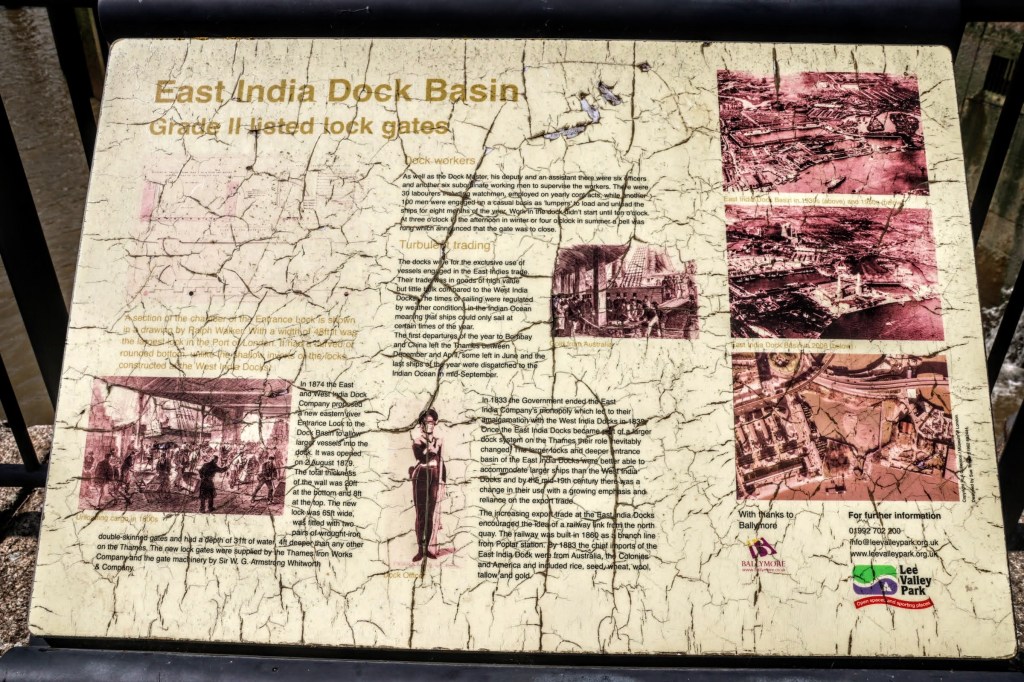
A major turning point came in the early 19th century with the construction of the East India Docks, which opened in 1806. These docks transformed Leamouth into a more industrial area but also made it geographically isolated, as access was limited through a single road. This isolation led to the area being nicknamed “Bog Island” due to its inaccessibility and tendency to flood. Despite these challenges, industrial development began to grow quickly.
During the Victorian period, Leamouth became an important industrial centre for shipbuilding, glass manufacturing, and sugar refining. The Thames Plate Glass Works, for example, was a major employer until its closure in 1874. The Thames Ironworks and Shipbuilding Company also operated in the area, producing famous ships such as HMS Warrior, one of the first iron warships to be built.
Whilst these industries attracted workers and the construction of small cottages, living conditions were poor. By the late 19th century, the area had become overcrowded and deprived, with few shops. This reflects wider problems in industrial London, where rapid growth often led to poverty and unhealthy living conditions.
The early 20th century saw the gradual decline of the Thames Ironworks, which closed in 1912, dealing a massive blow to the local economy. In the 1930s, most of the housing and buildings were demolished as part of slum clearance programmes. And during World War II, Leamouth was a primary target for the Luftwaffe due to its proximity to the Royal Docks, and the Blitz bombing caused extensive damage, leading to the eventual demolition of most Victorian housing in the post-war period.
As containerization changed global shipping in the 1960s and 70s, the East India Docks closed. By the 1980s, Leamouth had become a “brownfield” site—desolate, contaminated by industrial waste, and largely abandoned.
The 1990s Trinity Buoy Wharf was saved from demolition and repurposed as a centre for the arts and creative industries. The most significant shift occurred in the 2010s with the development of London City Island. This project transformed the industrial wasteland into a high-density residential “mini-Manhattan,” and the arrival of the English National Ballet in 2019 cemented Leamouth’s transition to a hub of high culture and luxury living.
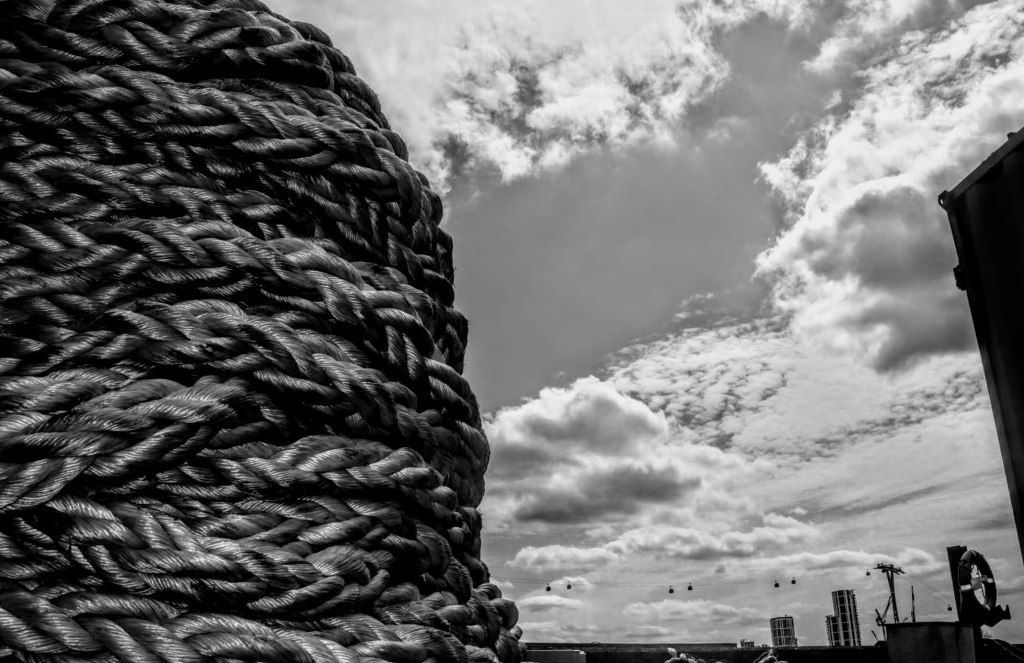
The history of Leamouth illustrates the “cycle of land use” common in urban geography. It evolved from a natural marsh to a Victorian industrial engine, suffered through post-industrial decay, and has now emerged as a symbol of London’s gentrification. While the ironworks are gone, the preservation of Trinity Buoy Wharf ensures that the area’s maritime heritage remains visible amidst the glass towers of the 21st century.
My Journey and Images
I visited Leamouth on the 10th of August 2023, journeying along the River Lea as it meanders through Bow Creek past City Island and Limmo Peninsula, then entering the Thames at Trinity Buoy Wharf. I also had a cheeky little visit to East India Dock.
I posted my images on social media in December 2023.
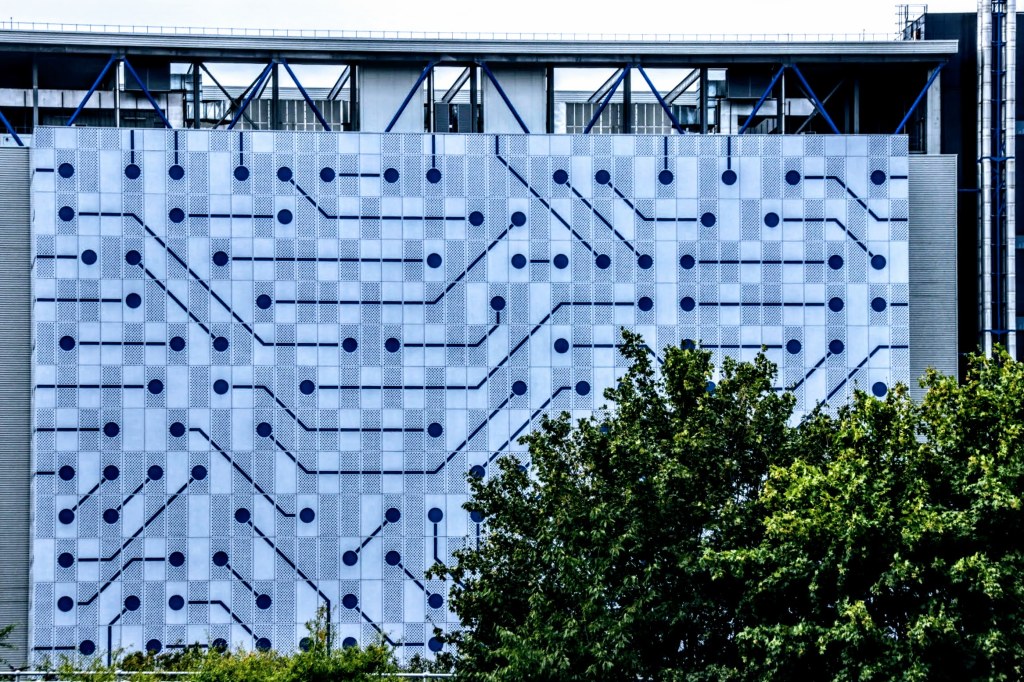
#01: Telehouse North Two
Be it in colour or black and white, the cladding of this East London Data Centre is quite spectacular and stands out from the crowd when viewed from Leamouth Peninsula.
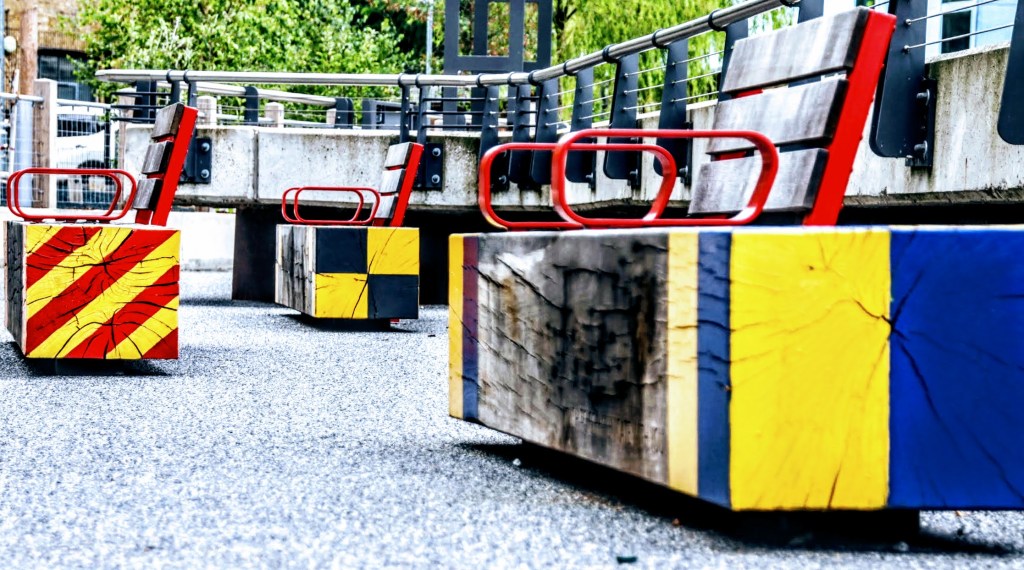
#02: Colour Blocks
Leamouth Peninsula and the development that is London City Island have a lot to offer, with views overlooking Bow Creek. Why not rest a while on a rustic seat as you watch the barges navigate their way along the waterway?
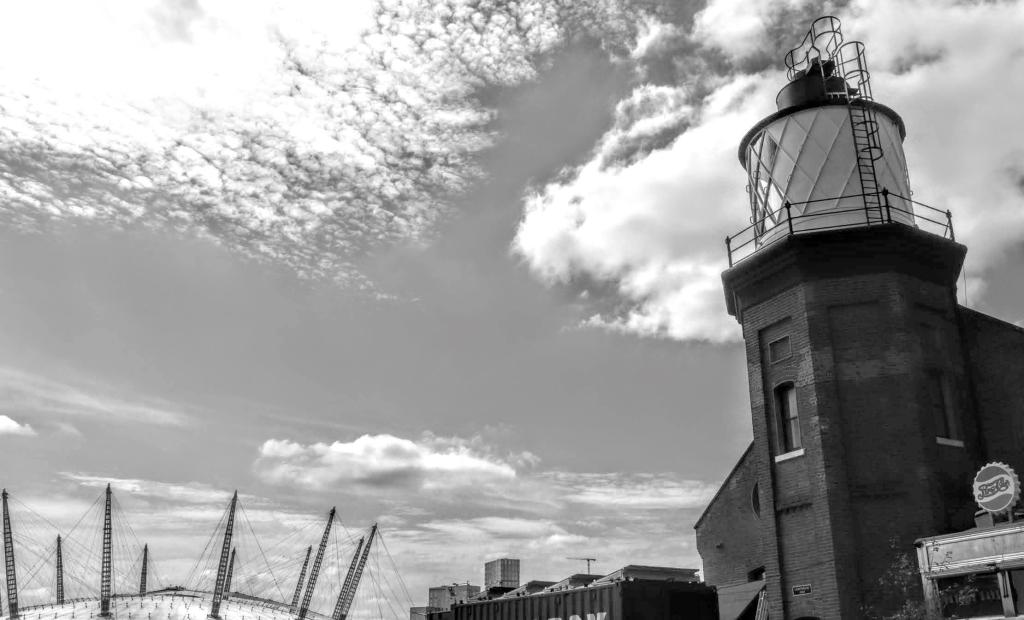
#03: Cloudy Rooftops
In the shadows of the O2, this is one of two lighthouses, once used by Michael Faraday at Trinity House to test new lighthouse techniques. He had a workshop here where he experimented with electric lighting for lighthouses.
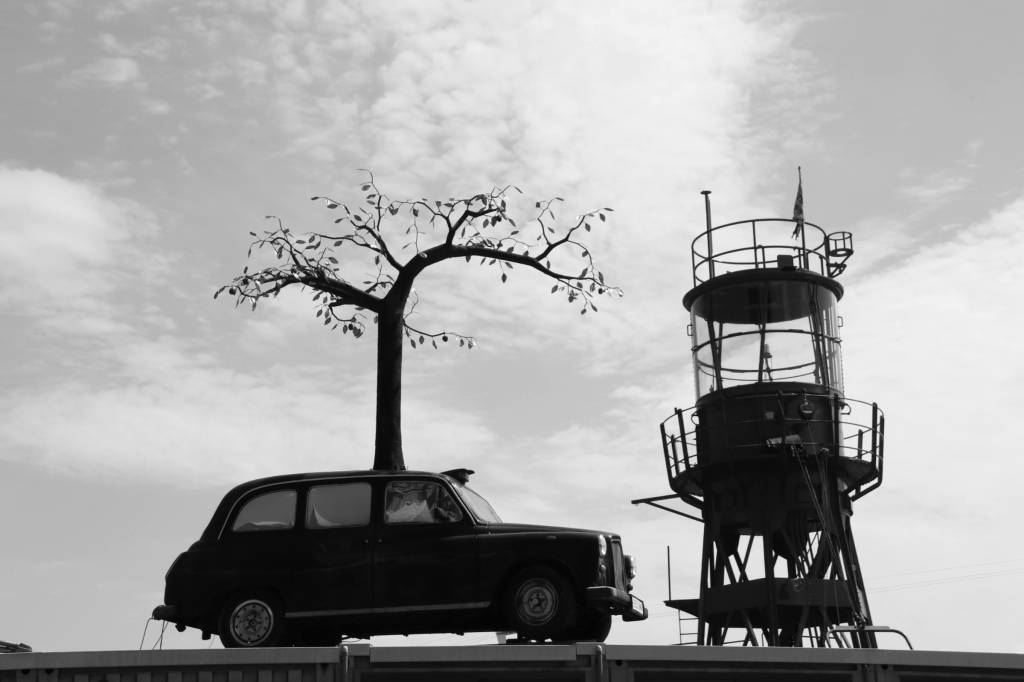
#04: Rooftop Taxi
This is no ordinary taxi. Not one you can hail anyway, as it sits on top of the cafe as an art installation and greets you as you enter Trinity Buoy Wharf. There are many other installations of interest that will keep you entertained as well.
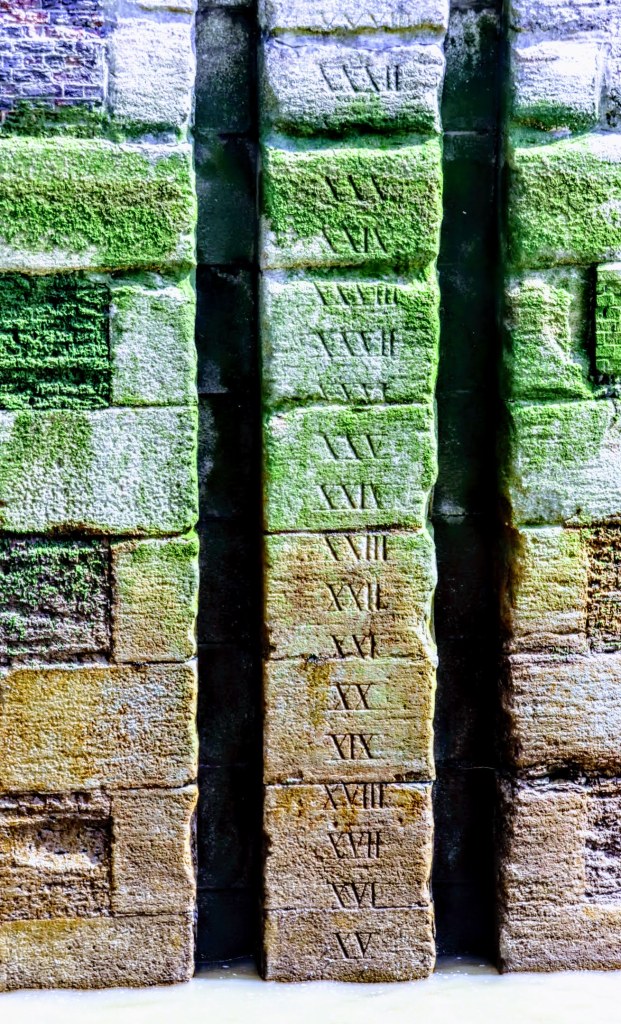
#05: Roman Markers
The East India Company built the East India Docks in the early 1800s, but due to containerisation in the 1960s, these were the first of London’s docks to close. These markings on the side of the entrance dock indicate the water depth.
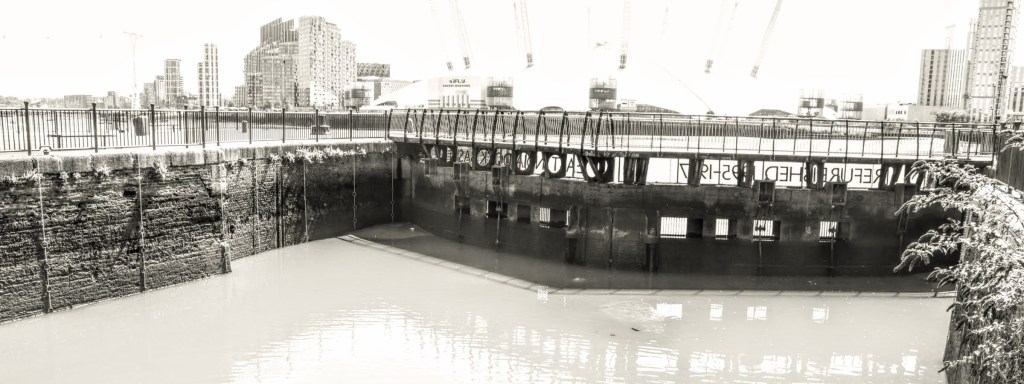
#06: East India Dock
The East India Dock Basin and the Entrance Dock are all that remain of the original East India Docks, which have all since been filled in as part of the area’s redevelopment in the 1990s. The view overlooking the Thames, directly opposite the O2, is quite spectacular.
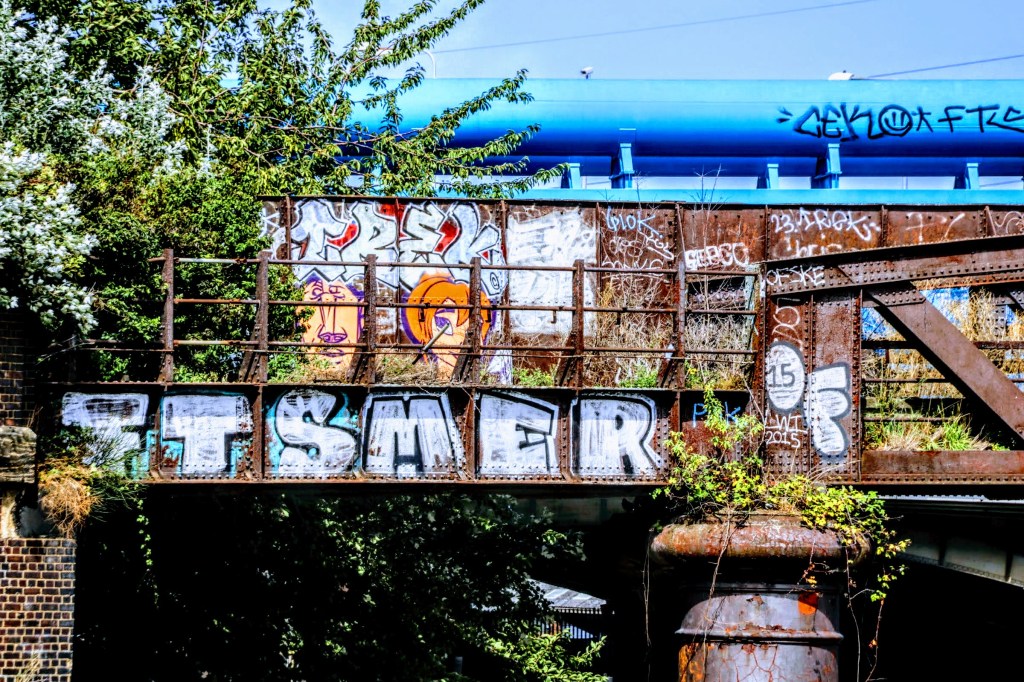
#07: Graffiti Highway
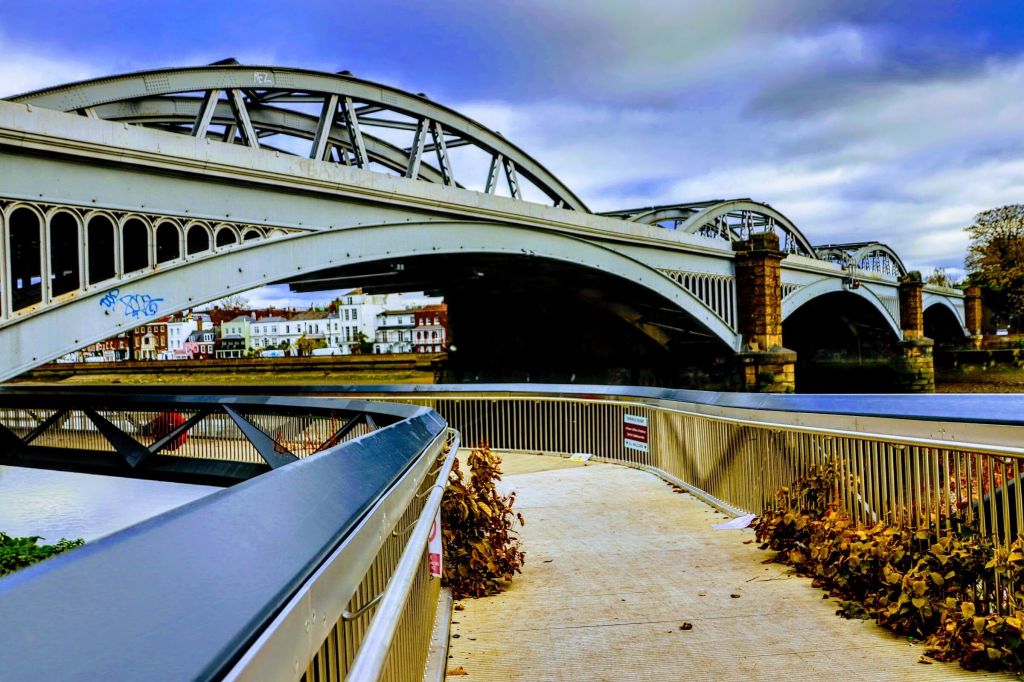
The area is riddled with footpaths, and at the eastern end of Bow Creek, as it flows under the A13, there’s a caged footpath leading to Bow Creek Ecology Park. Running alongside it is this redundant, now decorated, railway bridge.
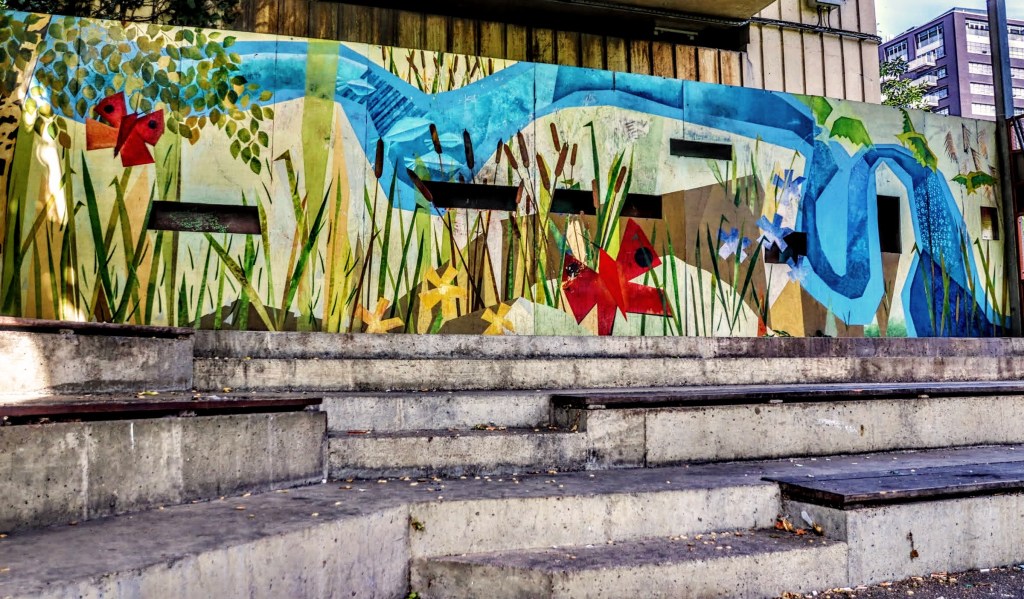
#08: Community Space
At the southern end of Bow Creek Ecology Park, under the elevated DLR, is this outdoor meeting space, but clearly a smoker’s haven, judging by the cigarette butts. The mural was created by artists Jan Rosser and Penny Sadubin in 2005.
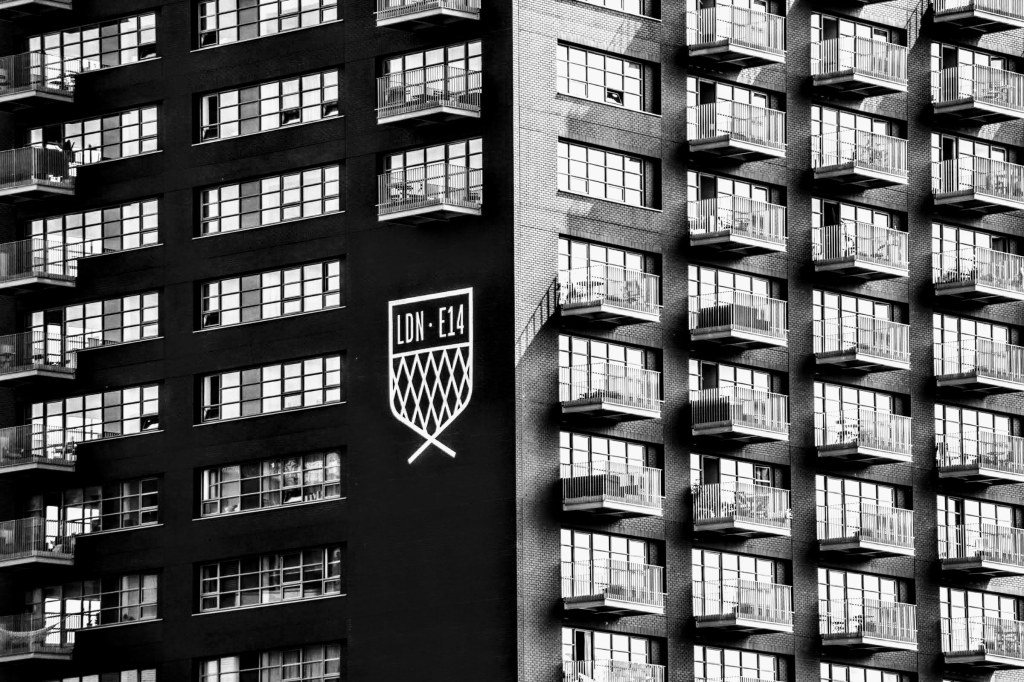
#09: Brunel Street Works
In case you’re not sure where you live, the postcode on the side of the new high-rise block of apartments overlooking Bow Creek is a bit of a giveaway. Caught in the sunlight, the brickwork and balconies look stunning.
Further Reading
Greater London Authority (2018) Docklands Regeneration and Development.
London Fandom (2023) Leamouth History Page.
Port of London Authority (2015) History of the River Thames.
Wikipedia (2024) Leamouth.
Hostettler, E. (2000). The Isle of Dogs: 1000 Years of History. London: Island History Trust. (Used for details on the Thames Ironworks).
English Heritage Archive. Records of Trinity Buoy Wharf and Bow Creek. (Consulted for Michael Faraday’s involvement).
London Docklands Development Corporation (LDDC) Archives. (1998). The Regeneration of the East End.
Power, A. (1999). Estates on the Edge: The Social Consequences of Urban Isolation. (Used for information on the “Leamouth Colony” housing).
Ballymore Group. (2015). London City Island: A New Cultural Quarter. (Reference for modern regeneration phases).


Leave a Reply