A Brief History
The bridge crosses the river in southwest London. It links Barnes with Chiswick and carries both railway lines and a pedestrian walkway. Its history reflects changing technology, safety concerns, and the expansion of the railway network.
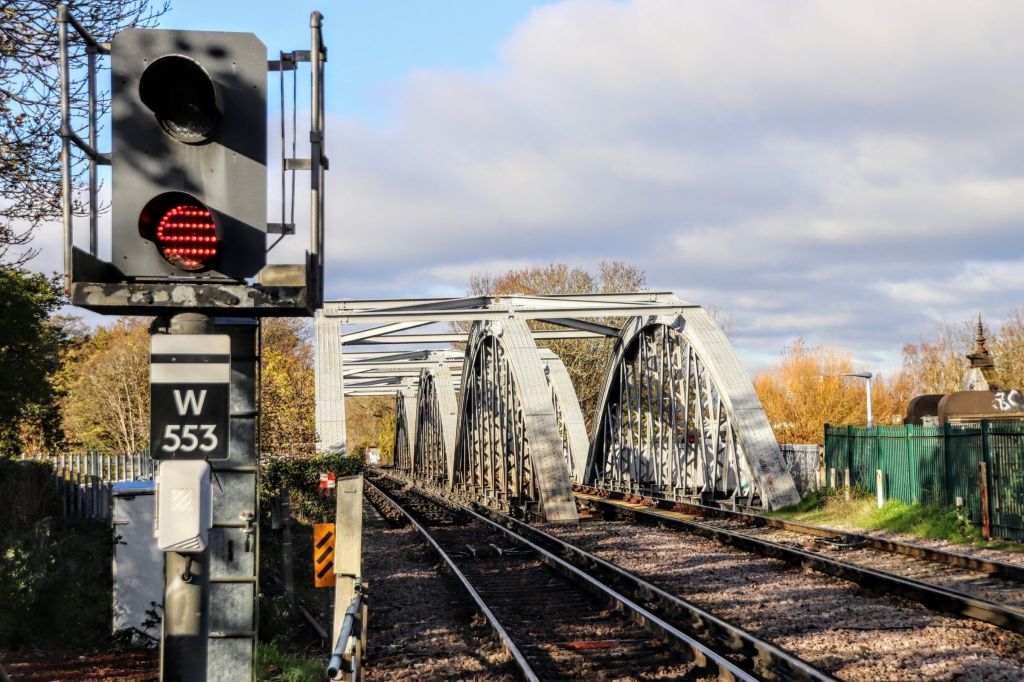
The original Barnes Railway Bridge was built in the mid-19th century, a time when railways were rapidly spreading across Britain. Barnes was then a small village, and railway companies were keen to improve connections between London and the surrounding areas.
The bridge was designed by the engineer Joseph Locke and constructed by Thomas Brassey. Work began in 1846, and the bridge opened in August 1849. It was built mainly from cast iron, a popular material at the time, and consisted of arch spans supported by brick piers. The bridge allowed trains on the Hounslow Loop Line to cross the Thames, making travel quicker and more efficient.
For many years, the bridge served its purpose well. However, by the late 19th century, attitudes towards cast iron began to change. Several bridge collapses elsewhere in Britain raised serious concerns about its safety, as cast iron could be brittle and prone to sudden failure. As trains became heavier and more frequent, engineers worried that older bridges might not be strong enough to support them. As a result, the London and South Western Railway decided that Barnes Railway Bridge needed to be replaced.
In the 1890s, a new bridge was designed by Edward Andrews. Instead of demolishing the old structure first, the railway company built the replacement bridge alongside it. The new bridge, completed in 1895, used stronger wrought iron girders and had three spans rather than arches. It was also wider, allowing it to carry two railway tracks and a pedestrian walkway. This made the bridge useful not only for trains but also for local people crossing the river on foot.
Interestingly, the original 1849 bridge was not removed. Instead, it was left standing next to the newer bridge, although it is no longer used by trains. This means that today, two bridges can be seen side by side, representing different stages in railway engineering history. In recognition of its historical and architectural importance, Barnes Railway Bridge was listed at Grade II in 1983, helping to protect it for future generations.
Today, Barnes Railway Bridge remains a working part of London’s railway system and a familiar local landmark. It is also well known for its connection to the annual Oxford and Cambridge Boat Race, as the crews pass underneath it during the race. Overall, the bridge is a strong example of how Britain’s industrial past continues to shape the modern landscape.
My Journey and Images
I visited the bridge, which sits between Chiswick Bridge (upstream) and Hammersmith Bridge (downstream), on the 25th of November 2025. My route took me along the shoreline in Barnes, over the bridge and into Chiswick Rugby Football Club. From there, along Dukes Meadows Promenade to Chiswick slipway and causeway before heading inland to Turnham Green.
I posted the images on Bluesky LinkedIn and Instagram between the ninth and 26th of January 2026.
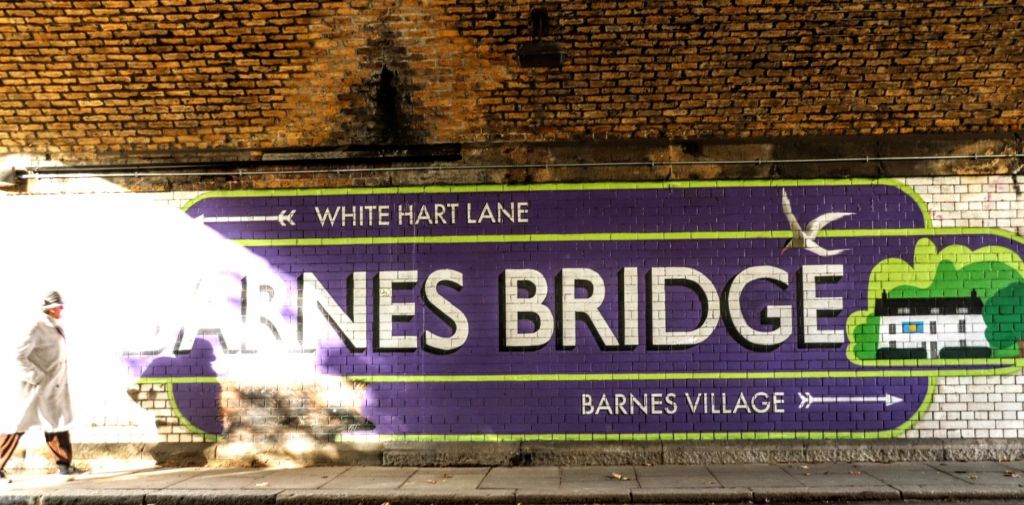
#01 Barnes Bridge
I didn’t know #Spurs played near Barnes Bridge. This lovely little mural under the bridge also serves as a directional map.
#02 The Old Bridge
The original bridge, seen here on the left, opened in 1849. Due to concerns about its safety, it was replaced in the 1890s. The new structure was wider and also included a footbridge. Plans to convert the old bridge into a garden walkway are now under consideration.
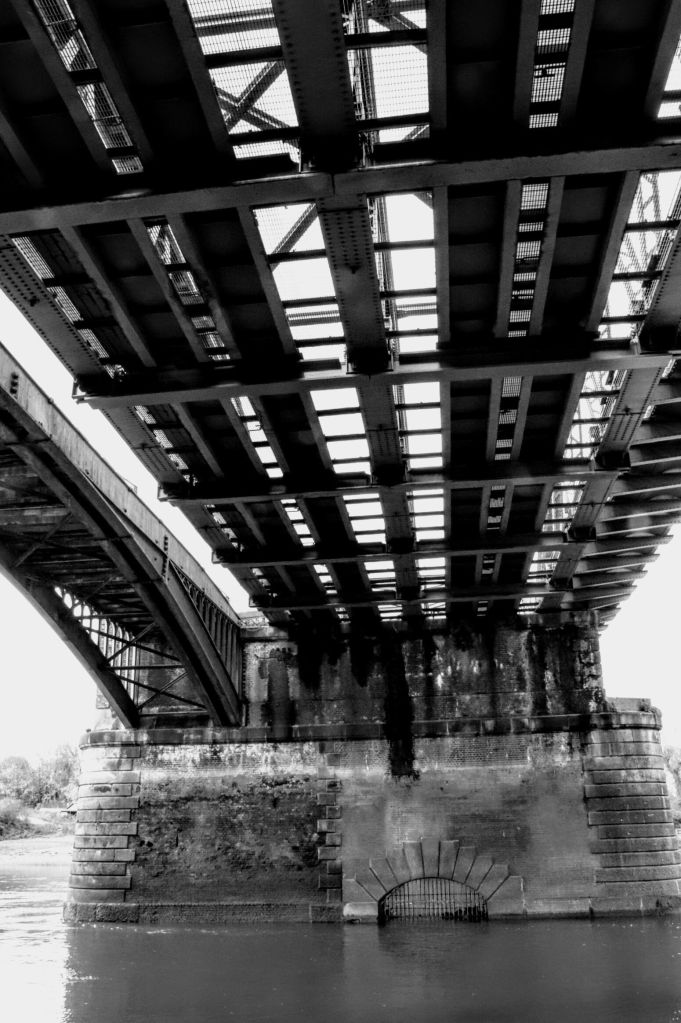
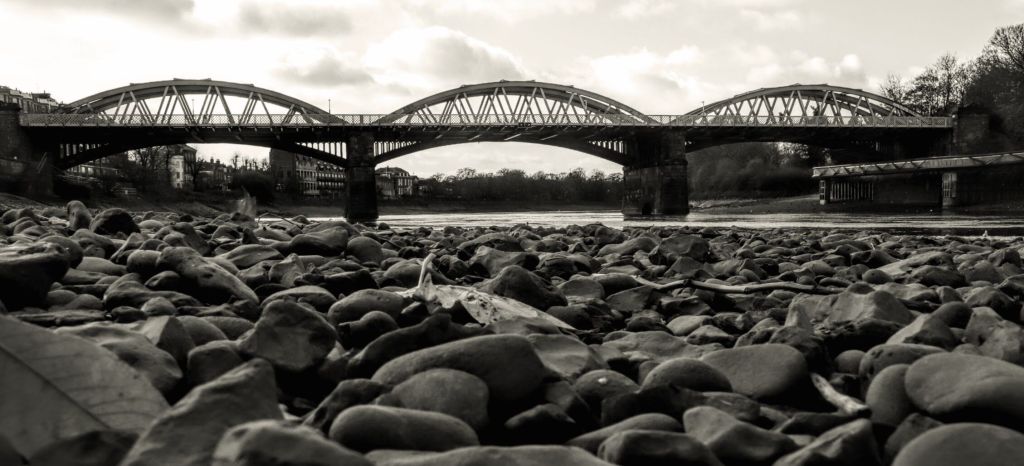
#03 Three Hoops
To get the best view of this Grade II listed structure, wait until the tide is out and walk into the middle of the river bed.
#04 Incoming
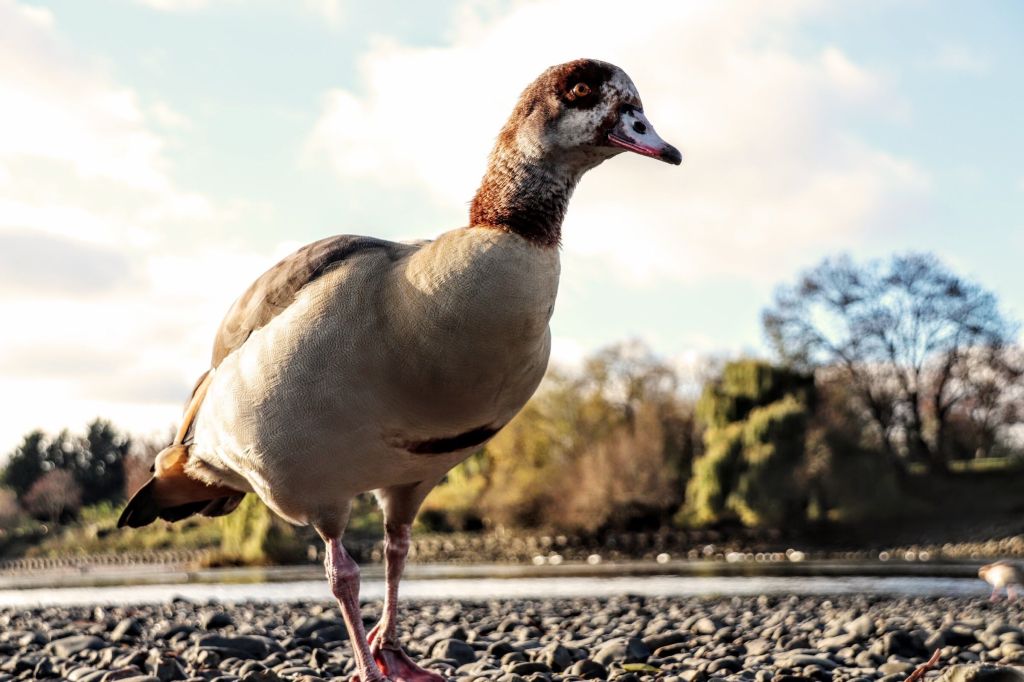
This was a first for me. A large flock of Egyptian Geese bombarded me as I crouched near the water’s edge. One inquisitive bird decided to approach gingerly for a closer look.
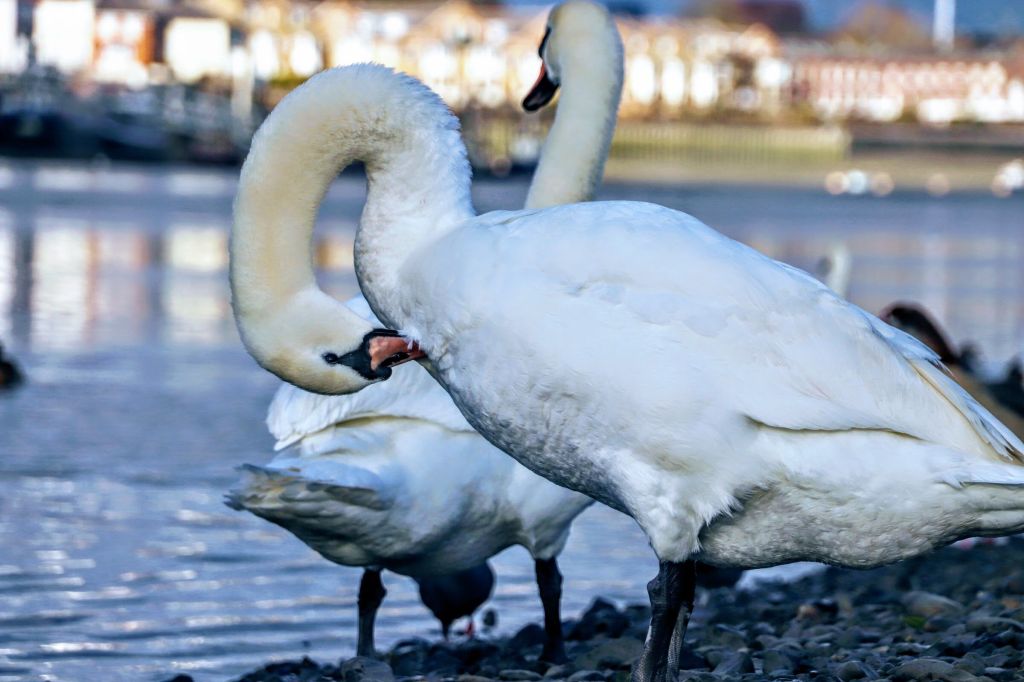
#05 Seven swans a swimming (almost).
I’ve learnt, over the years, not to get too close to these elegant birds, so it was a privilege to be able to get very close to them at the water’s edge.
#06 Footbridge Views
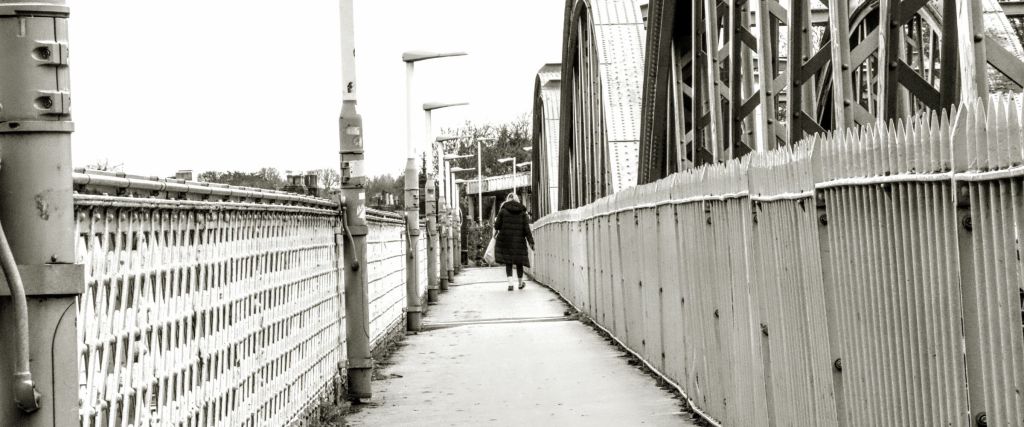
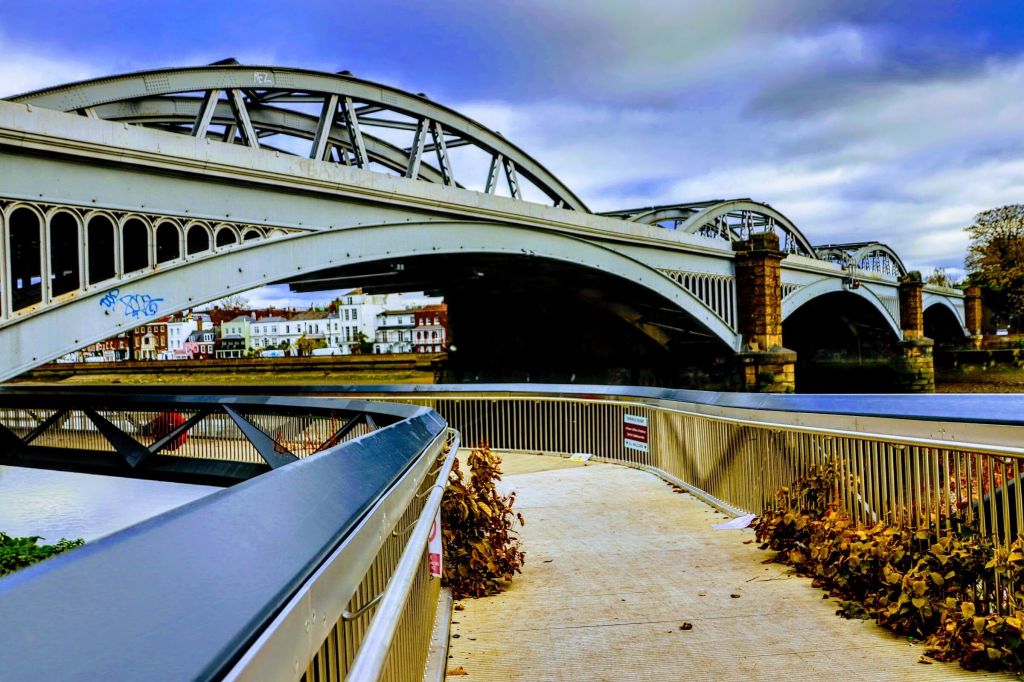
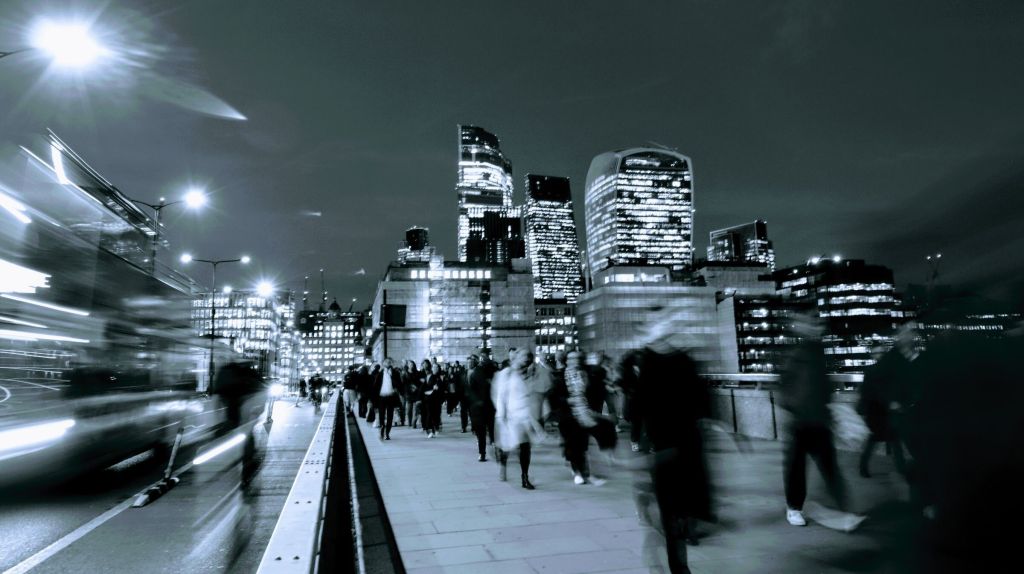
The bridge provides a handy link to Chiswick in the north, and from my limited time exploring, the footpath was well used with pedestrians and cyclists. The view to the east is quite spectacular, too.
#07 Lurid, Lame & Wink
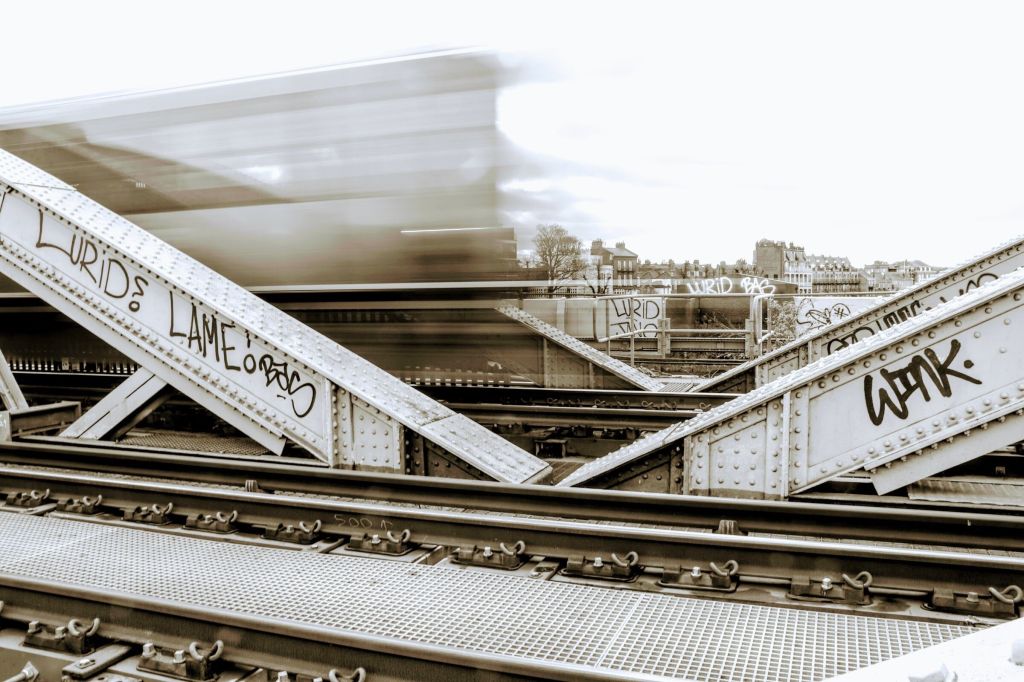
Alas, the graffiti taggers don’t respect a listed building or their safety when spreading their mark.
#08 Beware – Japanese Knotweed
The Dukes Meadows Footbridge was opened on the northern shore in 2023, providing uninterrupted access to the Thames Path. The image captures the ‘treated’ Knotweed with warning signs along the footpath.
#09 In! Out! In! Out!
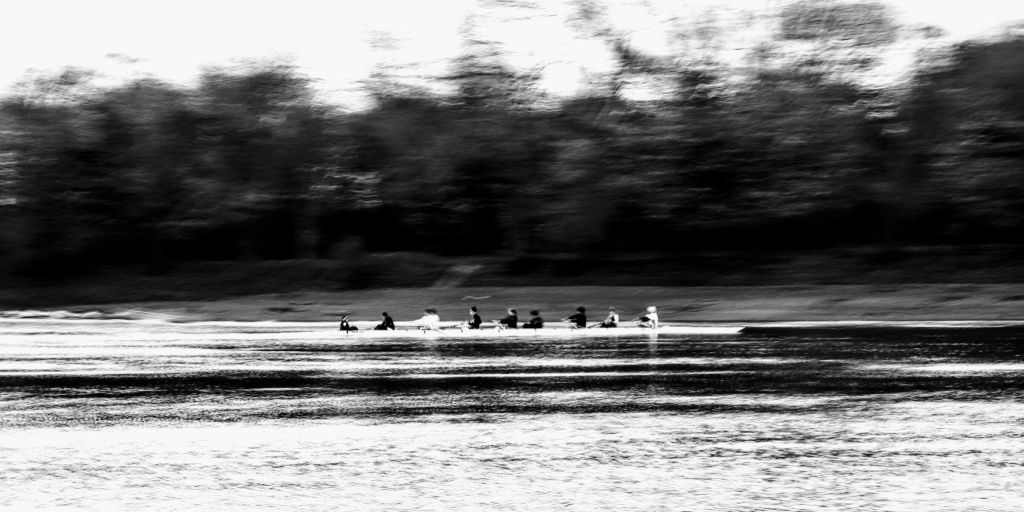
This was one of several ‘eights’ navigating the river, being coached by a nearby motor boat. It’s slightly out of focus, but that helps with the perception of movement.
Further Reading
Wikipedia – Barnes Railway Bridge
Abandoned Thames railway crossing lined up for garden bridge transformation
 Photos By RJT
Leave a comment