A Brief History
Westminster Bridge is a famous Grade II* listed landmark with an important place in the city’s history. It crosses the River Thames, connecting Westminster on the north bank with Lambeth on the south. The development of the bridge reflects London’s expansion. It showcases advances in engineering. It also highlights the significance of Westminster as the centre of British government.
Before the 18th century, London Bridge was the only permanent bridge across the Thames in central London. This caused serious problems as London grew larger, particularly towards the west. People living near Westminster had to rely on boats to cross the river, which was slow and expensive. Many watermen opposed the idea of a new bridge because it threatened their livelihood. Despite this resistance, Parliament recognised the need for improved transport. In 1736, an Act of Parliament approved the construction of Westminster Bridge.
The first Westminster Bridge was designed by Charles Labelye, a Swiss engineer. Work began in 1739 and presented major difficulties because the Thames riverbed was soft and unstable. Labelye used an innovative method involving caissons, which allowed workers to build strong foundations underwater. Although the project faced criticism and delays, the bridge was completed in 1750. It was built from Portland stone and had 15 arches. At the time, it was admired for both its size and appearance and became a popular subject for artists.
However, the first bridge soon began to show signs of weakness. The stone suffered from erosion, and the foundations slowly subsided due to the river’s strong currents. By the early 19th century, repairs were frequent and costly, and the bridge was considered unsafe. After several inspections, it was decided that the best solution was to demolish the structure and replace it entirely.
The current Westminster Bridge was designed by Thomas Page with decorative features by Charles Barry, who also designed the Palace of Westminster. Construction began in 1854, and the bridge opened in 1862. This new structure was built from cast iron, which was stronger and more durable than stone. It has seven arches and was designed in a Gothic Revival style to match the nearby Houses of Parliament.
A distinctive feature of Westminster Bridge is its green colour. This was chosen to represent the House of Commons, which uses green benches, creating a symbolic link between the bridge and Parliament. The bridge also features decorative ironwork, including shields and ornate details typical of Victorian design.
Today, Westminster Bridge remains an important crossing and a popular tourist attraction. Although it has undergone restoration work over the years, it continues to serve its original purpose of carrying road traffic along the A302.
My Journey and Images
I visited the bridge on the 18th of November 2025. I posted the images on Bluesky and LinkedIn between the 14th of December 2025 and the eighth of January 2026.
My route took me through Victoria Tower Gardens, across Lambeth Bridge (upriver) and along the SouthBank. I crossed over the river to The Embankment over Hungerford Bridge & Golden Jubilee Bridges (downriver) before returning to Westminster Bridge.
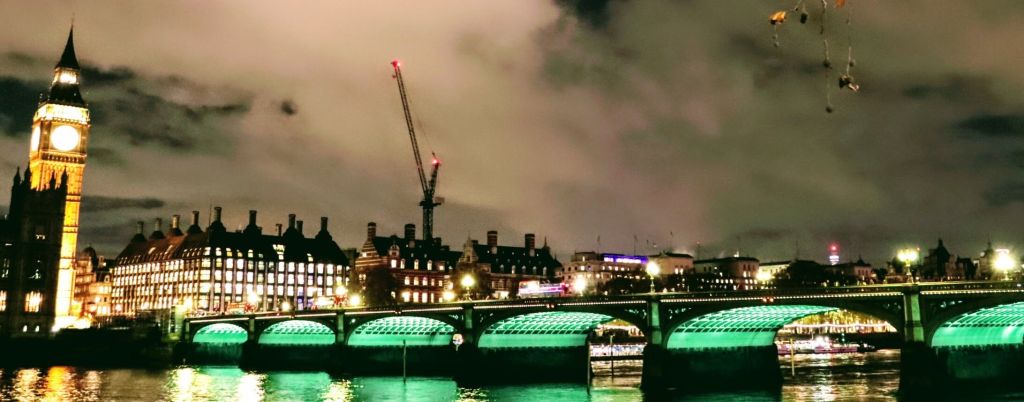
#01 All lit up
The current bridge, built in the mid-1700s, was opened in 1862. Here it is, in full, glorious technicolour, with the London Eye as its supporting cast.
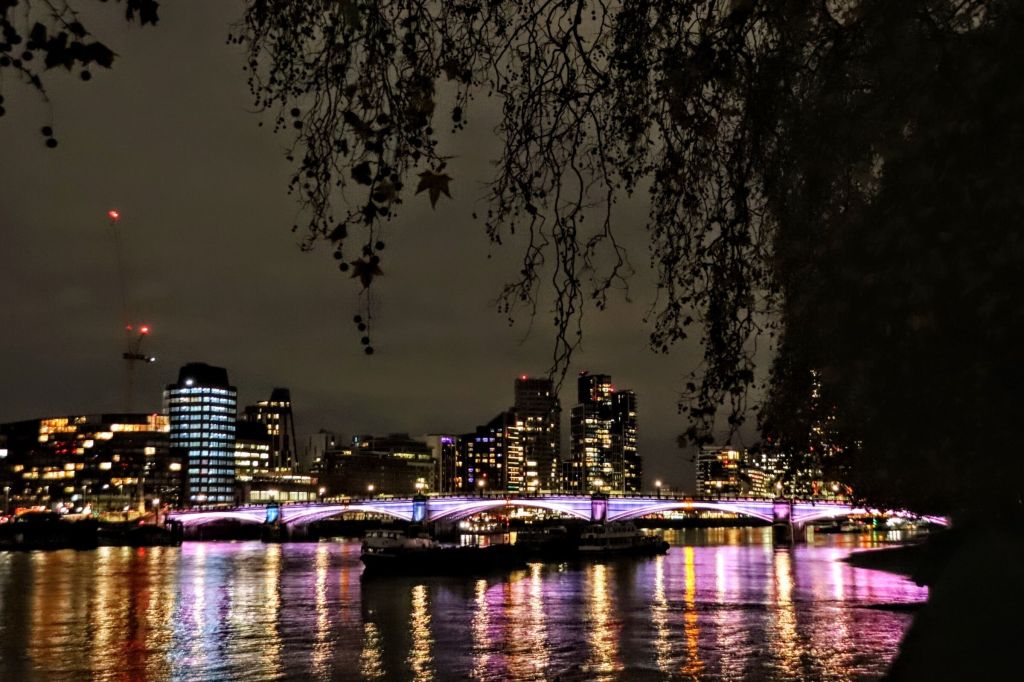
#02 Lambeth Bridge
Looking right from Victoria Tower Gardens South, you see the bridge that carries traffic from Millbank and Lambeth. Currently, due to extensive works, traffic only flows north into Millbank.
*********************************************************************
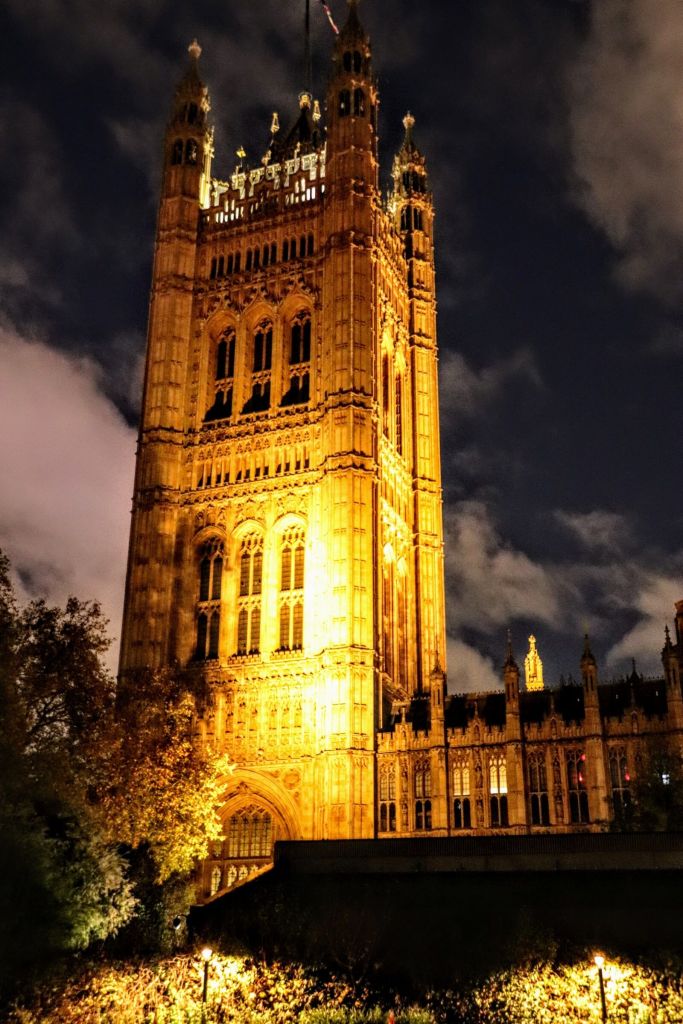
#03 Victoria Tower
At the southern end of the Palace of Westminster, the brightly lit tower dominates the surrounding gardens.
*********************************************************************
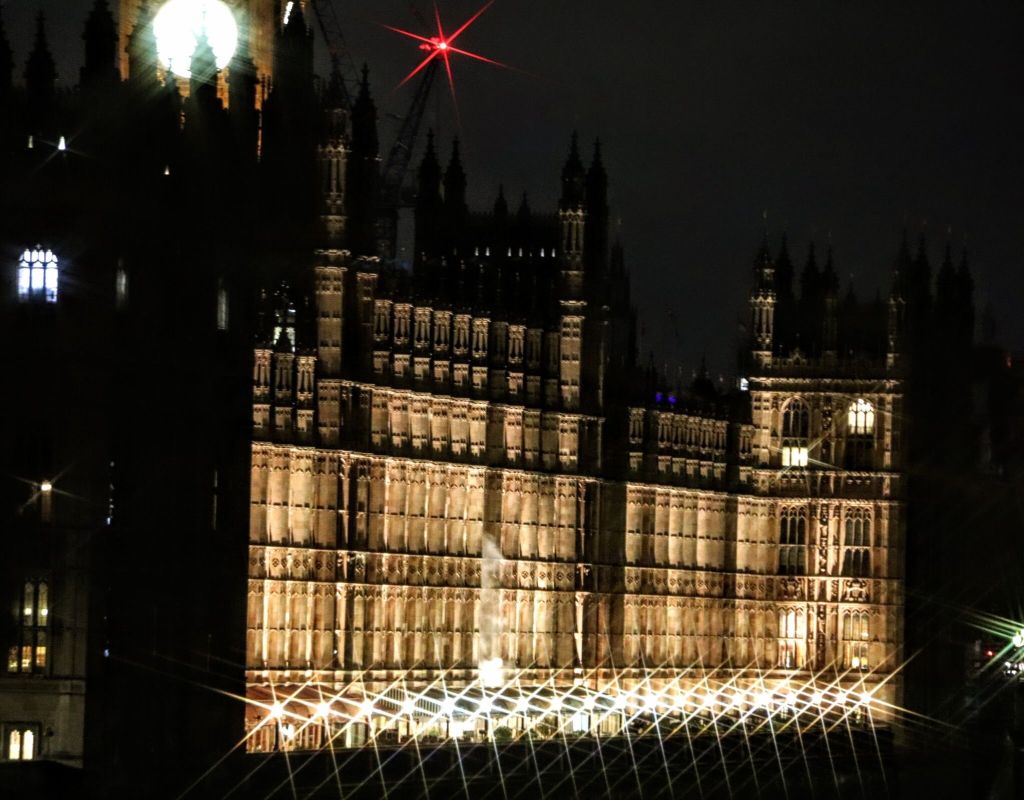
#04 Sparkly Palace
The Palace of Westminster or the Houses of Parliament – call it what you like. Here it is, with some playful starburst filter effects.
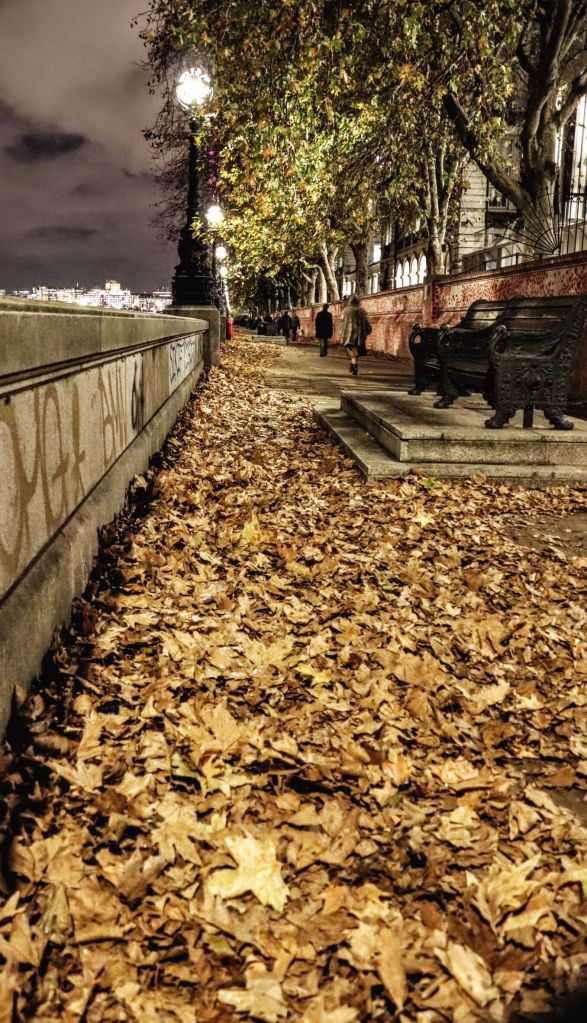
#05 Fallen memories
The Albert Embankment is the designated home of the National COVID Memorial Wall. It runs along the side of St Thomas’ Hospital. The fallen autumnal leaves symbolically mirror the memories of those loved ones lost to COVID.
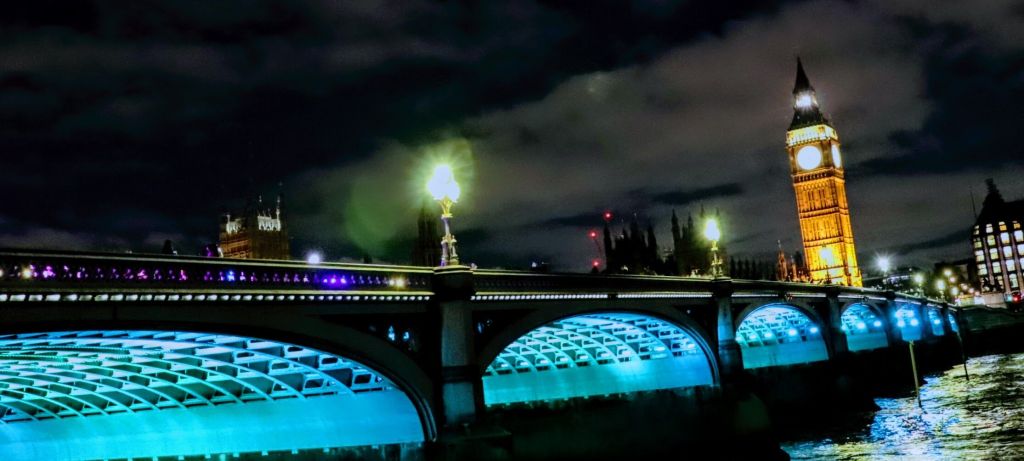
#06 Green or Blue?
The ever-changing Colourful cavalcade provides spectacular imagery when looking east or west. It rewards those who brave the chilling evenings along the Southbank.
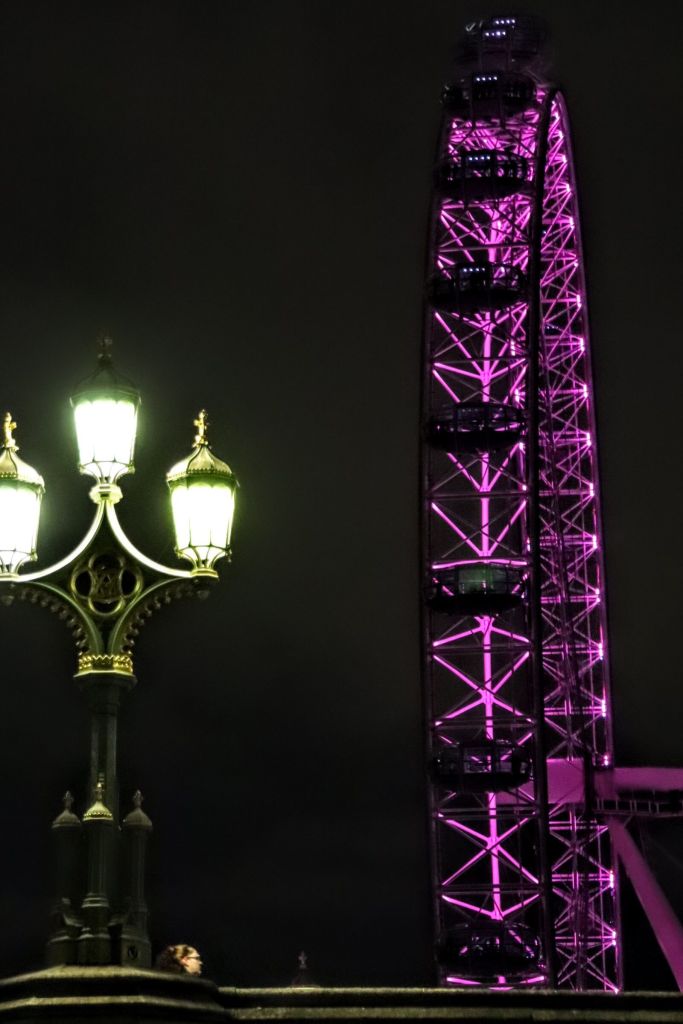
#07 Lights on the Eye
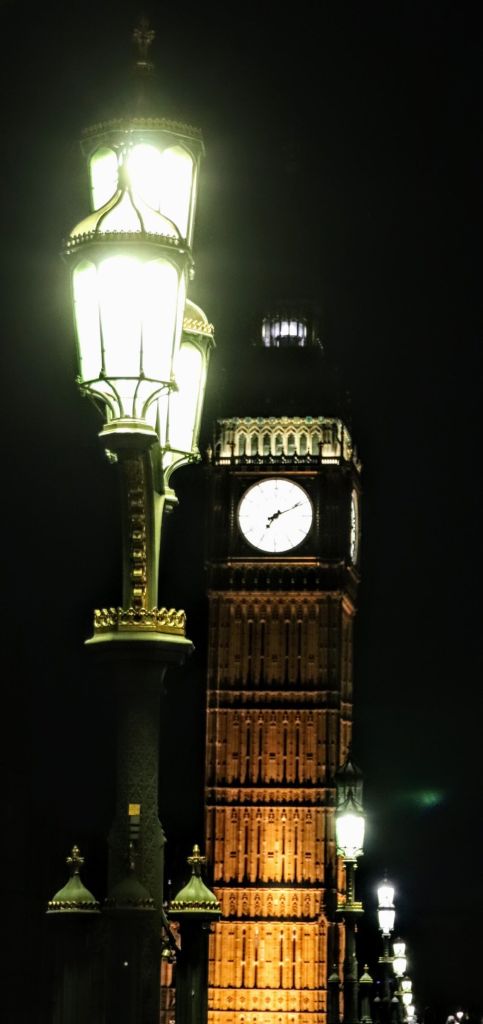
Westminster Bridge is adorned with Gothic detail, thanks to the Victorian architect Charles Barry, as seen in these decadent lanterns, with a side-on view of the London Eye.
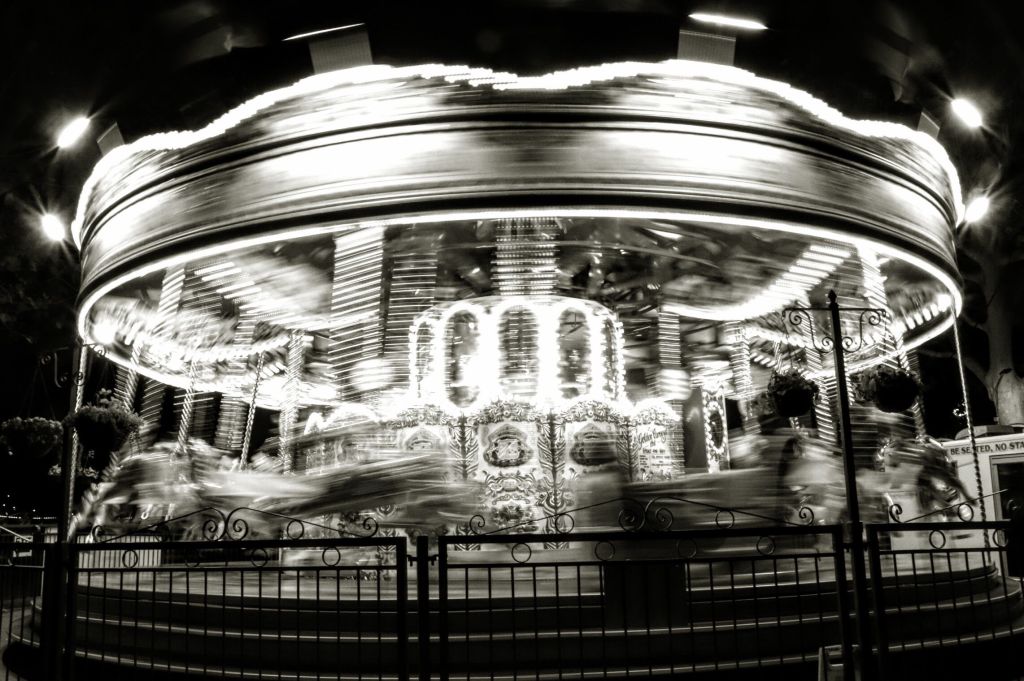
#08 South Bank Carousel
All the fun of the fair along the Southbank. And at nighttime, the lights just draw you in.
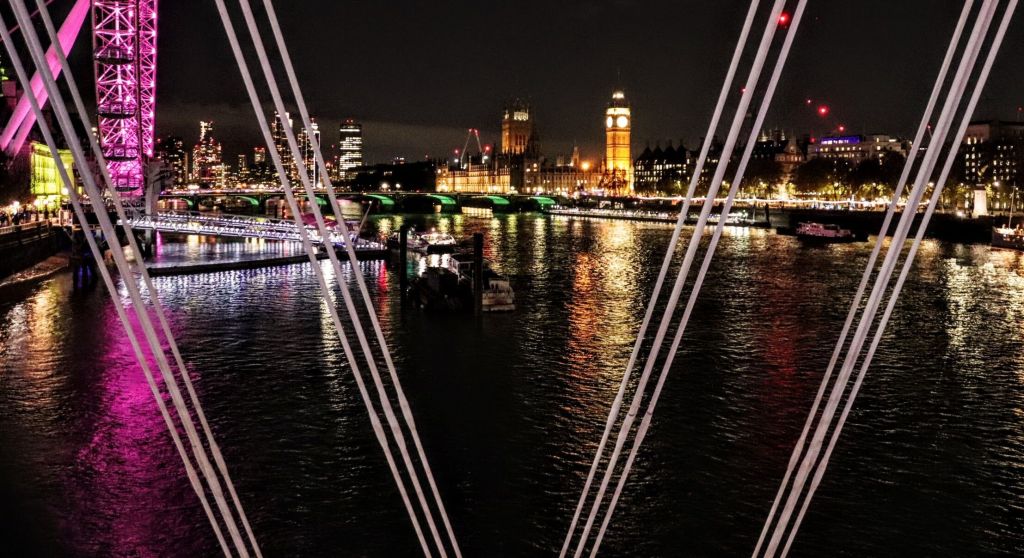
#09 Caught in a V
Looking upstream through the stanchions of the Golden Jubilee Bridge offers a rather splendid view of the bridge. You can also see its immediate surroundings and beyond towards Vauxhall.
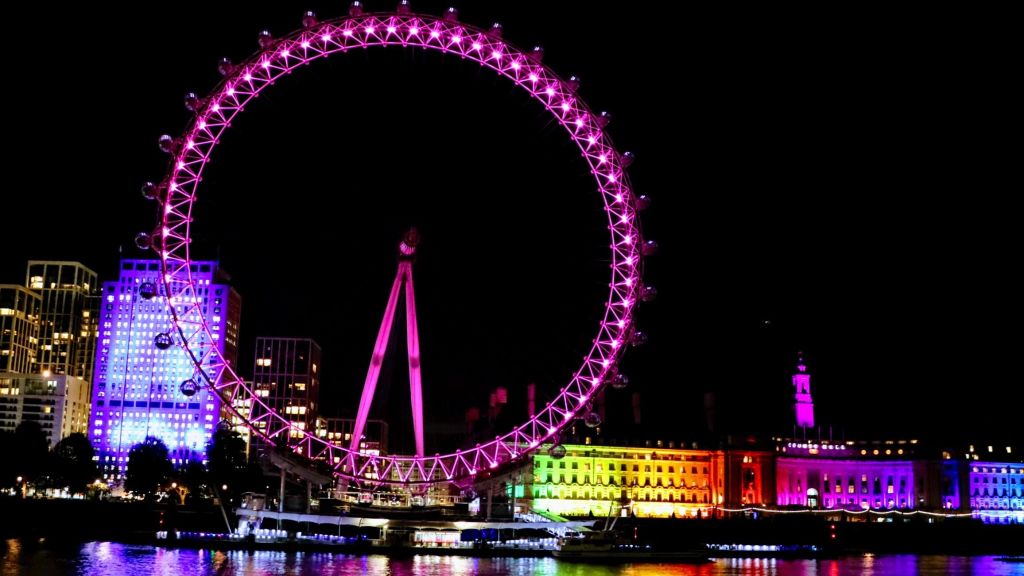
#10 Technicolour Thames
The Southbank is gearing up for the festive season and the annual New Year Celebrations with its colourful display, seen here from The Embankment.
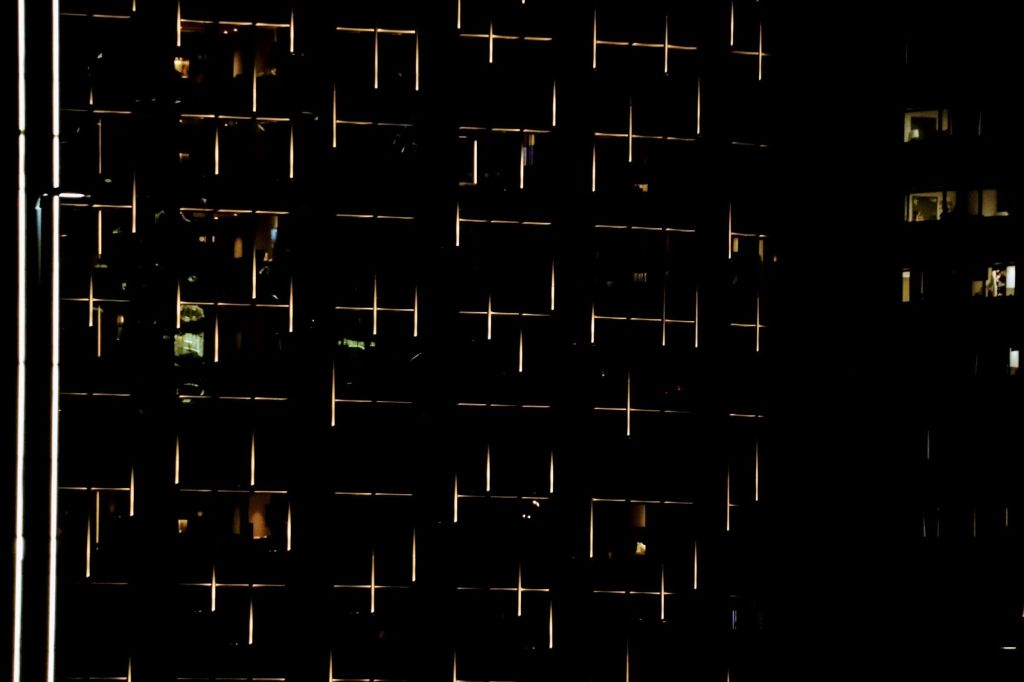
#11 Static Lighting
Can you tell what it is? If you’re standing on the bridge and look south, you’ll see the glass-fronted Park Plaza acting like a guardian of the south. The windows at night offer an interesting geometric illusion.
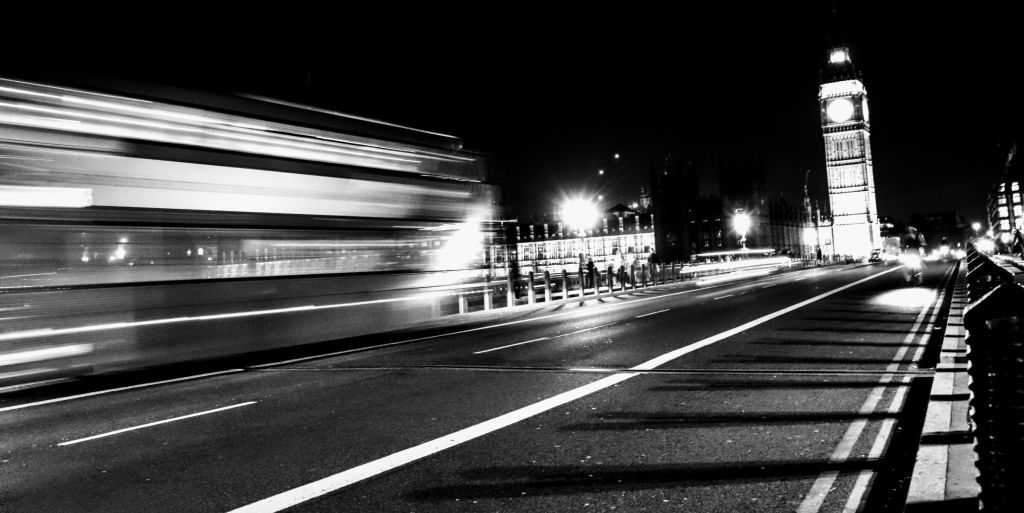
#12 Ghostly Buses
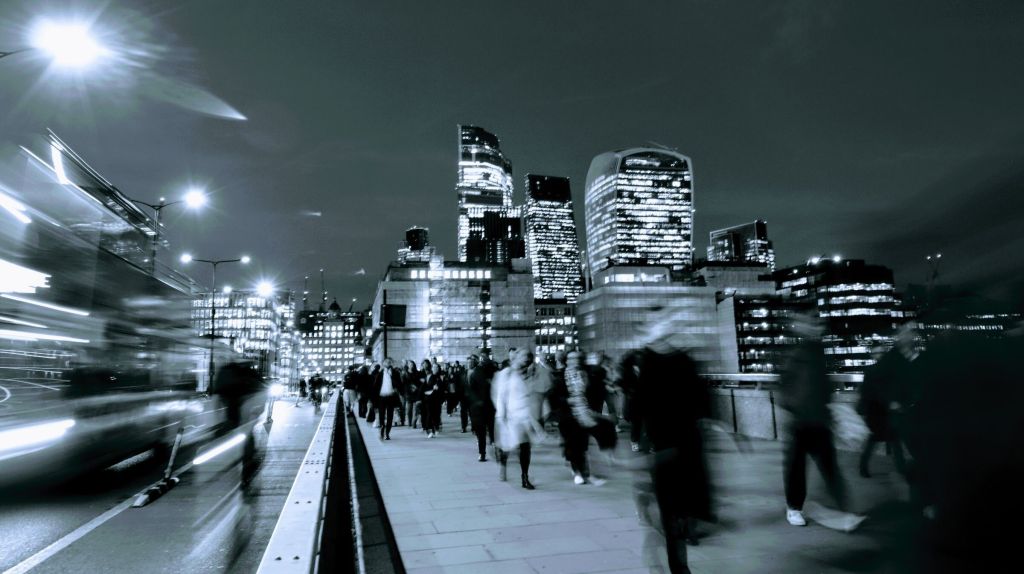
A wide-angle view of the bridge at ½ a second exposure captures the movement here. Need to be careful where to stand to avoid the speeding cyclists – Great fun, though.
#13 What’s the time?
19:10 hrs of course
Additional Reading
 Photos By RJT
Leave a comment