
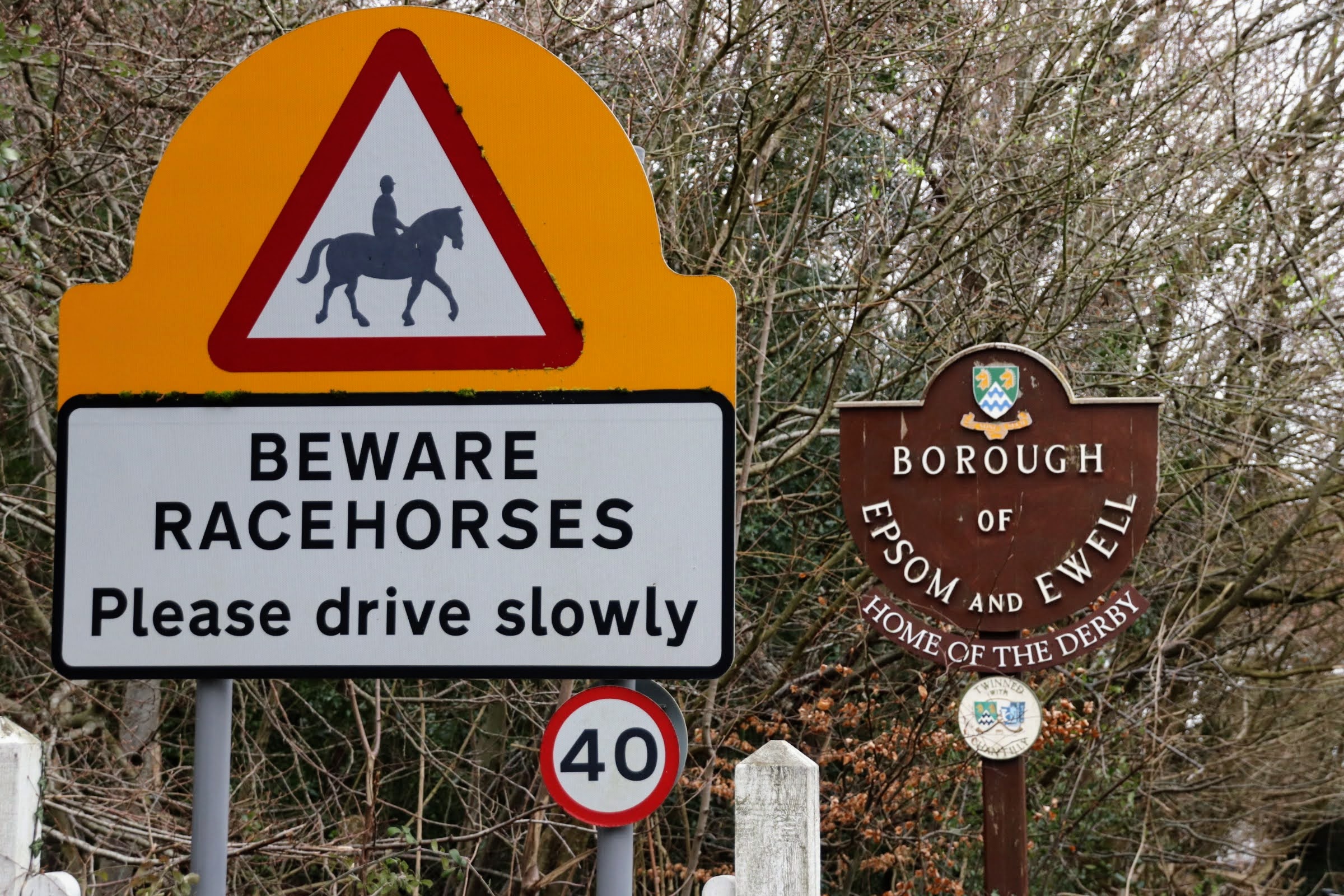
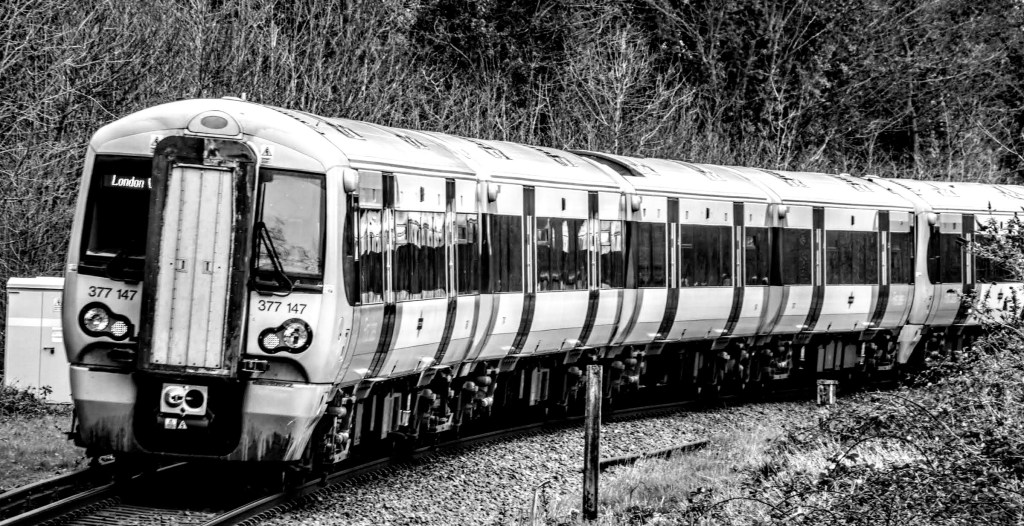
This station has to be one of London’s newest stations, having only opened in 1989 with a single-track branch line from Sutton. Southern Rail operates Class 377 trains from London Bridge on a half-hourly shuttle service arriving at a single platform unstaffed station. The literal end of the line looks like the back of someone’s house – it is, in fact, the offices of a property agency and a kindergarten.
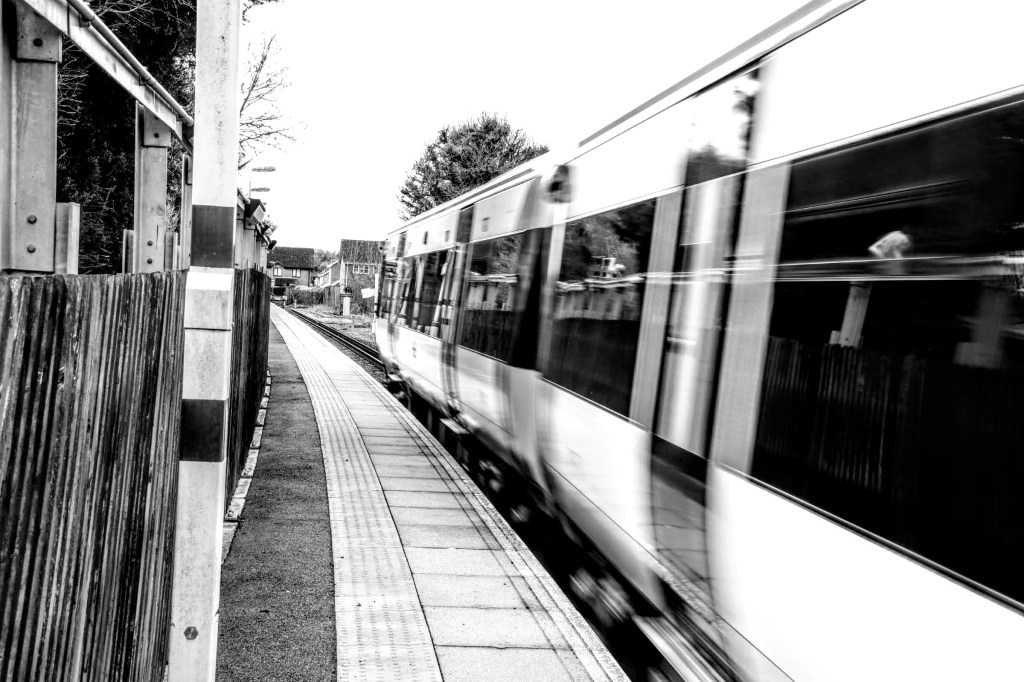

There is a small car park, and passenger traffic was light on my arrival. I was the only passenger getting off the train, with only a few others waiting to get on the returning service. I suspect this might not reflect the peak travel times, though.
Now hang on! Surely there was a station at Epsom Downs before this, especially as the Racecourse isn’t far away. As the crow flies, it’s a mile, and by foot, it’s 1.2 miles (or 2 kilometres). Yes, the original station with nine platforms stood half a kilometre closer to the racecourse than this station, but it was demolished in 1989, and the land was developed for a housing estate.
There’s a brilliant article on the Disused Stations website which charts the history of the original station that opened in 1865 to accommodate racegoers. But the timeline is fascinating, so here’s the potted version:
- 1730: Epsom Downs Racecourse hosts twice-yearly race meetings
- The mid-1800s: the demand for a station near the racecourse becomes evident, but the Epsom Downs Grandstand Association resists attempts to build one near the racecourse
- 22nd May 1865: Epsom Downs station opens with over 70,000 racegoers passing through for the May Derby. The Royal Train also travels here
- 1901: Tattenham Corner Station opens, resulting in passenger numbers falling as the station is much closer to the racecourse
- 1925: The Royal Train now makes its way to Tattenham Corner instead
- 1969: All but platforms 4 and 5 were in use
- 1981: a fire destroys the station’s signal box
- 13th February 1989: the new station opens.
A Walk to and Through the Races
Having visited the racecourse just over six weeks ago, when I stopped at Tattenham Corner Station, I had an idea of the lie of the land, so I knew what to expect. Except for the racecourse, there was little else around other than residential properties and open land to explore.
Consequently and unusually, I had planned my destination following a conversation with a couple I met while on the racecourse. Ann and Peter suggested I visit the Centenary Wood in Langley Vale, which was ‘just over the brow and down the hill from the top of the course’. Thankfully the forecast rain stayed away.
My route took me through the site of the old station along the new Bunbury Way. The properties are very fashionable and predominantly detached, and I am no doubt much sought after. However, it was a bit of a soulless walk until I reached Longdown Lane South and the expanse of Epsom Golf Course and its 18 holes that crisscrossed three roads. The view from the 16th tee showcases London nicely.


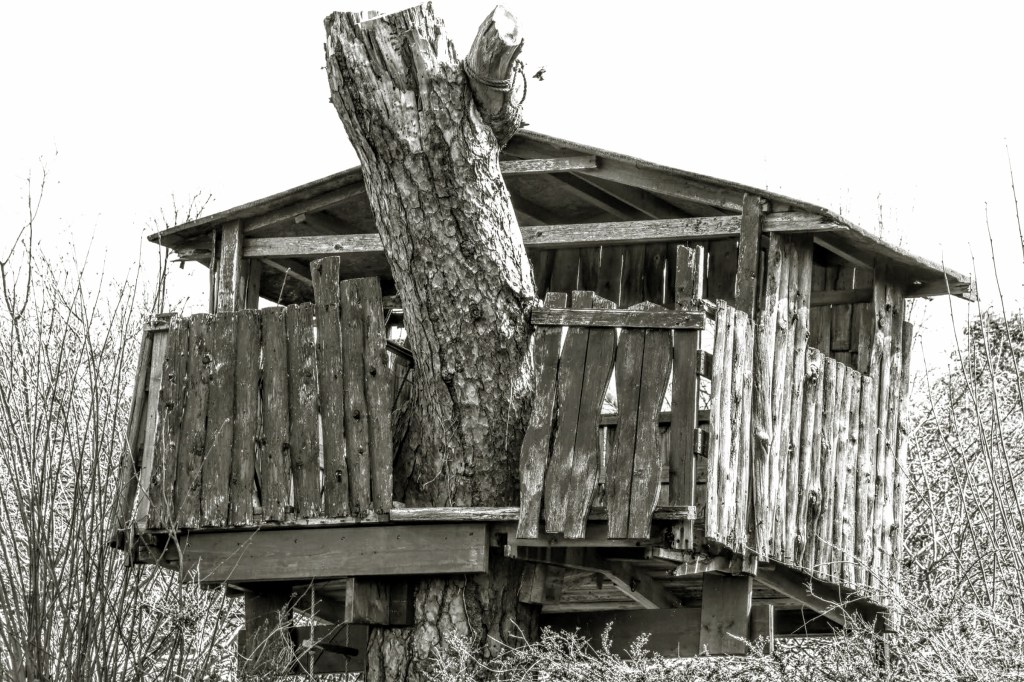
The walk to the racecourse takes me along Old London Road with high-fenced residential property on my left and shrubbery on the right partly hiding the golf course. I’m always looking for interesting images, and here are a few I collected along the way.



To reach my intended destination, I decided the quickest route was across the racecourse and climb The Downs. The views are stunning, and I did have some companionship along the way.
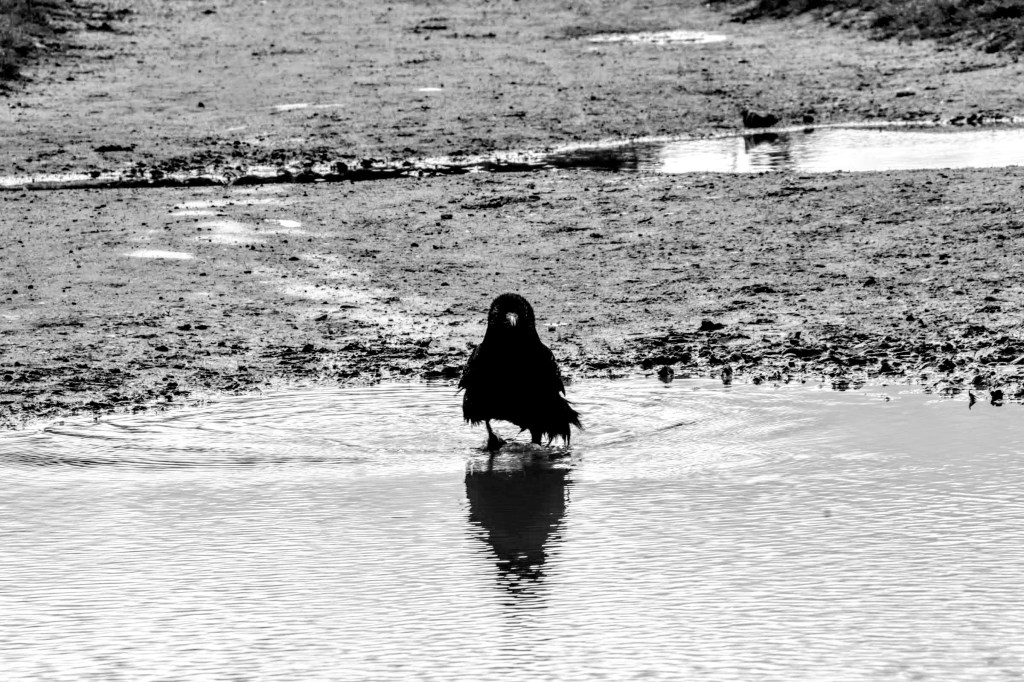
The last time I visited, the fields were littered with crows, as they were again today. This may be because the rich horse manure may attract them, or more likely, the associated bugs. Anyway, a few crows were preening their feathers in a muddy pool. But of course, as I neared, they fled except for this soloist.
And I make no apology for the second image here. Well, what else would you expect to find on a racecourse?
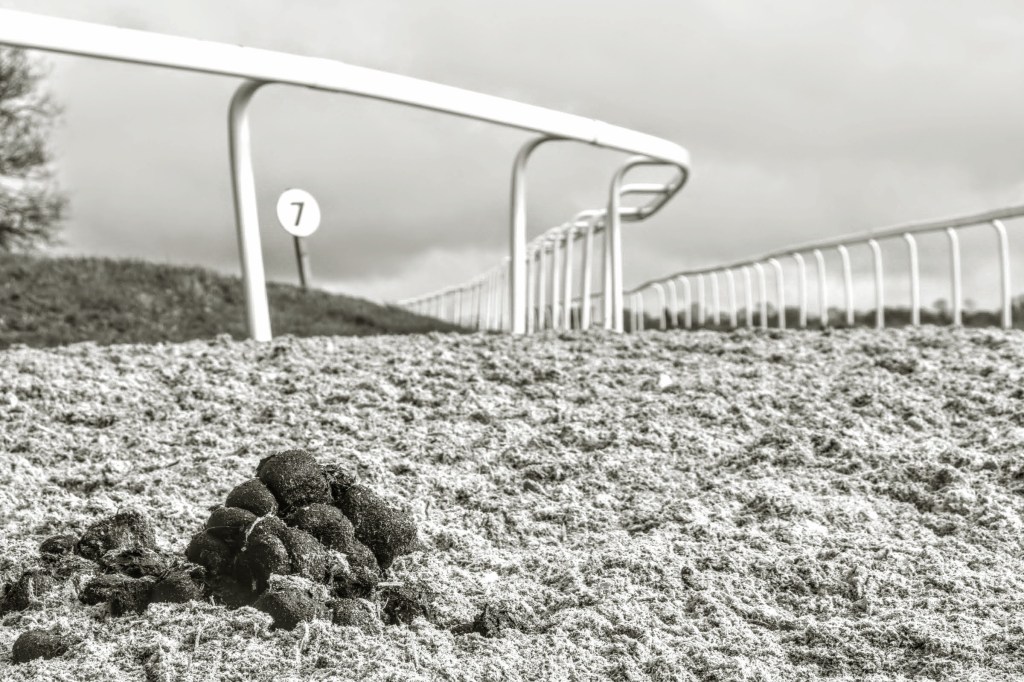
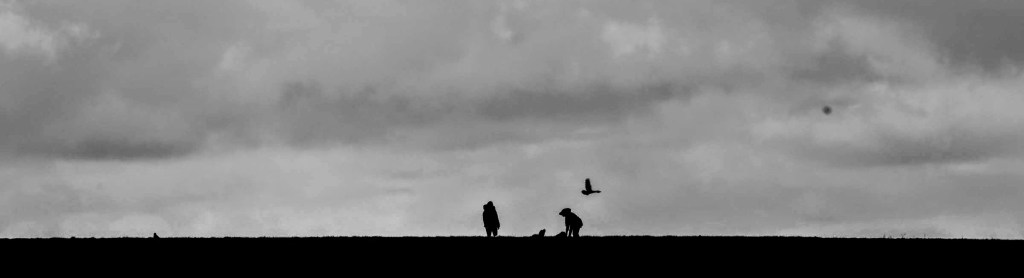
I took the following couple of shots halfway across The Downs, which are a testament to my 18-200mm Sigma zoom lens capability. I had the lens at 200mm and the aperture fixed at f18 to maximise the depth of field.
The first is of a couple of dog walkers with their dogs. I took a few sequences, and when I saw the bird flying past, it helped to make the picture more interesting. The second is looking due north, and I hadn’t realised the Wembley Arch was so prominent. As the crow flies, it’s just over 17 miles away, and I think the white arch complements the racecourse railings nicely.

Before reaching my destination, I was following these three experienced ramblers. It turns out we were headed for the same destination, but I kept my distance as I didn’t want them to feel I was stalking them in any way. I did observe, though, that the two ladies, centre and left, were leaving the one on the right to lead the way.

I approached the Wood from the north, having yomped over the racecourse and through the adjoining woodland. But there are several ways to access this 259-hectare site, with new parking facilities opening soon on Headley Road. There’s loads of information on the Woodland Trust website and a detailed account on Catherine Boardman’s Cultural Wednesday website, which I’d strongly recommend you read.
It’s a destination to enjoy for many reasons. Its woodland setting is peaceful and tranquil, where you can listen to the birds or enjoy the country views. Although, during my visit, a couple of helicopter flights went overhead. I’m unsure whether they were ‘trips’ to view the area from the air or some other pleasure purpose. But thankfully, they didn’t hover around for long.
The Woodland Trust acquired land here in 2014 to create a First World War centenary project site for England. It’s the largest of their four projects and occupies land where Kitchener’s army once camped as they prepared for their despatch to the Western Front. Most never to return.
Over 180,000 sapling trees were planted in 2015 as a memorial to those who camped nearby. And walking through them, you get a scale of the numbers involved, helping you to contemplate what it must have been like for those men waiting for their fate to map out in the coming days and weeks.
Walking around, you can study and enjoy the many artworks designed and created to symbolically commemorate those that died. Each has a specific way of focusing on their stories. I feature one of these in my Picture of The Day – Jutland Wood. Here are some others:
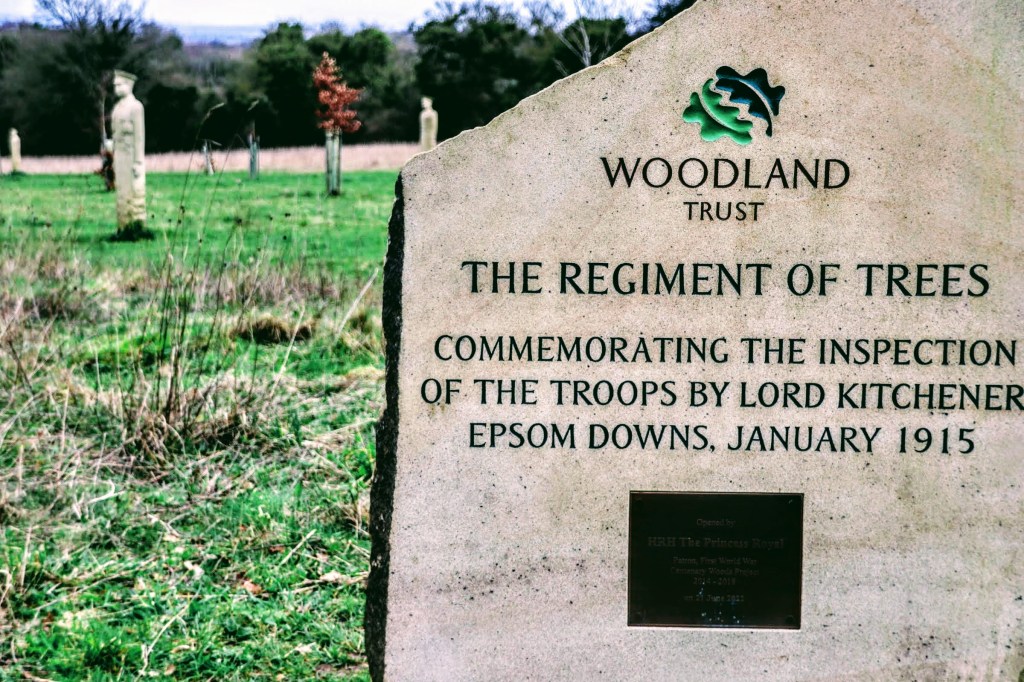
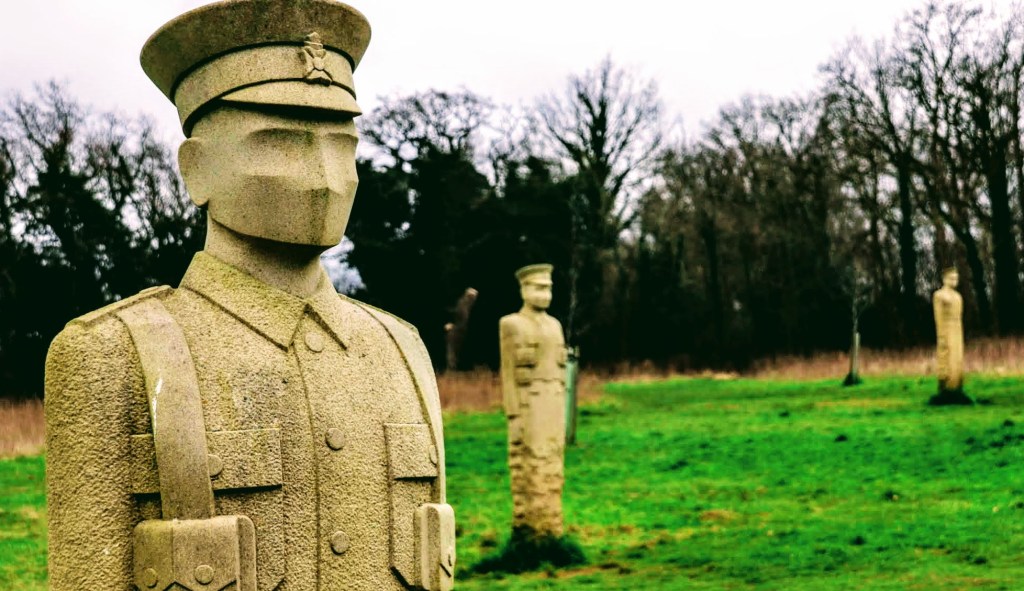
The Regiment of Trees – 12 figures carved from sandstone by Patrick Walls stand among a mix of trees to represent the harsh conditions some soldiers endured whilst waiting for Kitchener to inspect his troops in January 2015.
Witness – this is a six-metre tall construction of 35 pieces of oak. You can stand or sit in the middle and read the carved inscriptions from 20th Century poets. The work was created by John Merrill, inspired by images of desolate landscapes and desecrated trees painted by Paul Nash, the official war artist.

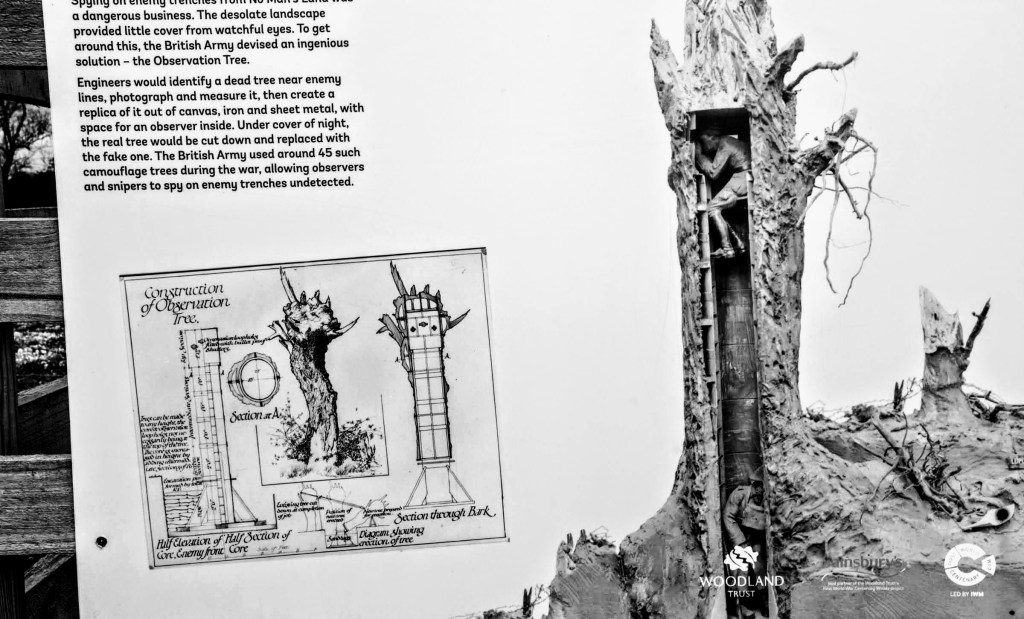
Avenue of Cherry Trees – sponsored by Sainsbury’s, the trees still encased in crates to protect them from deer have information boards with stories about how the soldiers lived and trained. This one is fascinating, as it tells why Observation Trees were conceived and used in the trenches.
Picture of the Day – HMS Nomad
Within the 641 acres that make up Langley Wood is one area called Jutland Wood. It was created to commemorate one of the most important Naval battles of World War I – the Battle of Jutland, where over 250 ships fought to control shipping lanes in the North Sea.
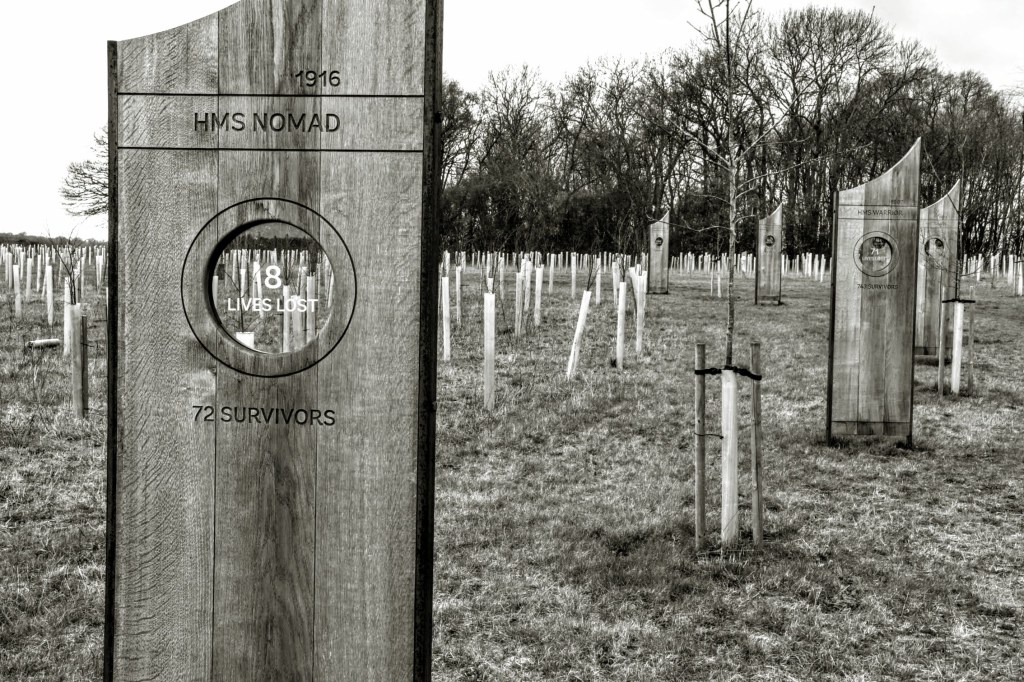
Fourteen wooden porthole markers commemorate each of the British warships sunk in battle. The numbers on the plinths represent those on board and those who lost their lives. So if you visit, you’ll count 6,097 lives lost, reflected by the 6,097 saplings planted to remember each of the Royal Naval lives lost. Andrew Lapthorn, a Chatham-based fine craftsman and furniture maker, created the porthole plinths.
HMS Nomad was one of 79 Destroyers that took part in the battle, and after being badly hit, the crew were ordered to abandon ship, eventually being picked up by a German Warship. The survivors were held captive in a POW camp until the war ended.
Whilst walking through the area, I felt moved by the frailty of life and thankful for those who unselfishly gave their lives to others. The memorial is truly a celebration of that, so I wanted to do justice to everyone’s memory. The plinths are crafted from oak, and I’ve filtered the image to make the grain stand out. Whilst focussing on one of the plinths, I’ve tried to capture the essence of the story with four other plinths in the background surrounded by the newly planted saplings.
- Location: Jutland Wood, Langley Vale
- Date/Time: Wednesday 22nd March 2023, 1.41 pm
- Settings: Camera – Canon EOS 200D; Aperture -f/18; Shutter Speed – 1/15; Focal Length – 28mm; Film Speed – ISO100
Social Media
Please follow me on my social media channels: Instagram, Facebook, and Twitter if you like what you see.


 Photos By RJT
Leave a comment