The station opened in 1849 with horse-drawn carriages, but steam locomotives soon replaced these within a couple of years. In its heyday, the station boasted up to ten sets of tracks, a turntable and a coal yard. But today, this terminus station has only two platforms served by an island walkway, although only platform 1 is in use.
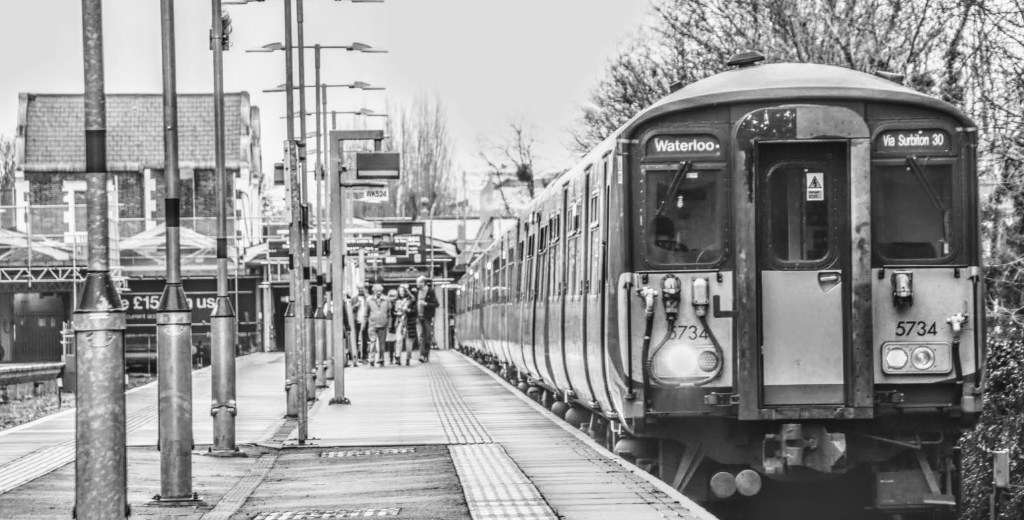
Class 455 trains operated by South Western Railways shuttle along this branch line from London Waterloo via Surbiton every half hour. But despite the limited service, it remains popular with those travelling by foot to enjoy Hampton Court Palace, a mere ten minutes away.
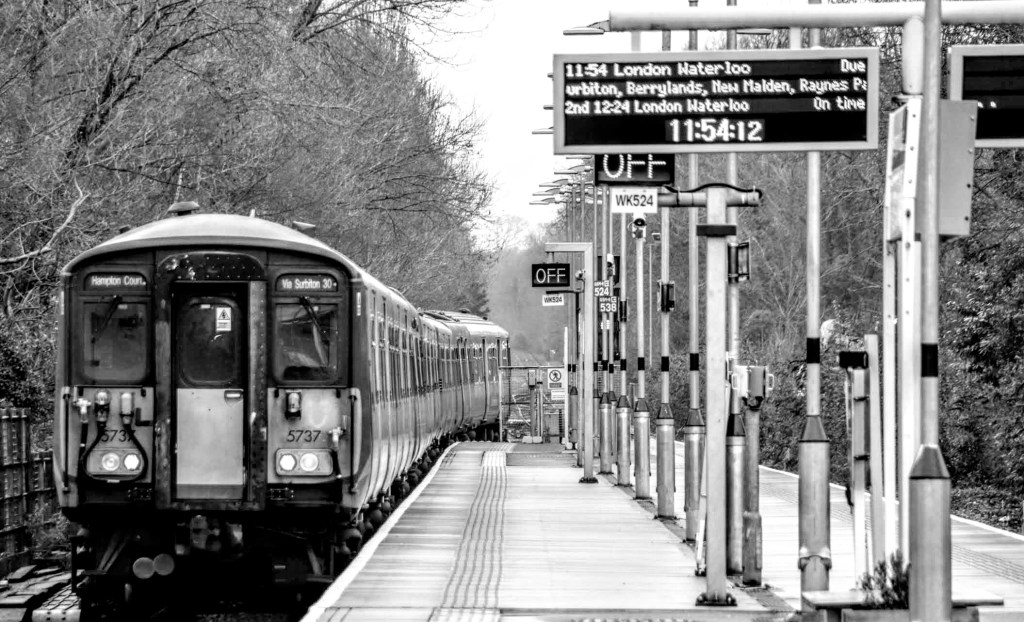
The station, named after the nearby Royal Palace, actually sits in East Molesey, in the Borough of Elmbridge, on land known as Cigarette Island – named after the last houseboat moored there. The waters around the island were filled in in the 1930s as part of road improvements during the construction of the latest Hampton Court Bridge. A consequence of these works was the removal of two bridges that allowed pedestrian and road traffic access to and from the station.
The link in the title takes you to Molesey History’s website, where you can read an in-depth account of the area through time.
But in brief, the earliest recorded settlement here was in the 7th century, with its name in Old English meaning island or river meadow. The name Molesham then appears in the Doomsday Book of 1086.
One of the key events that impacted the area’s development was the building of Hampton Court Palace in the 16th century. And the second was the railway in the mid-19th century, which made Molesey easily accessible ‘for the masses’ who descended in droves to enjoy the riverside hostelry and hospitality.
Today, the immediate attraction of this suburb, south of the Thames, is the riverside, The Palace and the delightful Bridge Road, full of independent shops and pubs, which I suspect will take some time to wander into all of them. Here are the buildings that caught my eye.
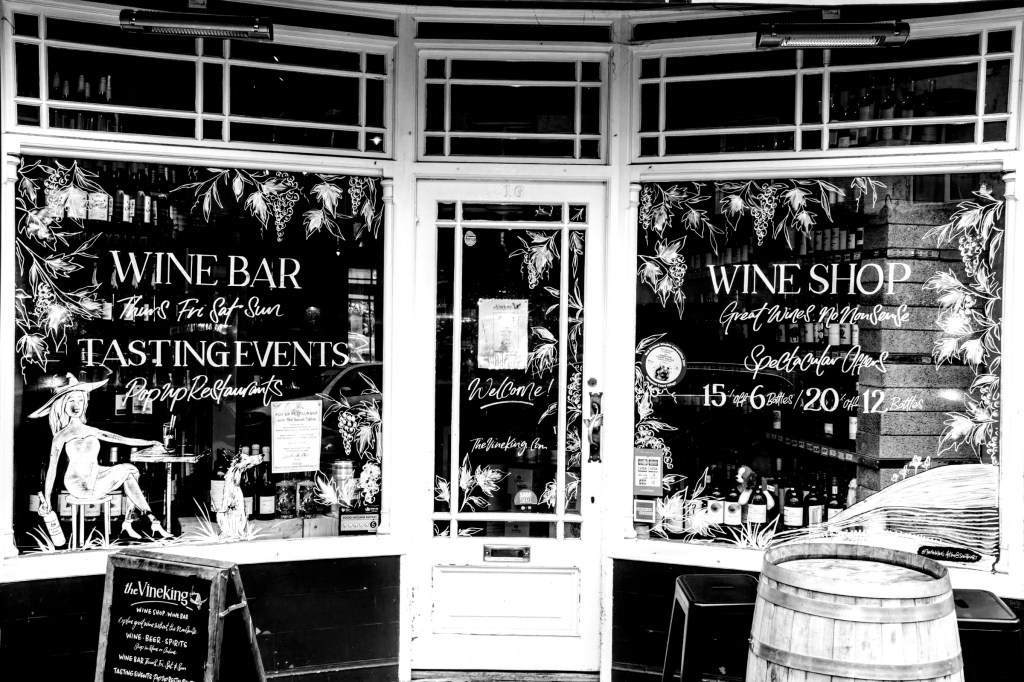
The VineKing: a delightful wine shop cum restaurant which I’m drawn to because I recognise the artwork style painted on the windows. I checked inside with the shopkeeper, but she didn’t know who the artist was, but thankfully the artist known as Sam TM had signed her work in the bottom right-hand corner of the window. I first met Sam in Caterham in November 2021, and since then, I’ve encountered her work several times – it’s so distinctive.
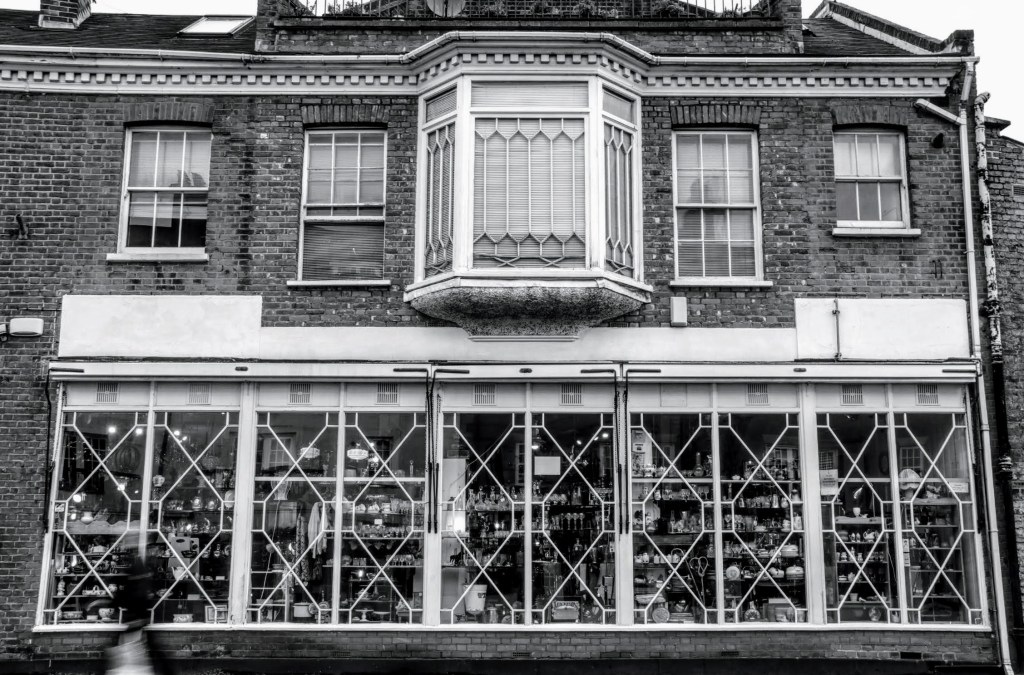
Hampton Court Emporium: The extensive building occupies the corner at the roundabout with Creek Road, and it is one of two centres owned by Surrey & Bucks Antiques. I peered through the windows, knowing if I wandered in, I’d get lost in admiring the collections of the more than 40 traders whose treasures were on sale. The building, seen here from Creek Road, is architecturally pleasing with its geometric window designs.
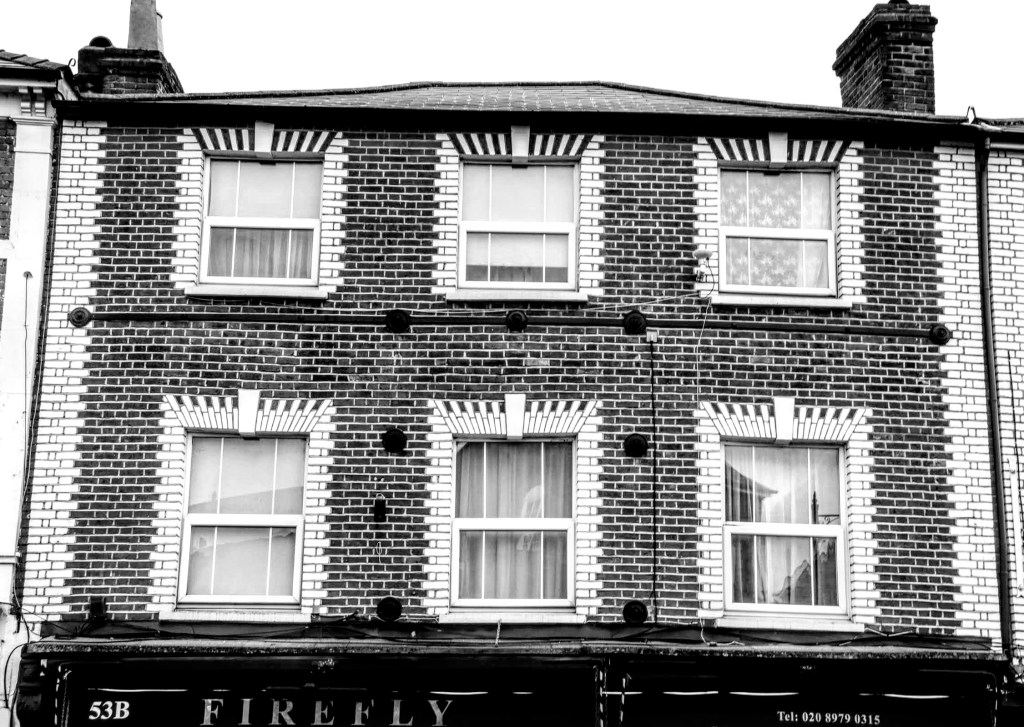
Firefly Hair Co Ltd: This is a stylish boutique-style salon at 53B Bridge Road. But if you look up, you’ll see this stunning, well-maintained brickwork that stands out from the crowd in black and white.
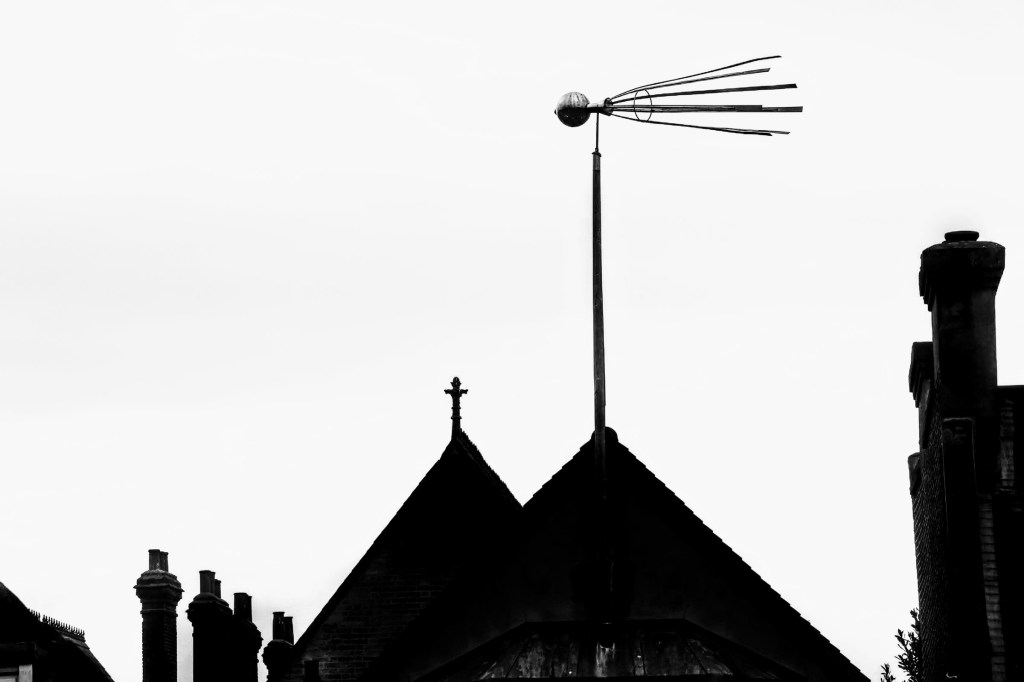
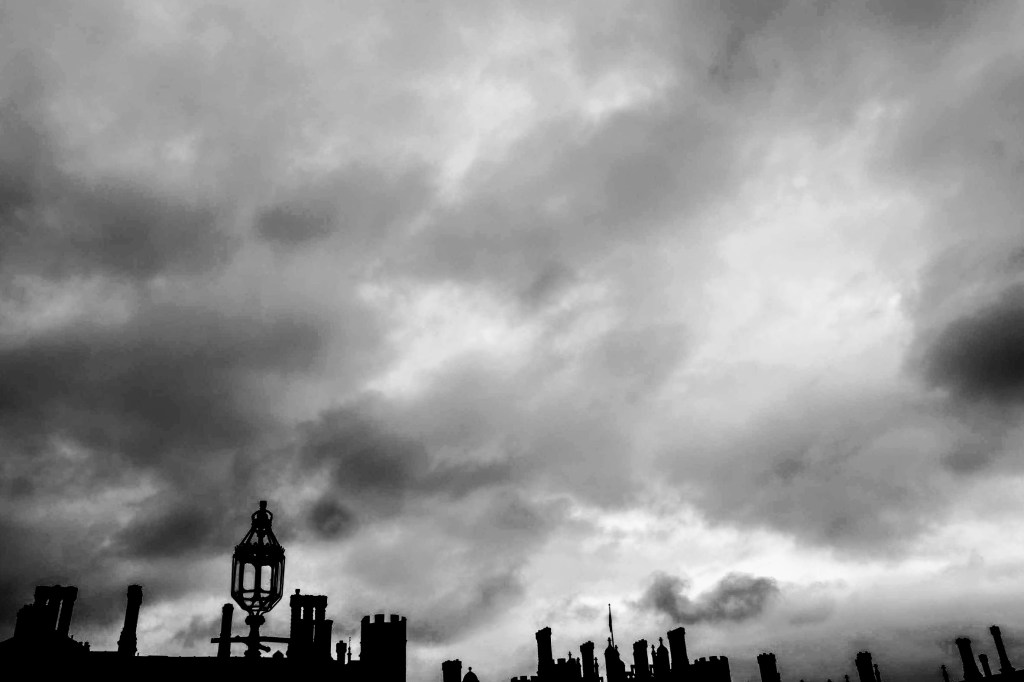
Make your way to 13-15 Creek Road and look up. Is this a weather vane? If so, it’s very unusual and helps make for a distinctive skyline with chimneys and a roof-line cross. My advice – is always to look up to see something different.
Street Art by Paul Don Smith: if you walk past the Creative Quilting shop heading away from the river, you might miss this as it’s on the end wall adjacent to The Albion pub. It’s discreet, but it’s part of this urban artist’s portfolio of murals created to celebrate the Queen’s Jubilee in 2022.

Kingfisher Court: further along Bridge Road, as you leave the shops, there’s a magnificent art deco development of 64 flats built in the 1930s. It’s all gated so I couldn’t look around, but their website states that the building ‘takes its design cues from the ocean liners of its day, the main layout, and especially the rooftop canopies, resembling the deck of a large cruise ship.’

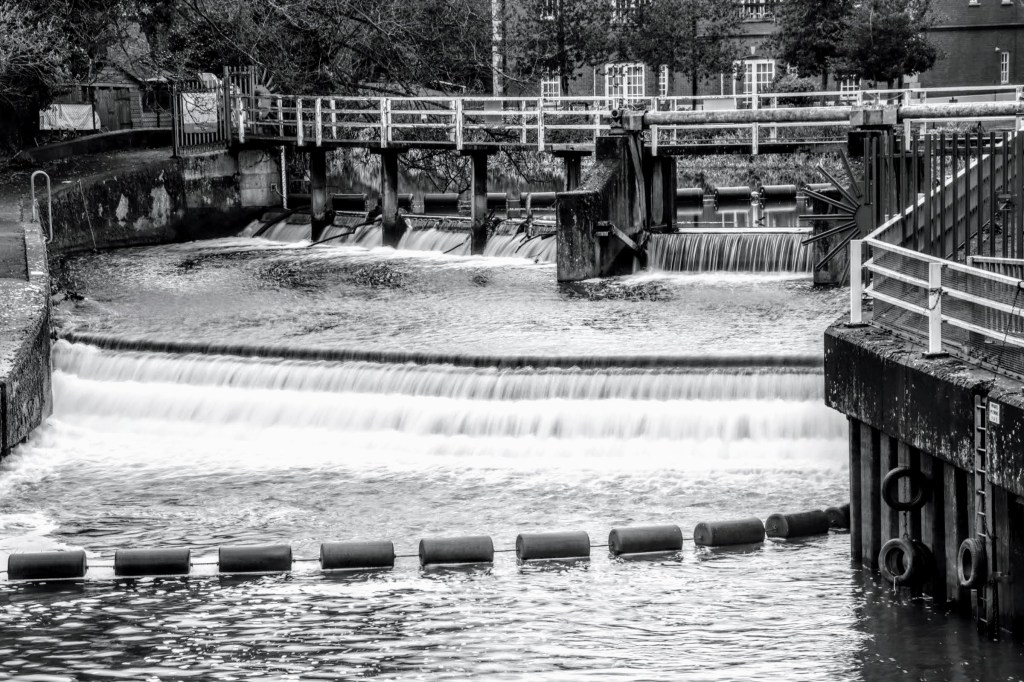
East Molesey sits on the confluence of the rivers Mole and Ember. Some believe the river Mole gives its name to the area, but this is not so (see above). Over the years, the area has been prone to severe flooding, and the Environment Agency introduced flood management improvements in the late 20th century. The photo below is of the weir on the river Mole as it joins the river Ember before flowing under the station as it empties into the Thames.
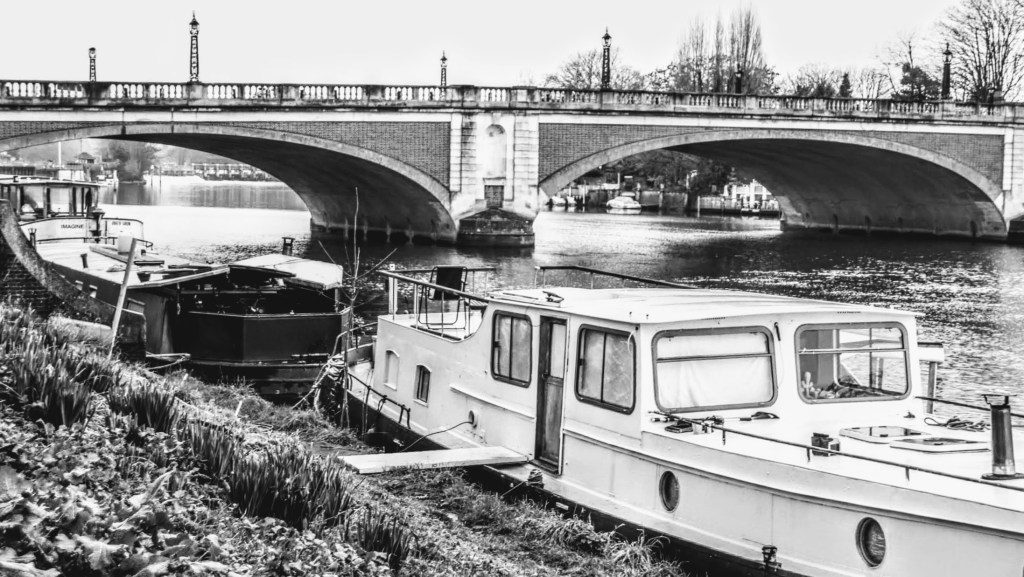
The current Hampton Court Bridge is the fourth since Parliamentary approval was granted to Mr James Clarke in 1750 to build the first. The full and fascinating history is here (again, courtesy of Molesey History).
The photo below is of the current bridge looking upriver to the west. On each corner of the bridge, there are ramparts which are excellent viewing galleries, but they are not just for viewing. Below them are rooms used during World War II by the Home Guard stationed in one of them to protect the bridge from intruders.
On the left-hand side of the southern end of the bridge, you’ll find the plaque below. It refers to the third bridge, owned by Thomas Newland Allen, who collected the tolls ‘to recoup his outlay’. Understandably unpopular, so when the Metropolitan Board of Works bought the bridge in 1876, ‘the toll was lifted, amidst loud cheering’.

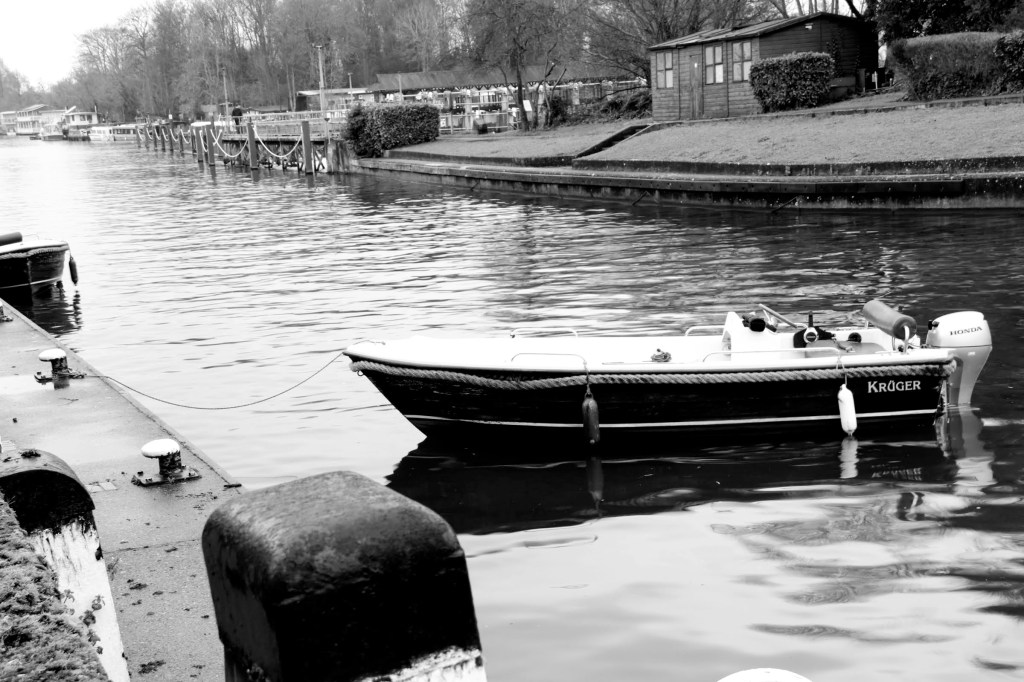
During peak season, why not take advantage of Martins Boat Hire, which offers a selection of rowing and motor boats available by the hour? They are on the water’s edge along Riverbank, where their Chipper small motor boats dominate the southern shoreline.

Just a little further along, head over to Molesey Lock. It was built in the early 19th century to enable barges to pass along the river during dry spells when it became impassable. The current lock was rebuilt in 1905 to accommodate larger barges built upstream at Platt’s Eyot.
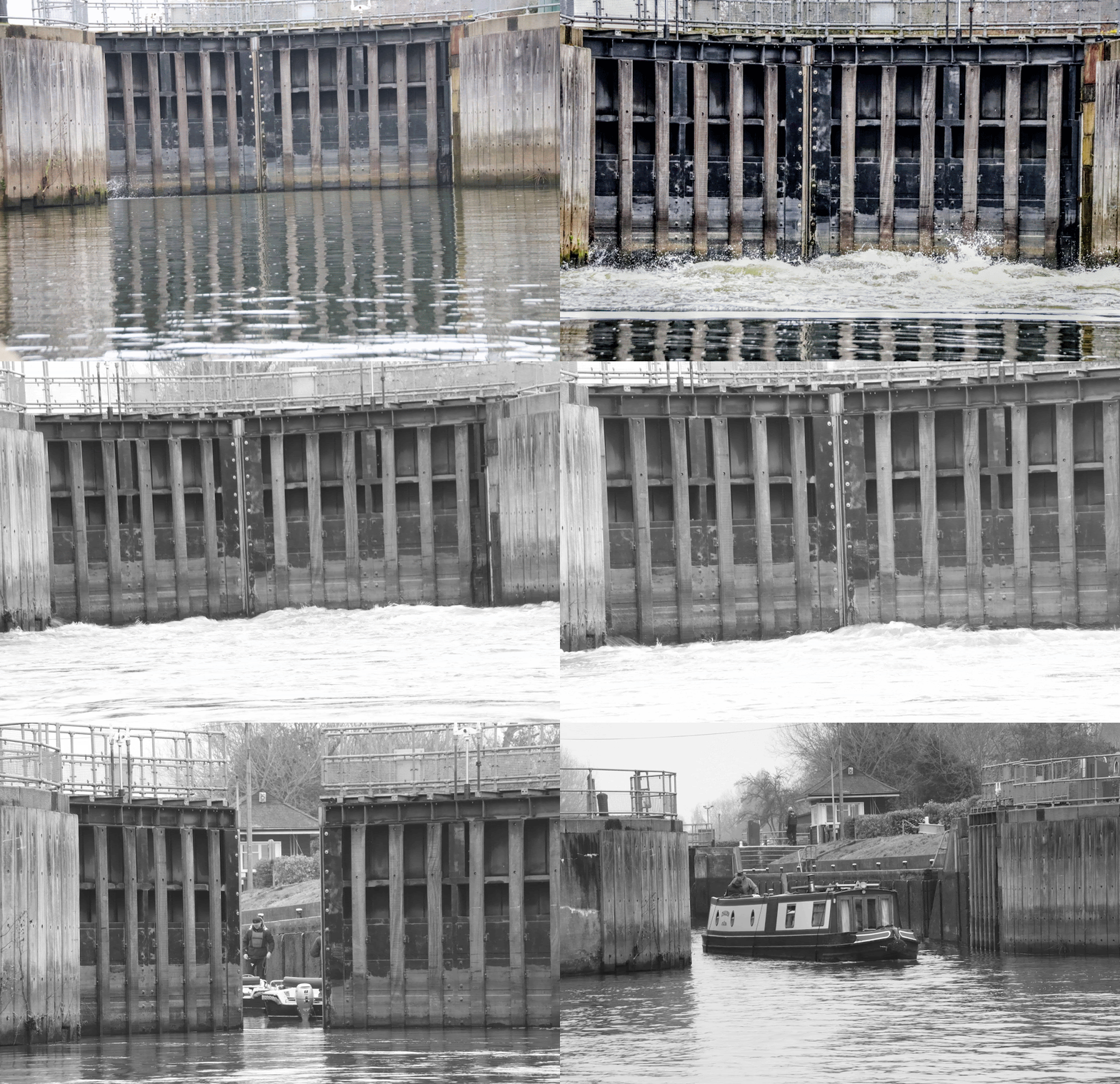
And whilst on the riverbank, I watched two boats navigate through the lock as they travelled from west to east. I was also surprised at how quickly the lock filled and emptied with water. So I decided to focus on the gates opening onto The Thames as I anticipated a dramatic gush of water as the lock emptied. And there was, with the released water creating quite a swell of white water and a tidal ripple that reached far. I took a sequence of shots, but rather than just one, here’s a rough animation showing the series.
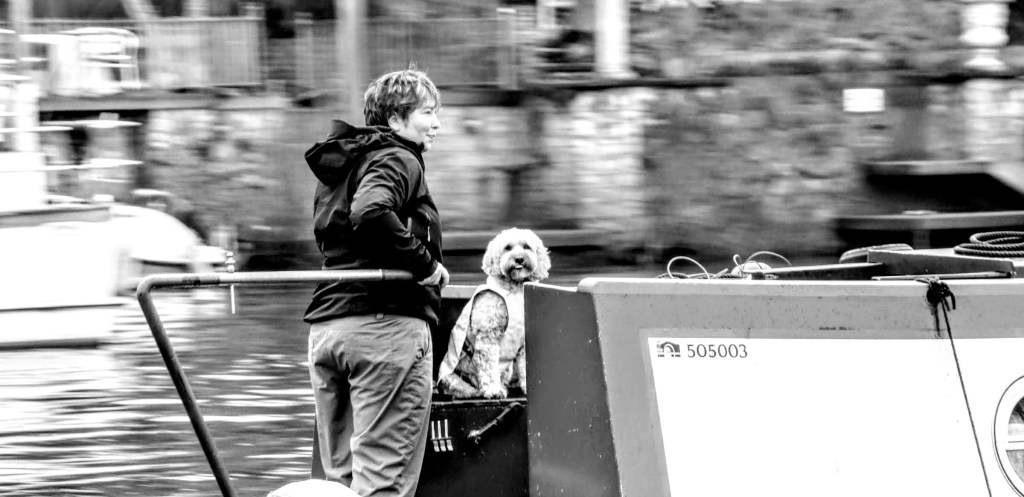
As the two boats manoeuvred through the open lock gates, this barge followed them. I hadn’t seen it head into the lock, so as it passed me by, I took a sequence of photos. And as I did, the dog followed me. It stayed perfectly still other than moving its head as the barge passed by, looking at me as I looked at it.
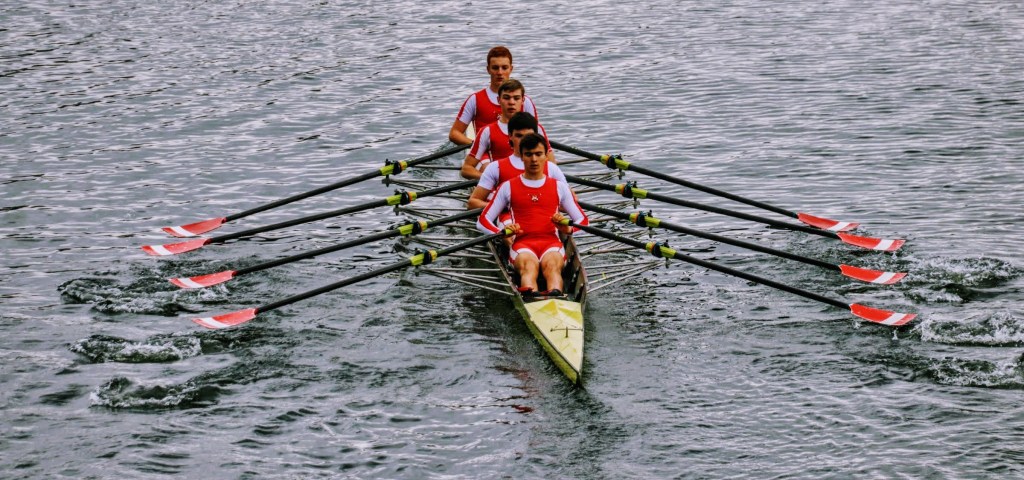
Later in the day, the rowers were out. Several four-man coxless boats are being taken through their paces as I walk over the bridge, and here’s one named Gary Brailsford.
I was determined not to make today’s visit about the Royal Palace as there are so many great photos. BUT, I couldn’t let the day go by without walking up to the Grade I listed Palace and looking for a different angle. Does this work?
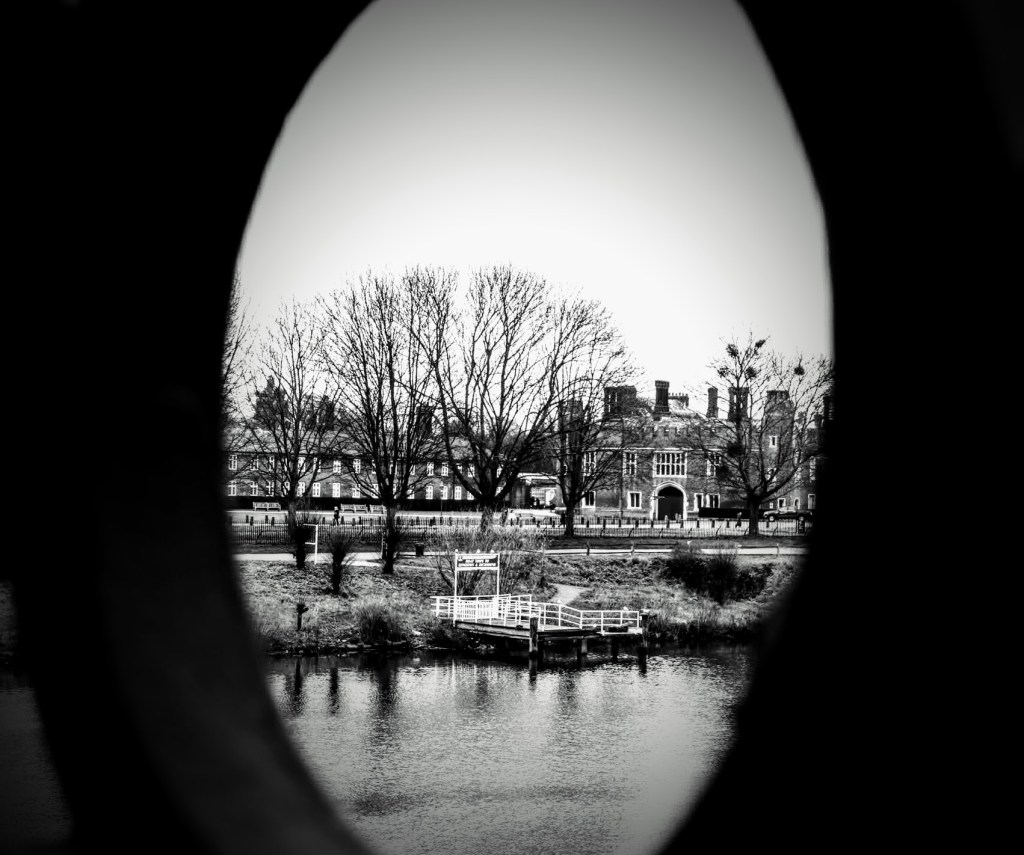
The Palace was built early in the 16th century for Cardinal Thomas Wolsey, Henry VIII’s chief minister. But when he fell out of favour with the King, the Cardinal gave the Palace to the King in 1529 by way of appeasement. What a gift! The following photo is a view of the Palace seen through one of the light stands on the bridge. The Thames River Boats landing stage is in the foreground.
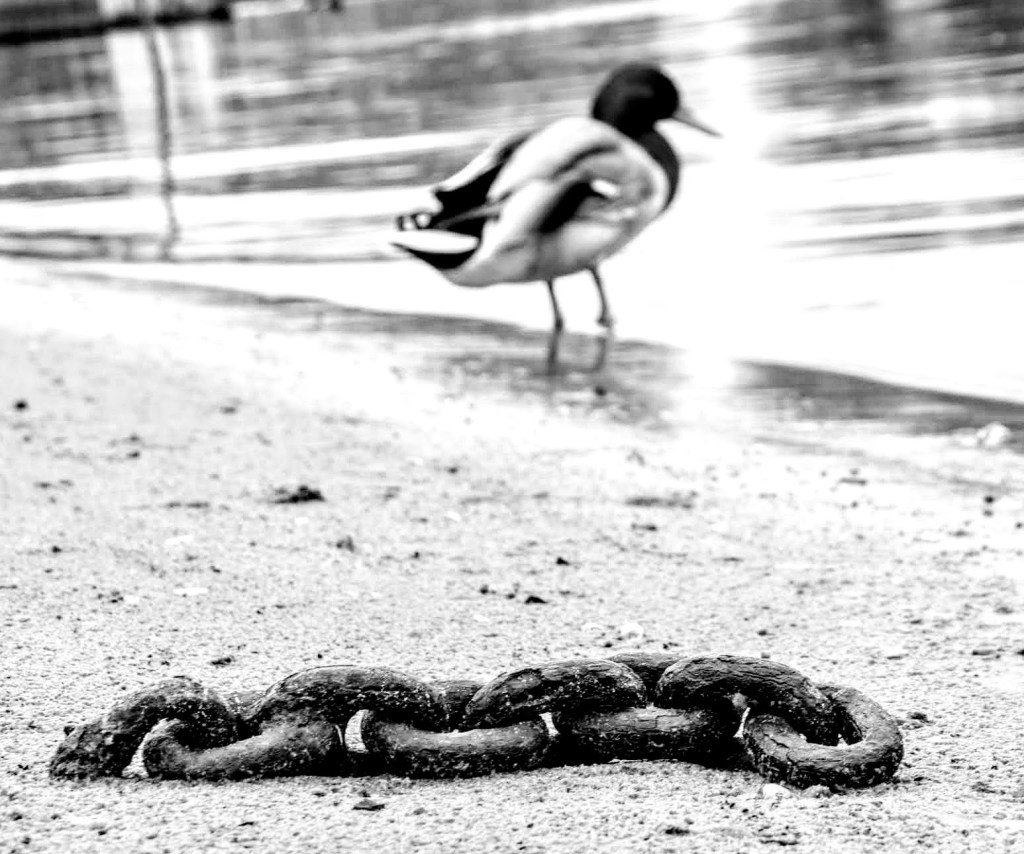
Picture of the Day – Duck and Chain
Here’s a simple study on the water’s edge reflecting a quiet and undisturbed moment with a ‘nod’ to how the water is used.
The cranky and rusty heavy-duty chain may be an unused mooring anchor. Whether this is abandoned and no longer used is unclear, or maybe it’s waiting for the height of the season when the river’s edge sees more boats moored. But for now, it’s the centrepiece of this shot.
I took a series of shots, but this study gives the best representation. The Mallard duck seemed unperturbed by my attention. Content with preening its feathers, it’s no doubt used to many more visitors during peak season.
[Image #14]
- Location: Riverbank, East Molesey
- Date/Time: Wednesday 22nd February 2023, 12.36 pm
- Settings: Camera – Canon EOS 200D; Aperture -f/11; Shutter Speed – 1/20; Focal Length – 63mm; Film Speed – ISO100
Social Media
Please follow me on my social media channels: Instagram, Facebook, and Twitter if you like what you see.

 Photos By RJT
Leave a comment