A Brief History
The Rise of the Bridge (1864)
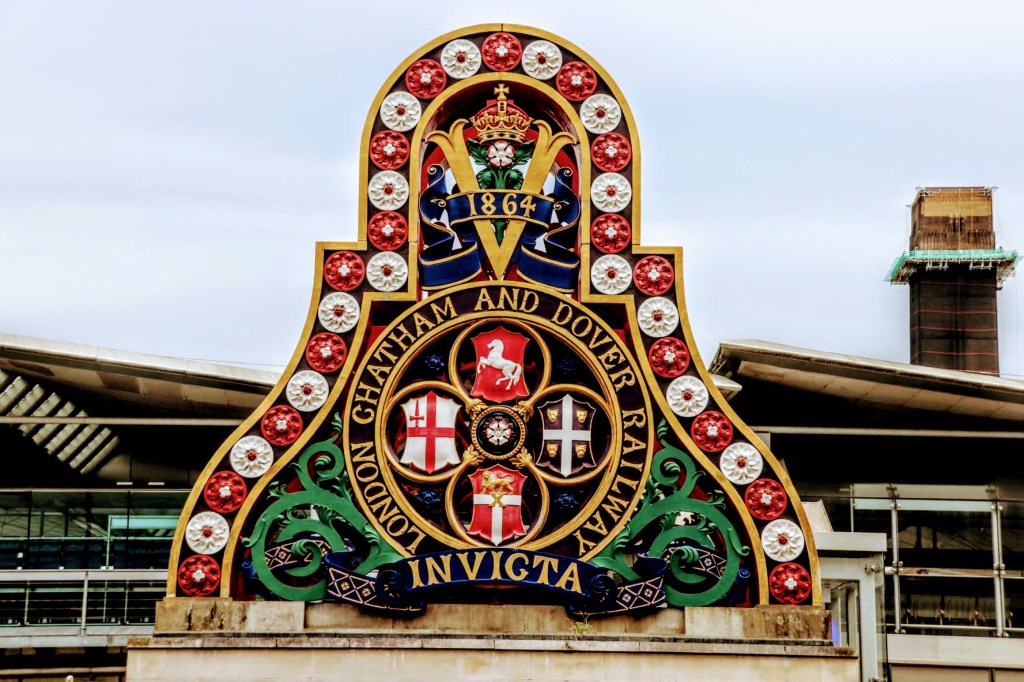
The first Blackfriars Railway Bridge was built by the London, Chatham and Dover Railway (LC&DR). It opened in 1864 to carry steam trains across the Thames and it was a vital link to the new Ludgate Hill Station on the northern bank.
Designed by Joseph Cubitt, it was constructed from iron supported by thick stone piers. Because the LC&DR wanted to show off its prestige, the bridge was decorated with the company’s insignia and grand architectural details.
The Problem: Too Many Trains
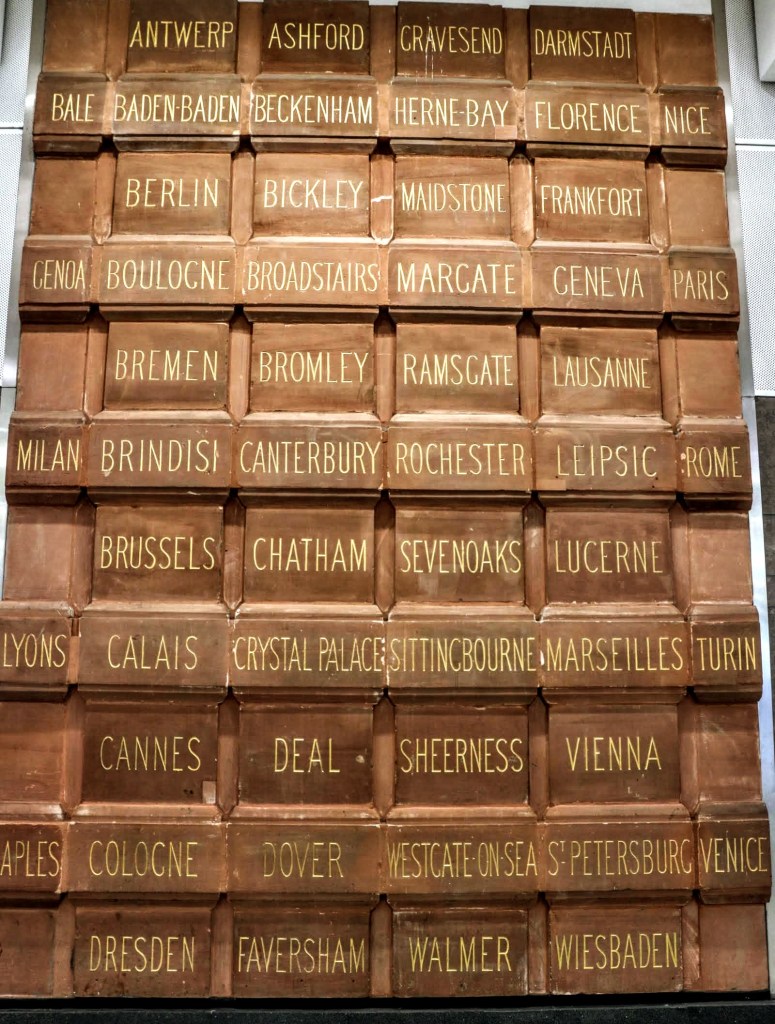
By the late 19th century, London’s rail traffic was booming. The original 1864 bridge was simply too narrow and too weak to handle the heavier, more frequent trains.
In 1886, a second bridge (the St. Paul’s Railway Bridge) was built right next to the original one. This new bridge was designed by John Wolfe-Barry and Henry Marc Brunel. For nearly a century, the two bridges sat side-by-side, creating a massive iron pathway across the water.
The Decline and Demolition
As the decades passed, the original 1864 bridge became obsolete. It was no longer strong enough for modern electric trains. In 1924, most of the train services moved to the newer 1886 bridge.
By the 1970s, the original bridge was in poor condition. It was decided that it was cheaper to remove the bridge than to maintain a structure that wasn’t being used. In 1985, the iron deck was finally dismantled and removed.
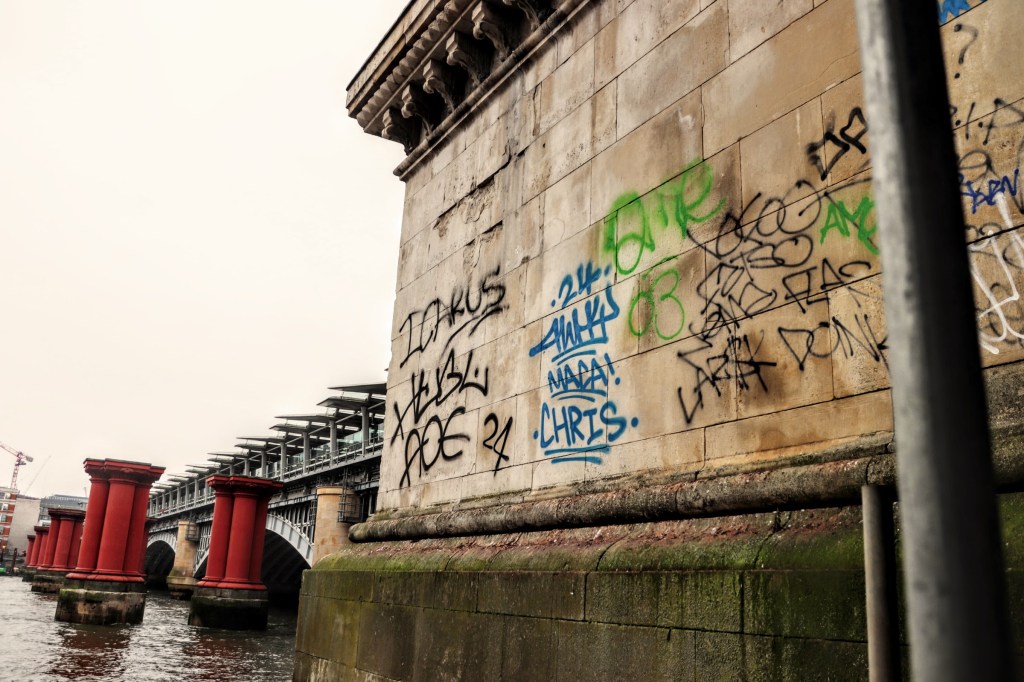
However, the engineers left the red stone pillars (the piers) standing in the river. They did this because removing the underwater foundations would have been incredibly expensive and could have disturbed the riverbed.
The Bridge Today
Today, you can still see the rows of red pillars rising out of the water, and these ‘ghost’ pillars have become a recognisable London landmark. During the major renovation of Blackfriars Station between 2009 and 2012, the newer 1886 bridge was widened and transformed into the world’s largest solar-powered bridge. Some of the old 1864 pillars were even used to support the new, extended platforms of the modern station.
Summary
- First Bridge Opened 1864
- Second Bridge Opened 1886
- Original Bridge Closed 1924
- Ironwork Demolished 1985
- Station Redeveloped 2012
My Journey and Images
I visited the bridge on the 10th of February 2025 which sits adjacent to the new Blackfriars Railway Bridge (downstream) and Blackfriars Road Bridge (upstream).
This was a relatively short journey as the main purpose of my visit was to meet Stuart Meek, General Manager of South Western Railway to hand over a copy of my book. Nevertheless, it did give me a chance to revisit this demolished bridge and write about its history. I originally visited the second Blackfriars Bridge on 12th of July 2022.
I posted the images on Bluesky and LinkedIn between the seventh and 16th of April 2025.
#01: ‘Ghost’ Pillars
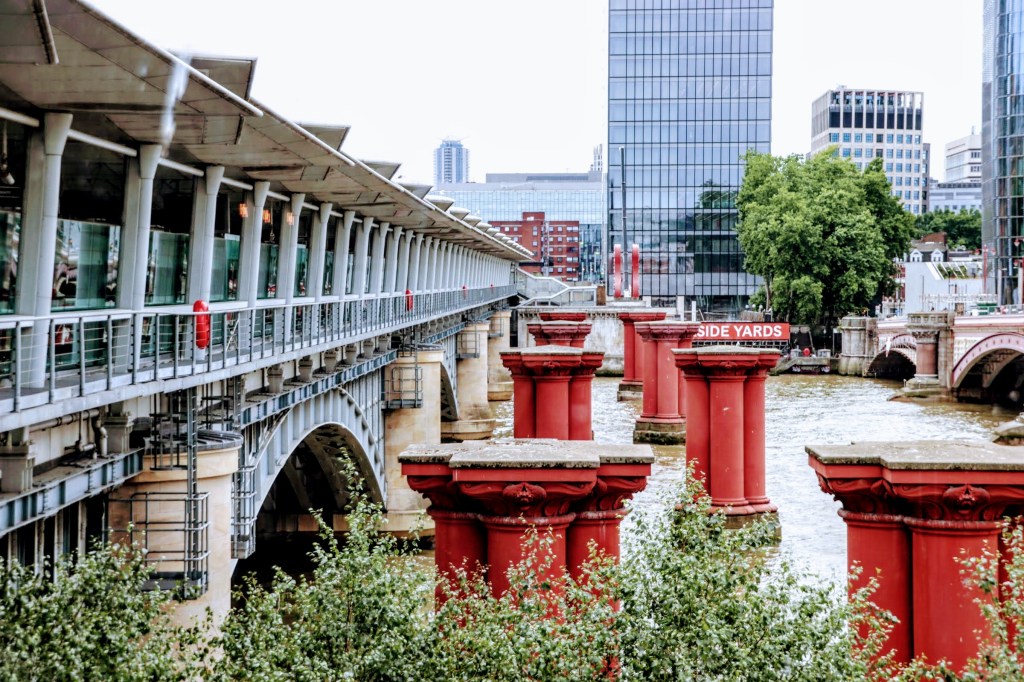
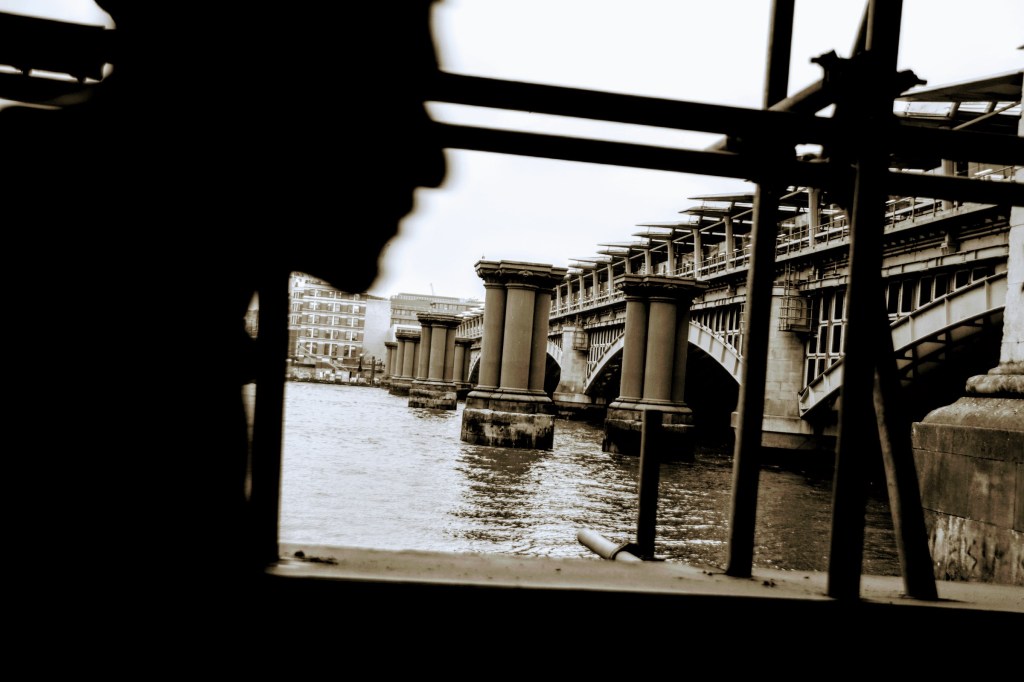
Built by the renowned civil engineer Joseph Cubitt, the abandoned pillars once supported the original Blackfriars Bridge. In 1985, the bridge was removed because it was considered too weak to support modern-day trains.
#02: Passing By
Scaffolding surrounds the Thames Path as Bankside Yards are redeveloped. Sadly, passers-by take no notice of the history that stands a few metres away in the middle of the Thames.
#03: Hoarding Murals
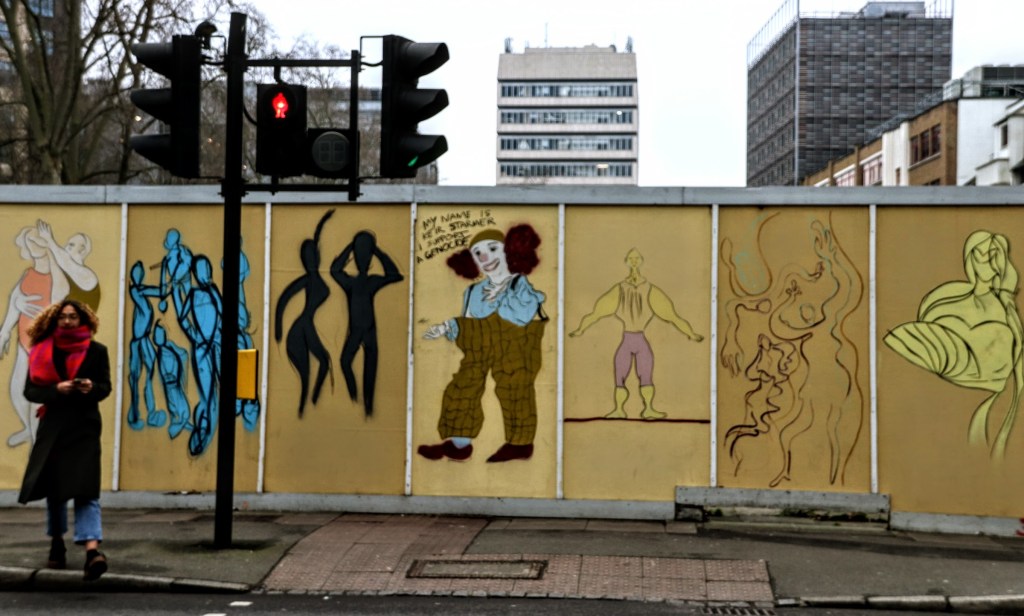
The former Wakefield House on Stamford Street was demolished in 2016, but since then, the site has remained an eyesore. In 2024, the surrounding hoarding was decorated by and for the community to promote the redevelopment of 18 Blackfriars Road.
#04: South Bank Central
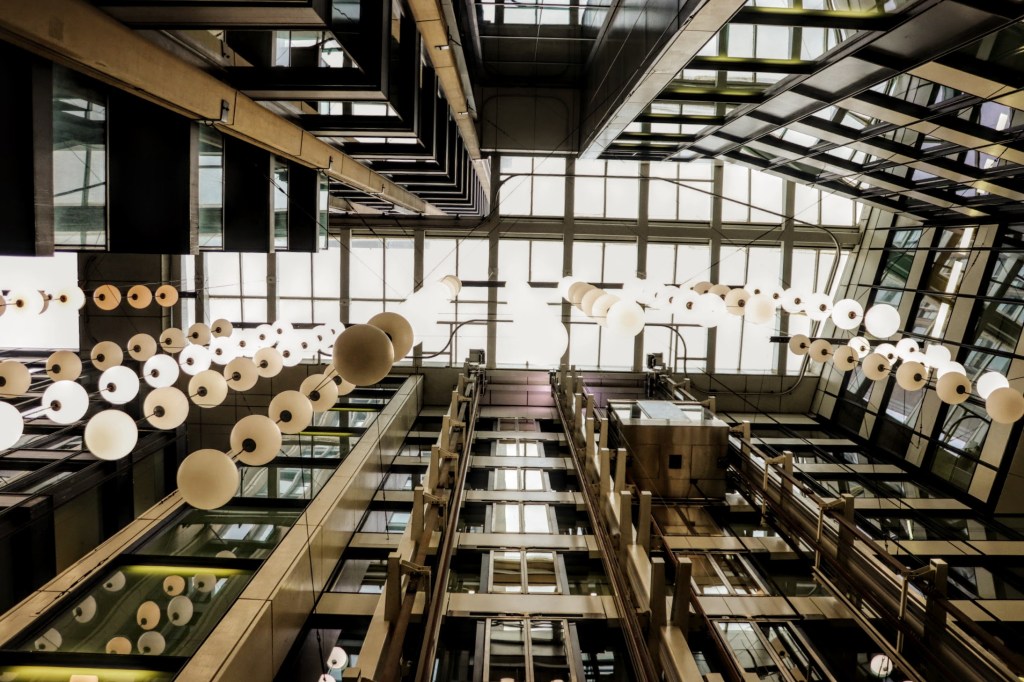
I was visiting South Western Railway at 30 Stamford Street, and on exiting the building, I had a scout around. Modern architectural design has come a long way, with functionality now only playing a part in the end result. This upward view from the inside reveals a delightful mix of lights and lift shafts.

#05: Book Promotion
South Western Railway says thank you for a copy of my book, Return to The End Of the Line.
It was a pleasure to meet Stuart Meek, their General Manager, for an informal chat during which we shared our combined interest in photography.
My book is available from my online store – https://bit.ly/3WKM7sV
Further Reading
Wikipedia – Blackfriars Railway Bridge

 Photos By RJT
Leave a comment