A Brief History
London Bridge is one of the most famous landmarks on the Thames with a long and complex history that reflects the City’s development. For nearly two thousand years, a bridge has stood on this site, serving as a vital link for trade, travel, and communication. Over time, London Bridge has been rebuilt many times, each version showing the changing needs, technology, and priorities of the society that constructed it.
It’s believed that the Romans built the earliest bridge here at around AD 50, shortly after they established the settlement of Londinium. Made largely of wood, it was essential for allowing soldiers, merchants, and goods to cross the river. As the Roman town grew in importance, the bridge became a key part of the road network across Britain. However, wooden bridges were vulnerable to fire, flooding, and decay, and the Roman bridge required frequent repairs. After the Romans left Britain in the early fifth century, the bridge fell into disuse and may have collapsed entirely.
During the Anglo-Saxon period, London Bridge was rebuilt and destroyed several times. The River Thames was often attacked by Viking raiders, and the bridge was both a target and a defensive structure. According to tradition, the bridge was damaged during a battle in 1014 involving King Olaf of Norway. This event may have inspired the well-known rhyme “London Bridge Is Falling Down.” The exact historical details are unclear. However, it is certain that the bridge was unstable and frequently needed rebuilding.
The most famous and significant version of London Bridge was constructed in the medieval period. Building began in 1176 under King Henry II and was completed in 1209 during the reign of King John. This stone bridge, designed by Peter de Colechurch, was a remarkable engineering achievement. It had 19 arches and was built with strong stone piers that allowed it to survive for over 600 years. The uniqueness of this bridge came from its coverage with buildings. These included houses, shops, and a chapel dedicated to St Thomas Becket. As a result, London Bridge became a busy and crowded place, full of traders and travellers.
Life on the medieval bridge was difficult and sometimes dangerous. The road was very narrow, and fires were a constant threat because the buildings were made largely of wood. Two major fires, in 1212 and 1633, caused widespread damage and loss of life. The bridge also served a darker purpose as a place of punishment and warning, with the heads of executed traitors displayed on spikes above the southern gate, reminding people of the Crown’s power.
By the 18th century, the medieval bridge was no longer suitable for London’s growing population. Its many piers restricted the flow of the river, causing strong currents and making navigation dangerous. As a result, a new bridge was built and opened in 1831. John Rennie designed this granite bridge. It was wider and safer. It was more efficient, reflecting improvements in engineering during the Industrial Revolution.
In an unusual chapter of its history, Rennie’s bridge was sold in 1968 and moved to Lake Havasu City in Arizona, where it still stands today. The current London Bridge, a modern box girder structure made of pre-stressed concrete. It opened in 1973. Although it is less decorative than earlier versions, it continues to serve its original purpose carrying traffic along the A3.
My Journey and Images
I visited London Bridge on the 28th of October 2025. It sits between Tower Bridge (downriver) and Cannon Street railway bridge, and I posted the images on Bluesky and LinkedIn between the 12th of November and 13th of December 2025.
My routine is to walk over each bridge and explore its structure, architecture and the ‘traffic’ it carries. I’ll also divert, as far as possible, under the bridge.
London Bridge carries the name of the Railway Station on the south shore. It provides a convenient connection for commuters from the City and Monument underground station on the north bank.
On my way home via Liverpool Street Station, I meandered through The City. There, I caught a glimpse of some of the artwork on show.
The Bridge is the star of the show
#01 Looking South
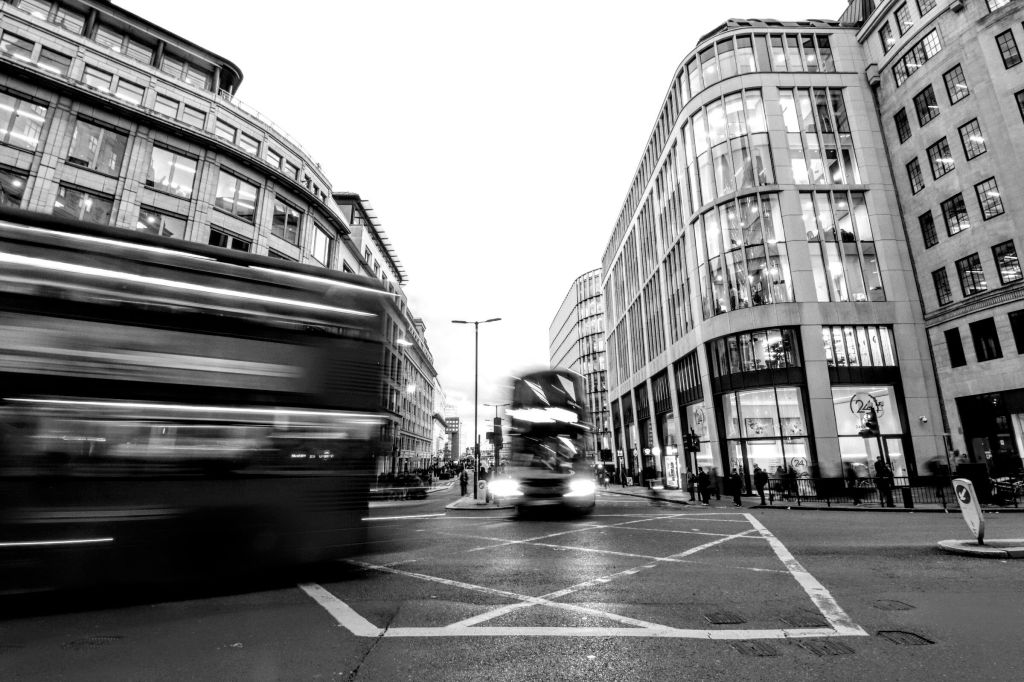
I had some fun walking across the bridge as the sun set and the day turned into night. Here’s a long view whilst standing on Eastcheap watching the buses heading into the City.
#02 Don’t eat my heart
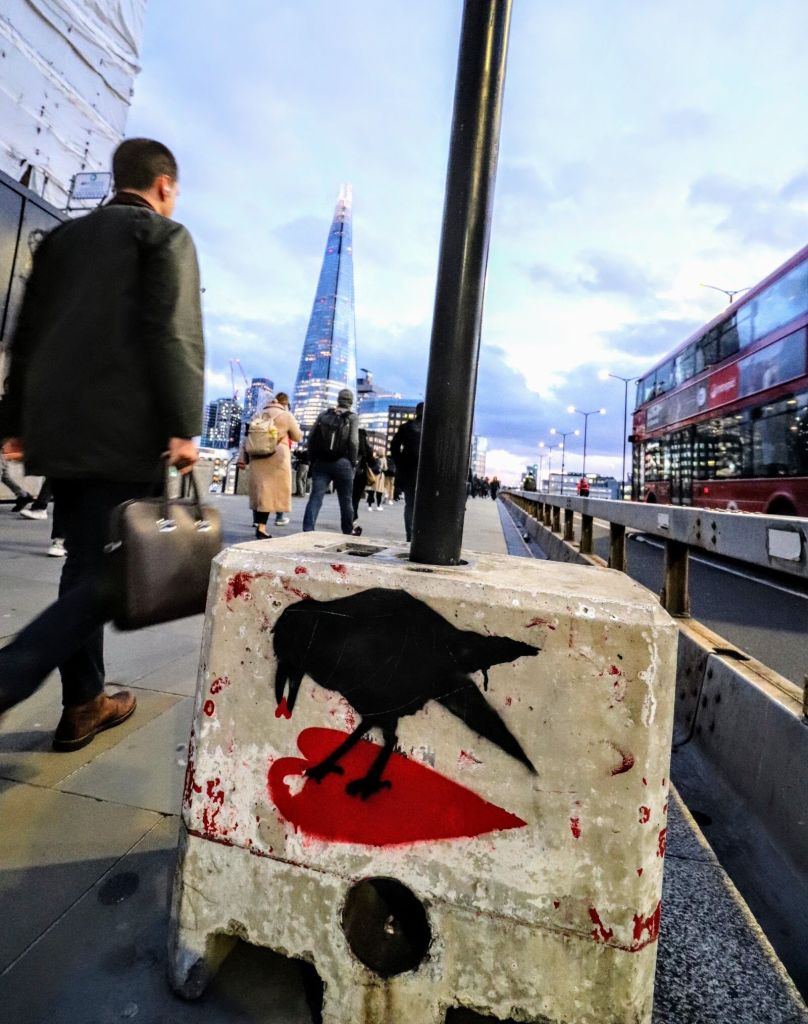
Graffiti artist mypenleaks has adorned this temporary signpost with one of his trademark symbols of a crow eating a heart. I timed the shot to capture a pedestrian and a bus, framing the image with The Shard in the background.
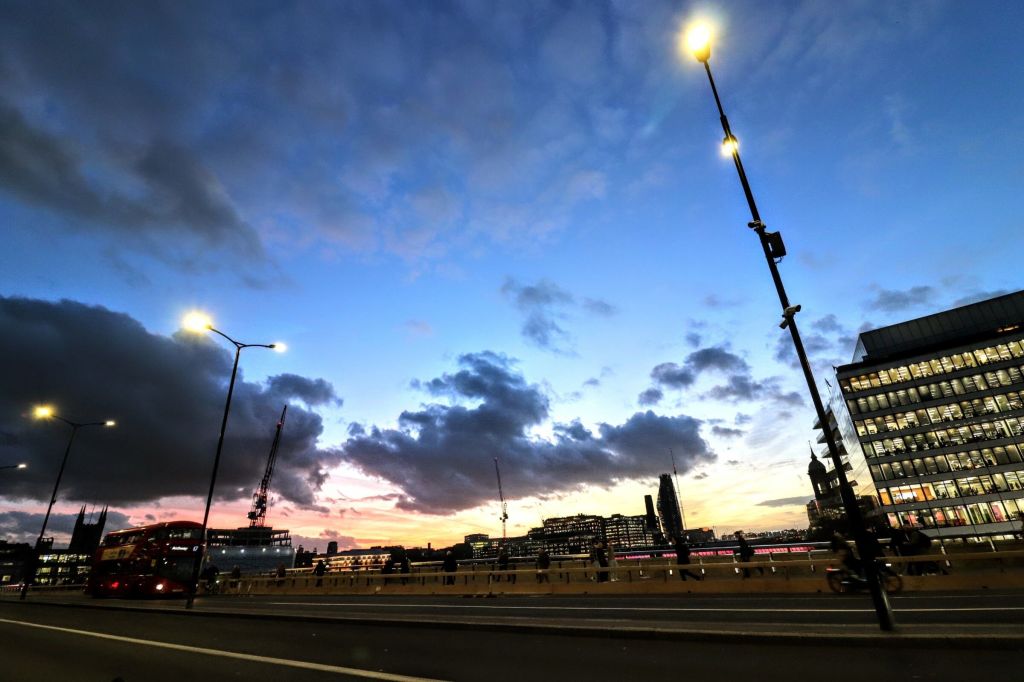
#03 Twilight over the bridge
Don’t ya just love these moody sky scenes?
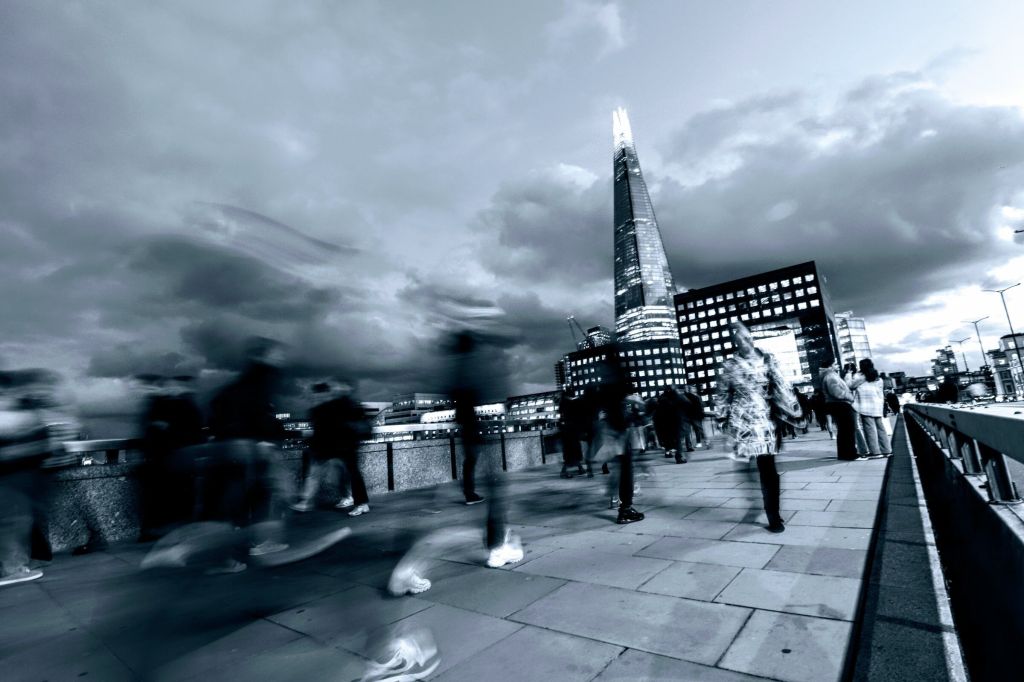
#04 Phantom Pedestrians
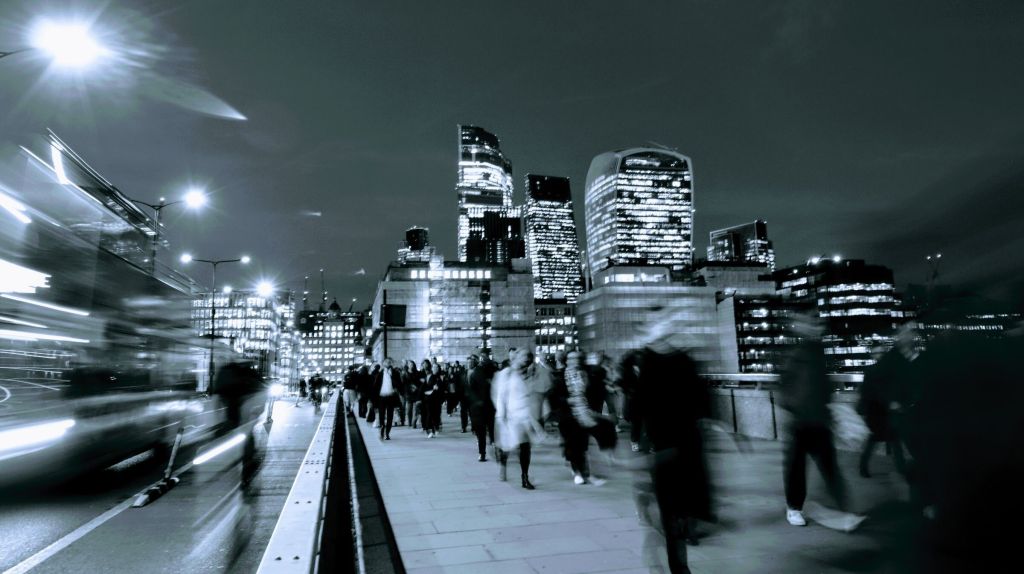
It was time to play with a wide-angle 10mm lens. The slow ⅓ sec shutter speed helped capture the movement of the commuters. They were rushing across the bridge, headed towards the station.
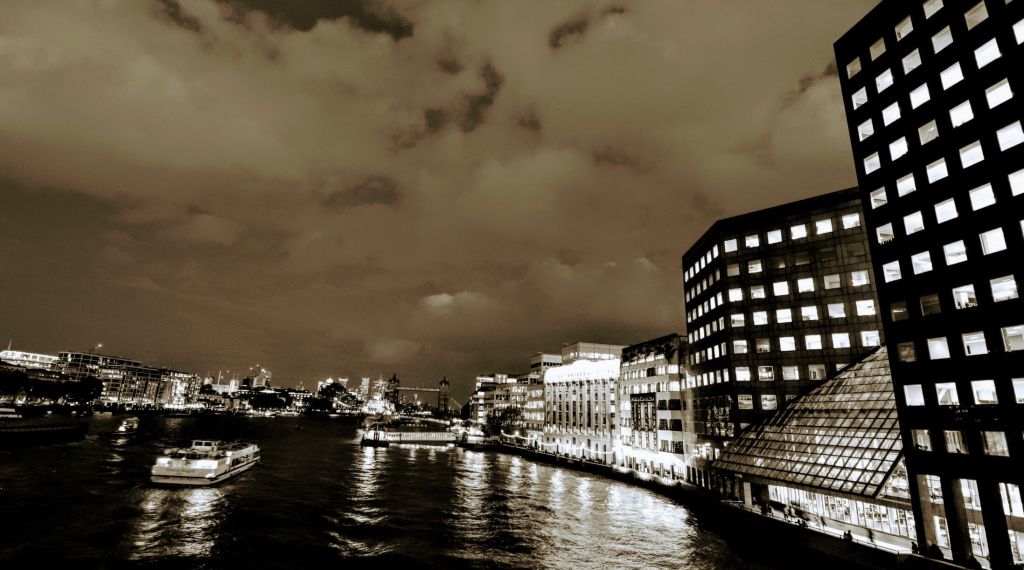
#05 Stormy Skies
There’s something quite mesmerising about peering over a bridge and watching the world go by. And this sepia-enhanced image captures life along the river nicely with Tower Bridge in the distance.
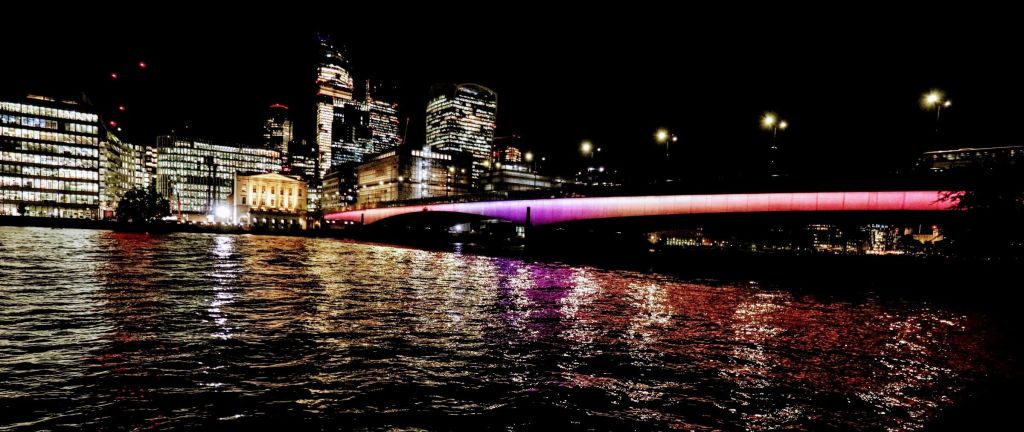
#06 Colourful Bridge
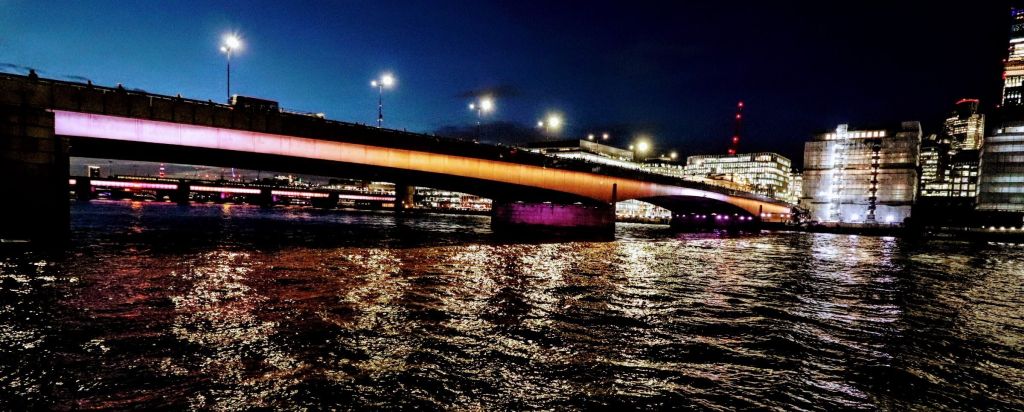
Nights provide an excellent opportunity to enjoy the Illuminated River spectacle. The design of the colours on London Bridge has been created by #leovillareal. Here’s the bridge from both sides.
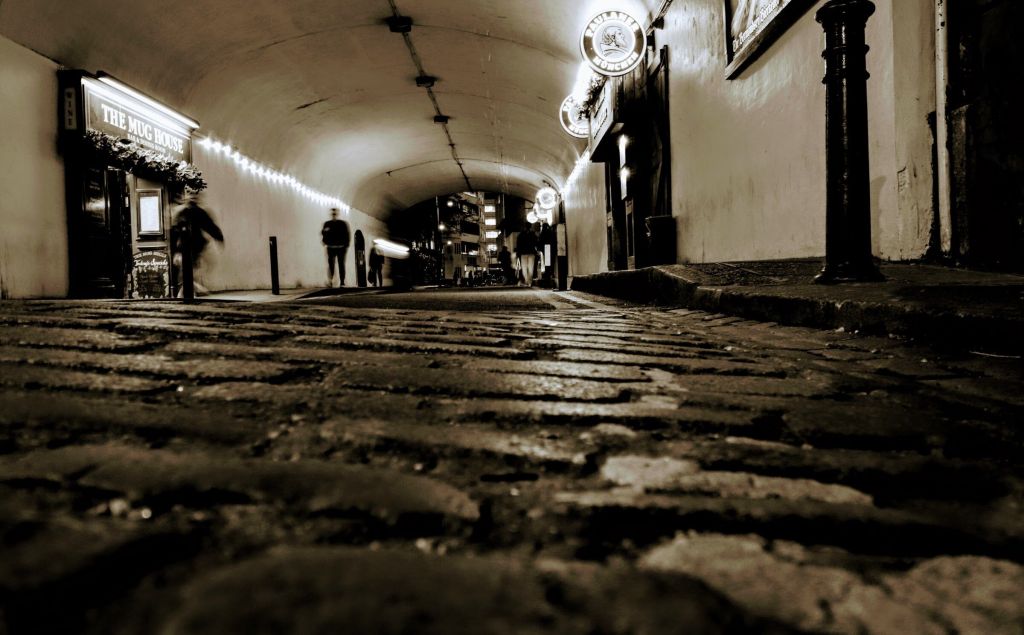
#07 Cavernous Cobbles
The cobbled Tooley Street is directly under the bridge. It is home to #themughouse and the Bermondsey Bierkeller where you can whet your whistle with real ale or German beer.
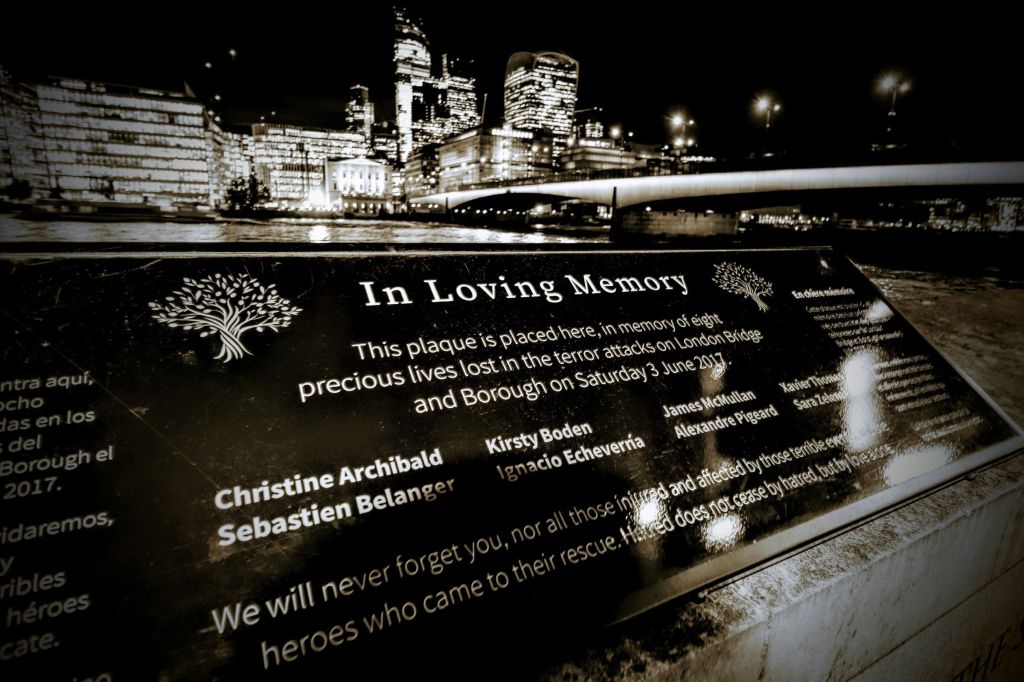
#08 In Loving Memory
No words needed…
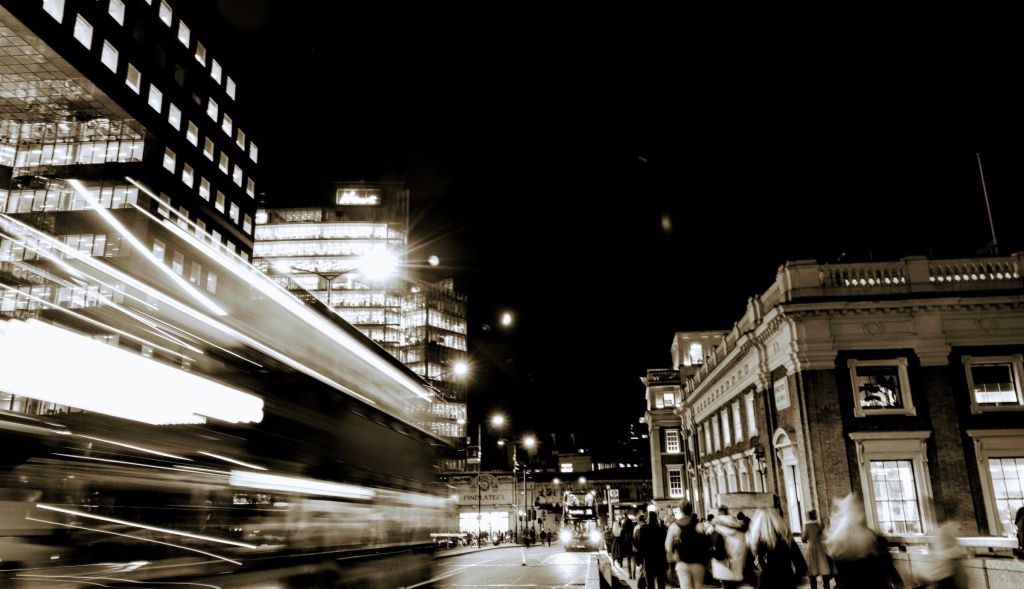
#09 Ghostly Buses
Could these be the night bus from Harry Potter?
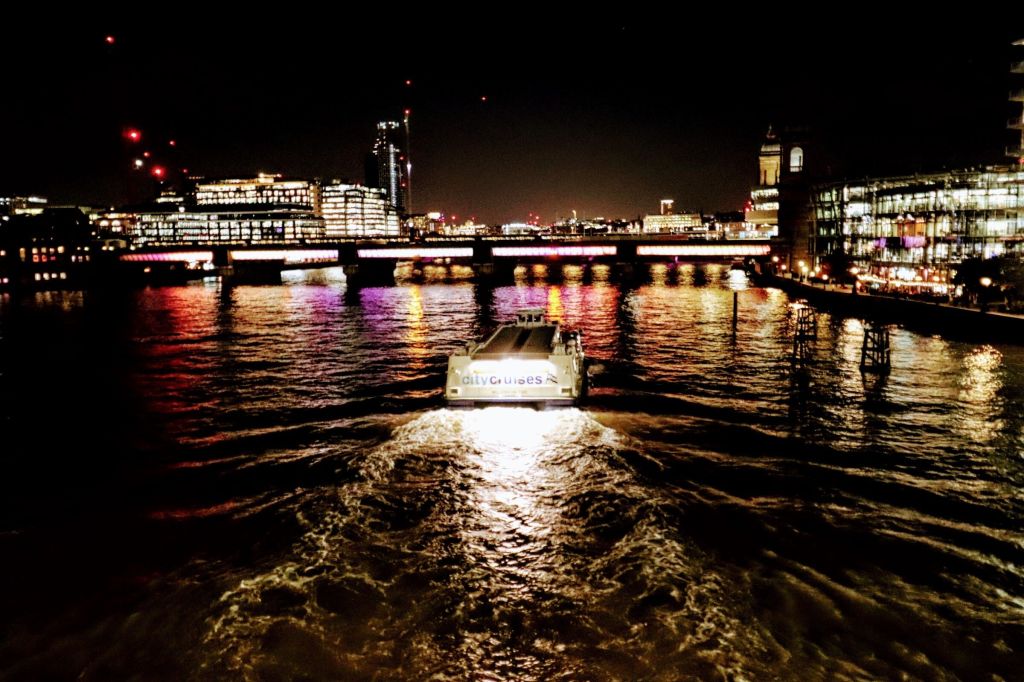
#10 Bobbing along
Why not enjoy the Illuminated River display, courtesy of a City Cruises trip along the river? Here is one of their fleet approaching #cannonstreetrailwaybridge
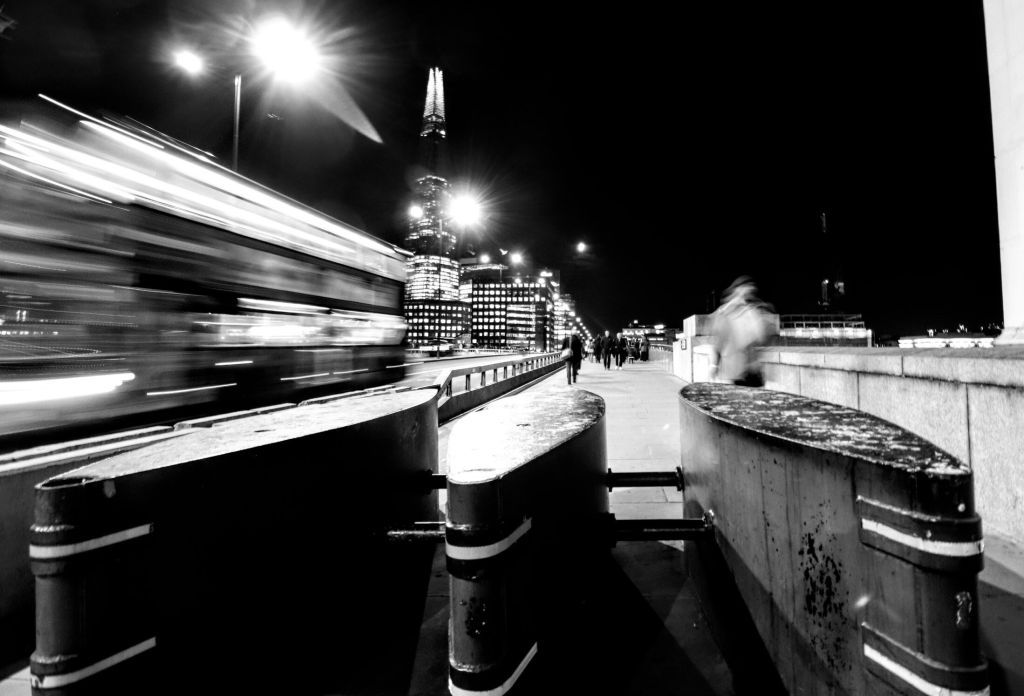
#11 Balustraded Bridge
…and we know why these have been installed… It is a sad indictment. Yet, it’s necessary due to today’s security arrangements in and around the City.
Into The City and Its Artwork
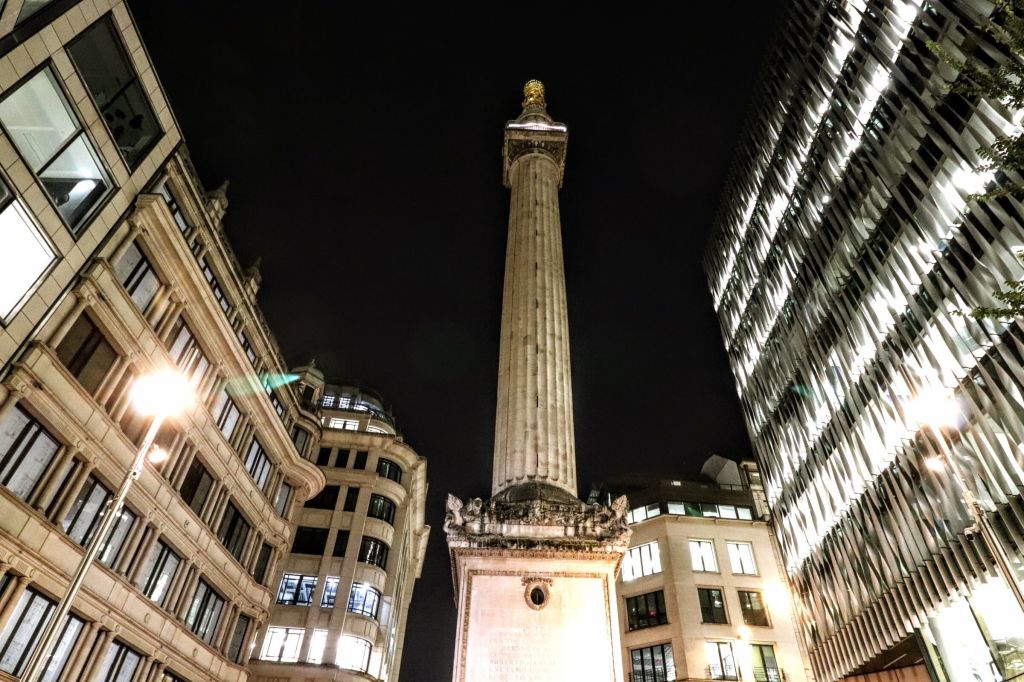
#12 Monument Square
Another wide-angle (13mm) shot of the square, against a black night sky, nicely sets off the architectural features. I’ve still to climb the 311 steps to the top of the Monument—someday.
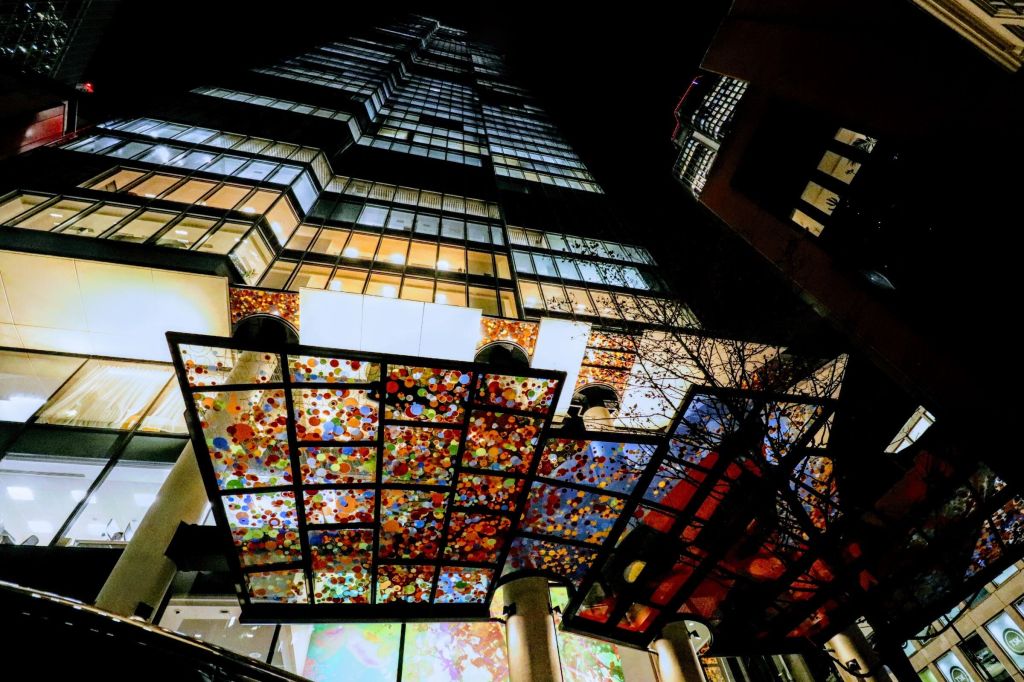
#13 Horizon 22
Much has changed in Bishopsgate, and continues to do so. Why not stop at No. 22 and admire the canopy decorations surrounding this building? You can also pop up to level 58 for a unique view of London’s skyline.
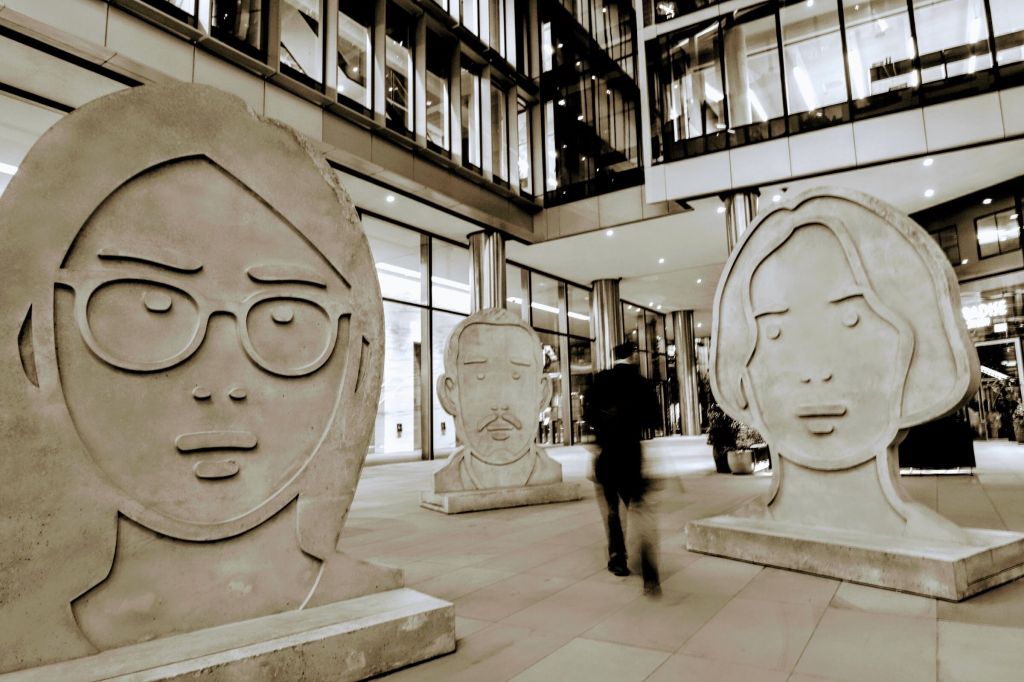
#14 Clerks Place
Don’t be afraid to meander through and between the high-rise office blocks. In fact, Sculpture in the City positively encourages you to do so. This sculpture in Clerks Place is of ‘Charles. Jiwon. Nethaneel. Elena.’ by London artist Julian Opie.
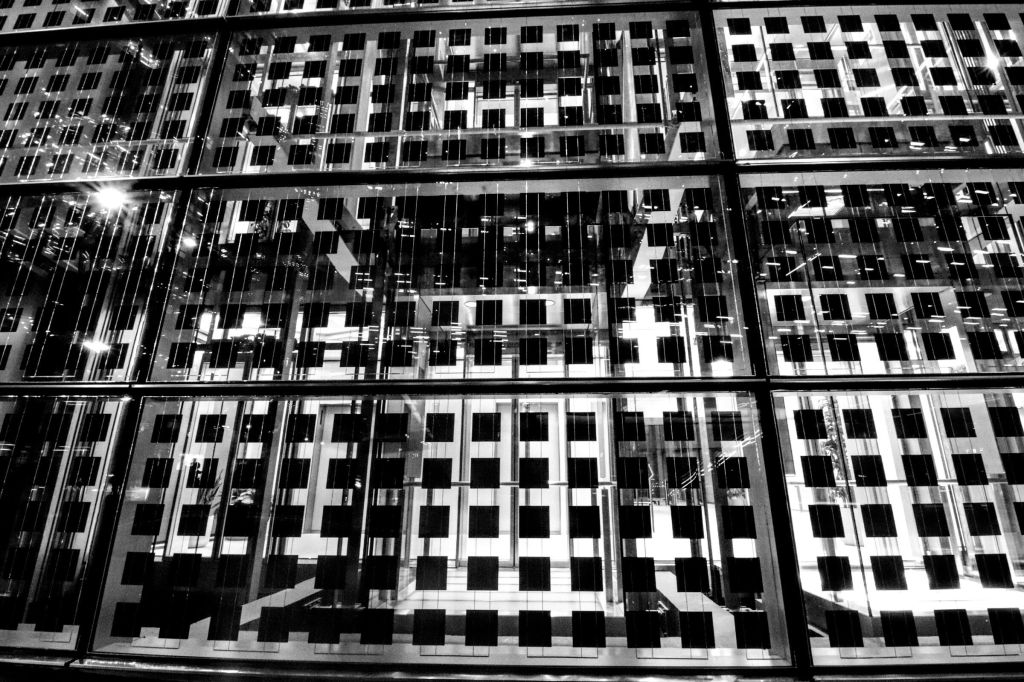
#15 Heron Tower
110 Bishopsgate is another high-rise glass building which epitomises how The City has evolved where architects seem compelled to outdo each other. This side view ‘hides’ the lift shaft that propels visitors up/down its 40 floors.
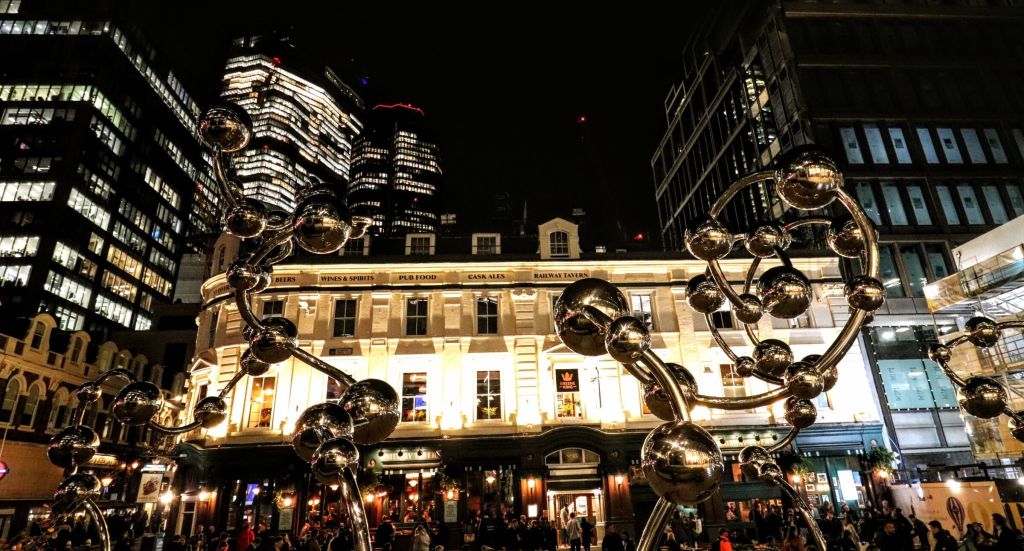
You can’t miss this sculpture outside the Elizabeth Line and Liverpool Street Station entrances. It’s well worth a look to admire its scale and consider the artist’s thought process in its making.
Further Reading

 Photos By RJT
Leave a comment